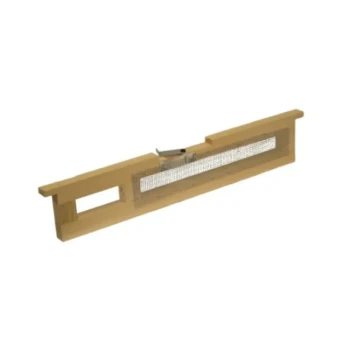
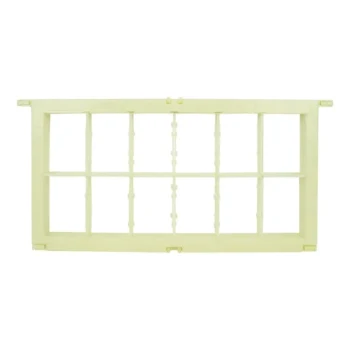
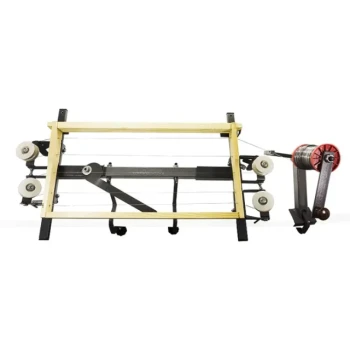
The primary purpose of equipping queen bee confinement tools with honey storage frames is to ensure the queen has uninterrupted access to nutrition during high-stress procedures, such as irradiation and colony transfer. By simulating a natural feeding environment, these tools prevent energy depletion and starvation. This safeguards the queen's survival and ensures she remains physically capable of resuming egg-laying immediately upon reintroduction to the hive.
These specialized tools bridge the nutritional gap during experimental handling, protecting the queen from metabolic stress to preserve the integrity of longitudinal research data.
Physiological Stability During Stress
Research protocols often require removing the queen from the safety of the colony. The inclusion of honey storage frames addresses the immediate biological risks associated with this isolation.
Counteracting Energy Depletion
Queen bees have high metabolic demands. During phases like irradiation or physical transfer, a queen isolated without food faces immediate energy depletion.
The storage frames provide a continuous caloric supply. This prevents the rapid decline in health that typically results from nutritional interruption.
Simulating Natural Hive Conditions
Stress is a significant variable in bee research. A queen removed from her natural environment experiences heightened stress levels.
By mimicking the natural nutritional environment of a hive, these tools reduce physiological shock. This helps maintain the queen's baseline health despite the artificial conditions of the experiment.
Preserving Reproductive Function
The ultimate goal of using these tools is not just survival, but the retention of function. A living queen is useless to research if she is too weak to perform her role.
Maintaining Egg-Laying Potential
Nutritional stress can cause a queen to cease reproduction. If energy reserves drop, egg-laying is often the first physiological function to be sacrificed.
Continuous feeding ensures the queen maintains normal physiological functions. This preserves her readiness to lay eggs without a prolonged recovery period.
Ensuring Successful Reintroduction
The success of a study often hinges on the queen's performance after the confinement period.
Because the tool prevents starvation-induced weakness, the queen is more likely to reintegrate successfully. She returns to the colony with the energy required to assert her role and resume colony growth.
Operational Considerations
While these tools offer significant advantages, their effectiveness relies on proper utilization.
Dependence on Adequate Preparation
The "honey storage frame" is a delivery mechanism, not a source in itself. Its effectiveness is entirely dependent on being adequately stocked prior to confinement.
If the frame is under-filled, the tool functions no differently than a standard cage. The protective benefits against energy depletion are lost if the supply runs out during the irradiation or transfer window.
Specificity of Application
These tools are explicitly designed for transitional phases. They are engineered for the specific stresses of irradiation and transfer.
They should be viewed as temporary life-support systems rather than permanent housing. Prolonged confinement, even with food, may eventually introduce other stressors not mitigated by nutrition alone.
Making the Right Choice for Your Goal
When designing your research protocol, consider how this tool aligns with your specific experimental needs.
- If your primary focus is Queen Survival: Use this tool to prevent mortality caused by starvation during transport or irradiation processes.
- If your primary focus is Data Continuity: Use this tool to ensure the queen retains her egg-laying capabilities, minimizing the lag time in data collection after reintroduction.
By prioritizing nutritional continuity, you transform a high-risk procedural step into a controlled, stable variable.
Summary Table:
| Feature | Benefit for Queen Bee | Impact on Research |
|---|---|---|
| Honey Storage Frames | Constant caloric supply & nutrition | Prevents energy depletion & starvation |
| Simulated Environment | Reduces physiological shock | Minimizes stress as an experimental variable |
| Energy Maintenance | Sustains reproductive health | Ensures immediate egg-laying after reintroduction |
| Specialized Design | Protects during irradiation/transfer | Preserves the integrity of longitudinal data |
Elevate Your Commercial Apiary with HONESTBEE
Are you a commercial apiary or distributor looking for high-quality beekeeping solutions? HONESTBEE specializes in a comprehensive wholesale offering designed to meet the rigorous demands of professional beekeeping and research.
From queen bee management tools and specialized hardware like hive-making and honey-filling machines to a wide array of essential consumables, we provide everything you need to scale your operations. Our mission is to empower you with durable equipment and innovative tools that ensure the health of your colonies and the efficiency of your business.
Ready to optimize your production and supply chain?
Contact us today to discuss your wholesale needs!
References
- G. Sawires, Sawsan Abdelmegeed. Morphological Changes and Colony Activity in Honeybee Workers Apis mellifera Produced from Irradiated Queens.. DOI: 10.21608/eajbsa.2016.12841
This article is also based on technical information from HonestBee Knowledge Base .
Related Products
- JZBZ Langstroth Queen Rearing Frame for Beekeeping
- Automatic Heat Preservation 6 Frame Pro Nuc Box for Honey Bee Queen Mating
- Premium Wood Framed Metal Wire Queen Bee Excluder
- Professional Wooden Requeening Frame for Beekeeping
- Assembled Wooden Bee Frames with Beeswax Foundation Ready to Use by HONESTBEE
People Also Ask
- Why use finishing colonies for queen cell capping? Secrets to Superior Queen Quality and Performance
- How do queen rearing frames and grafting needles function together? Master the Doolittle Method for High-Quality Queens
- What is the purpose of queen rearing frames? Master Controlled Queen Production for Your Apiary
- What are the functions of queen rearing frames and artificial queen cells? Master Bee Genetic Improvement
- What roles do professional queen rearing frames and artificial queen cells play? Scaling Your Queen Bee Production