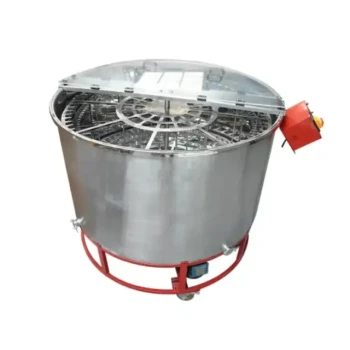
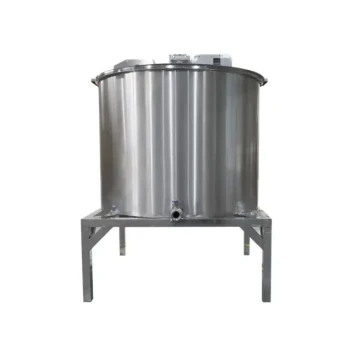
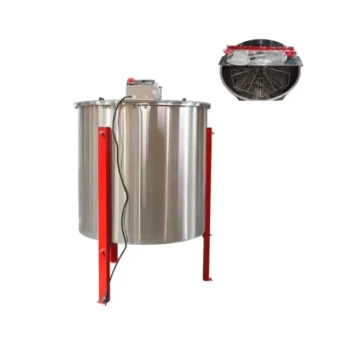
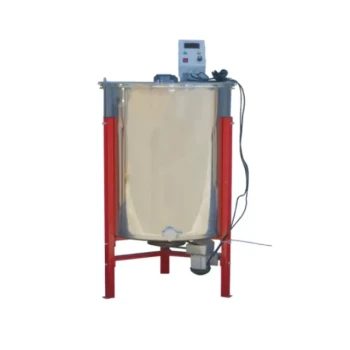
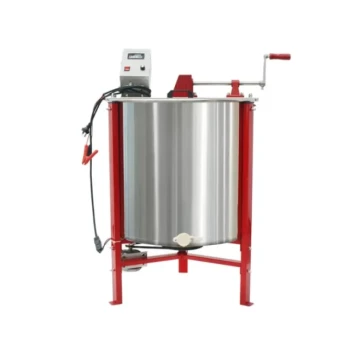
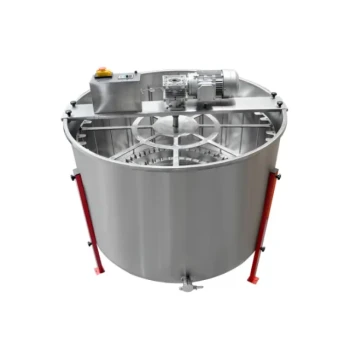
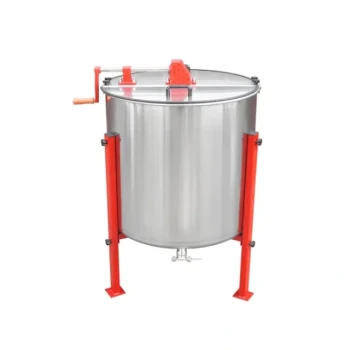
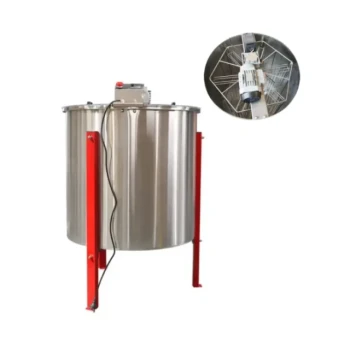
The primary role of an industrial-grade honey extractor in this context is to function as a large-scale homogenization device for pooled sampling. By utilizing centrifugal force to extract and mix honey from multiple frames simultaneously, the machine creates a composite mixture at the discharge outflow, allowing a single sample to represent the biological status of 9 to 18 beehives.
The extractor transforms pathogen detection from a granular, labor-intensive process into a cost-effective, apiary-level risk assessment by consolidating the health status of nearly two dozen hives into a single testable unit.
The Mechanics of Pooled Sampling
Leveraging Centrifugal Force
The fundamental mechanism of the industrial extractor is the application of centrifugal force. As the machine spins to extract honey from the comb, it naturally blends the contents of every frame currently loaded in the drum.
This physical action ensures that the honey discharged at the outflow is a homogenous mixture. This mixing process is critical for detecting Paenibacillus larvae spores, as it ensures that pathogens present in just one or two frames are distributed throughout the pooled sample.
Scaling from Hive to Apiary
The most significant advantage of this method is the shift in testing scale. Standard protocols often require sampling individual hives, which is time-consuming and expensive.
By sampling from the extractor's outflow, you effectively pool data from 9 to 18 hives (depending on machine capacity) into one workflow. This enables you to assess the risk level of an entire apiary sector rather than diagnosing a single colony at a time.
Operational Efficiency
Using the extractor for sampling dramatically reduces the manual labor involved in monitoring. There is no need to open individual hives solely for sample collection during the harvest season.
Instead, sampling becomes an integrated part of the harvesting workflow. This integration significantly lowers the cost per hive for disease monitoring, making frequent testing more financial viable.
Ensuring Sample Integrity Downstream
Handling the Pooled Sample
While the extractor provides the pooled sample, maintaining its integrity is vital. The use of disposable sampling spoons to collect the honey from the outflow is essential.
Because Paenibacillus larvae spores are highly infectious and persistent, single-use consumables prevent cross-contamination between different extraction batches. This ensures that a positive result can be traced back to a specific batch of hives without ambiguity.
Preparing for Accurate Analysis
The extractor will inevitably pull solid impurities, such as beeswax and larval debris, into the honey. Before the sample is applied to culture media (like Columbia blood agar), it must be filtered using sterile gauze or swabs.
This pre-treatment prevents physical debris from obscuring bacterial colonies. Clear observation of colony morphology is necessary for accurate counting and identification of the pathogen.
Overcoming Spore Resilience
It is important to note that while the extractor pools the honey, it does not expose the pathogen's DNA. Paenibacillus larvae spores have incredibly robust protein coats that resist standard chemical lysis.
To ensure the pooled sample yields accurate PCR results, the laboratory must use grinding beads. This mechanical lysis provides the shear force needed to break the spore walls and release genomic DNA, preventing false-negative results.
Understanding the Trade-offs
The Risk of Dilution
The primary trade-off of using an extractor for pooling is biological dilution. If only one hive in a batch of 18 is infected, the concentration of spores in the final outflow sample will be significantly lower than in a direct hive sample.
Tracing Infection Sources
While this method is excellent for screening, it lacks immediate specificity. A positive result from the extractor tells you that at least one hive in that batch is infected, but it does not identify exactly which one.
Consequently, a positive result from an extractor sample usually necessitates a secondary round of individual hive inspections to pinpoint the specific source of the infection.
Making the Right Choice for Your Goal
To apply this equipment effectively to your disease monitoring program, consider the following:
- If your primary focus is cost-effective screening: Utilize the extractor outflow method to monitor large numbers of hives during harvest with minimal additional labor.
- If your primary focus is avoiding cross-contamination: Implement a strict protocol using disposable sampling spoons for every new batch discharged from the machine.
- If your primary focus is analytical accuracy: Ensure that all extractor-derived samples undergo filtration and mechanical bead beating to prevent false negatives caused by debris or unbroken spores.
By integrating the extractor into your sampling protocol, you turn a standard harvesting tool into a powerful first line of defense against American Foulbrood.
Summary Table:
| Feature | Role in Pathogen Sampling | Benefit to Apiary Management |
|---|---|---|
| Centrifugal Mixing | Homogenizes honey from 9-18 hives into one composite sample. | Ensures pathogen distribution for reliable detection. |
| Pooled Sampling | Consolidates data from multiple hives into a single test unit. | Reduces lab costs and manual labor per hive. |
| Outflow Collection | Integrated sampling during the honey harvest workflow. | Eliminates the need for separate hive-side collection. |
| Risk Assessment | Provides a broad overview of apiary-level infection status. | Functions as a cost-effective early warning system. |
Secure Your Apiary’s Health with HONESTBEE
Protecting your commercial honey production starts with the right equipment. HONESTBEE provides high-capacity, industrial-grade honey extractors, honey-filling machinery, and hive-making tools specifically designed for commercial apiaries and distributors.
Our comprehensive wholesale offering ensures you have the specialized hardware and industry consumables needed to maintain biosafety and operational efficiency. From large-scale extraction to honey-themed cultural merchandise, we deliver the value you need to scale your business.
Ready to upgrade your extraction and monitoring workflow?
Contact HONESTBEE Today for a Professional Consultation
References
- Michael W. Zabrodski, Elemir Simko. Establishment of apiary-level risk of American foulbrood through the detection of Paenibacillus larvae spores in pooled, extracted honey in Saskatchewan. DOI: 10.1038/s41598-022-12856-4
This article is also based on technical information from HonestBee Knowledge Base .
Related Products
- HONESTBEE 72 Frame Industrial Electric Honey Extractor for Beekeeping
- 24 Frame Honey Extractor Commercial Radial Honey Frame Extraction Machine
- 32 Frame Commercial Electric Honey Extractor for Beekeeping and Honey Production
- Stainless Steel Manual 8 Frame Radial Honey Extractor Machine for Beehives
- Commercial Electric 12 Frame Honey Extractor Spinner Motorized Honey Extractor
People Also Ask
- What is the importance of balancing honeycomb frames within a honey extractor? Ensure Stability and Protect Machinery
- How is honey separated from the frames after they are uncapped? Efficient Extraction Methods for High Yields
- What are the main benefits of using a honey extractor? Maximize Yields and Protect Your Honeycomb
- What are the recommended methods for removing honey from the honeycomb? Top Extraction Techniques for Maximum Efficiency
- How do manual honey extractors compare to electric honey extractors? Choosing the Right Tool for Your Apiary Growth