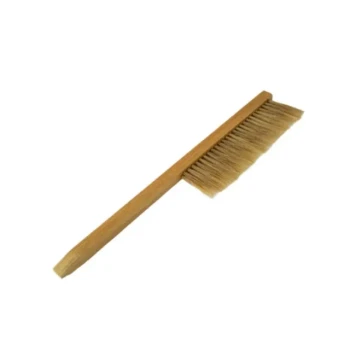
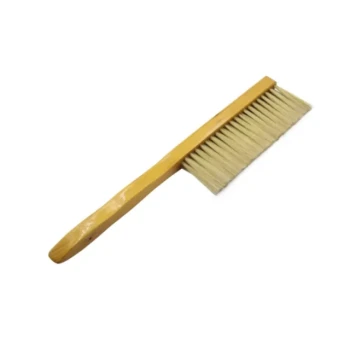
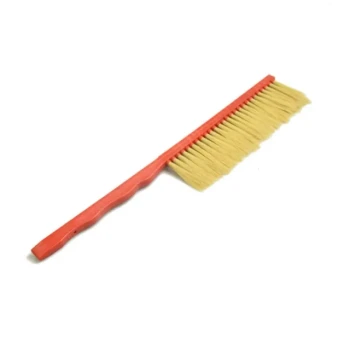
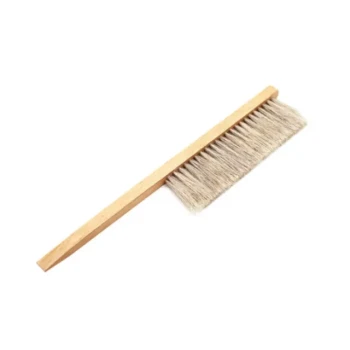
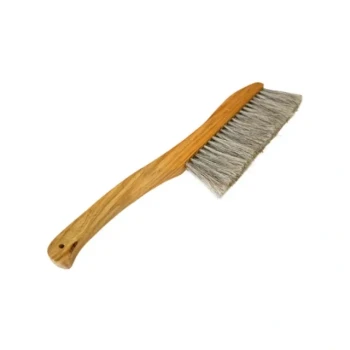
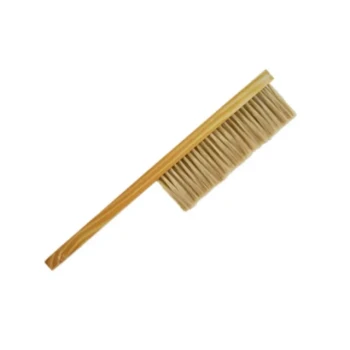
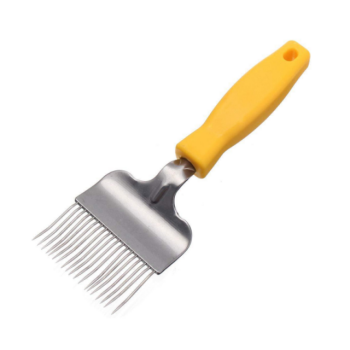
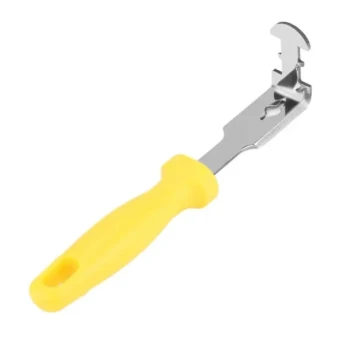
Brushes and styli serve as precision sorting instruments during the chromatic assessment of bee pollen. Their primary function is to facilitate the physical separation of fresh pollen samples across a white background, enabling technical personnel to manually group mixed pollen loads according to their distinct visual color characteristics.
The separation of pollen helps quantify biodiversity. By sorting pellets into color-based categories, researchers can translate a physical mixture into an approximate index of the plant species diversity present in a foraging area.
The Mechanics of Chromatic Assessment
Physical Separation of Samples
The assessment process begins with a mixed load of fresh pollen. Brushes, styli, or scrapers are used to manipulate individual pollen pellets.
This manual intervention allows technicians to spread the sample effectively on a white background. This contrast is critical for distinguishing subtle variations in hue.
Categorization by Abundance
Once separated, the tools are used to group the pollen into distinct clusters based on color.
Personnel sort these clusters into specific frequency categories, typically defined as abundant, rare, or very rare. This sorting converts a chaotic mixture into structured, countable data.
Deriving Biological Data from Color
Translating Color to Species
The underlying principle of this method is that pollen color acts as a visual proxy for botanical origin.
By using styli to isolate specific colors, researchers are effectively isolating pollen from specific plant species.
Creating Diversity Indices
The ultimate goal of this manual sorting is to calculate an index of plant species diversity.
The number of distinct colors found corresponds roughly to the number of plant species visited by the bees. This allows for an assessment of the botanical variety available in the local environment.
Understanding the Limitations
The Nature of Approximation
It is important to recognize that this method yields an approximate index, not a genetic identification.
While brushes allow for careful sorting, different plant species can sometimes produce pollen of very similar colors. Visual sorting alone may group different species together or separate a single species with variable pollen colors.
Reliance on Manual Proficiency
The accuracy of the data depends heavily on the technical personnel performing the task.
Because the process involves manual manipulation with simple tools, the consistency of the results is directly tied to the operator's ability to visually distinguish and physically separate small pellets.
Optimizing Your Assessment Workflow
To get the most value out of chromatic assessment, align your technique with your specific research goals:
- If your primary focus is Process Efficiency: Ensure your workspace has a pure white background and optimal lighting to make the manual separation with brushes as fast and accurate as possible.
- If your primary focus is Ecological Data: distinctively categorize the "rare" and "very rare" loads, as these provide the nuance required for a comprehensive diversity index.
Mastering the use of these simple tools bridges the gap between raw biological material and actionable ecological insight.
Summary Table:
| Tool/Feature | Role in Assessment | Impact on Data |
|---|---|---|
| Brushes/Styli | Physical separation & manipulation | Enables accurate manual grouping |
| White Background | Providing visual contrast | Enhances hue distinction for personnel |
| Sorting Categories | Abundant, rare, or very rare | Converts physical samples to frequency data |
| Diversity Index | Translating color to species count | Provides an approximate botanical variety map |
Elevate Your Bee Pollen Processing with HONESTBEE
For commercial apiaries and distributors, precision in pollen processing is key to delivering high-quality products. HONESTBEE provides the comprehensive wholesale solutions you need to scale your operations. From specialized beekeeping tools and industry consumables to high-capacity honey-filling and hive-making machinery, we support every stage of your production.
Ready to enhance your efficiency and botanical assessment capabilities? Contact us today to discover how our professional-grade equipment and machinery can drive value for your beekeeping business.
References
- Robert Brodschneider, J.J.M. van der Steen. CSI Pollen: Diversity of Honey Bee Collected Pollen Studied by Citizen Scientists. DOI: 10.3390/insects12110987
This article is also based on technical information from HonestBee Knowledge Base .
Related Products
- Classic Wooden Bee Brush with Double-Row Boar Bristles
- Wooden Bee Brush with Triple Row Artificial Fiber for Beekeeping
- Plastic Handle Single Row Artificial Fiber Bee Brush
- Wooden Bee Brush with Double-Row Horsehair Bristles
- Premium Triple-Row Horsehair Bee Brush
People Also Ask
- What are the key features of a popular bee brush? Essential Design for Bee Safety and Hive Hygiene
- What are the key characteristics of the bristles on a bee brush? Master Gentle and Efficient Bee Removal
- What is a bee brush and what is its primary use? A Gentle Tool for Hive Management
- What is the purpose of using a bee brush during the inspection of hive components? Safe & Precise Hive Management
- What is the specific function of a bee brush? Ensure Pure Harvests and Colony Welfare During Honey Extraction