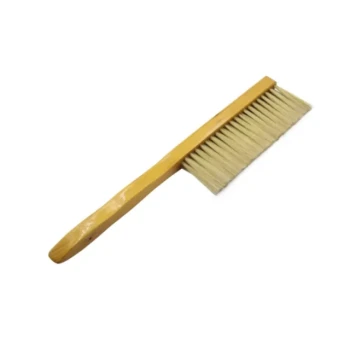
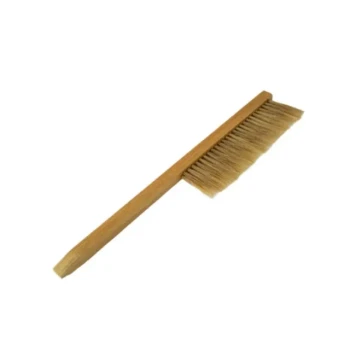
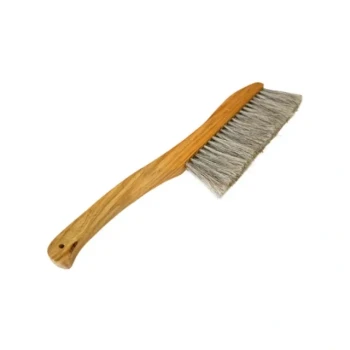
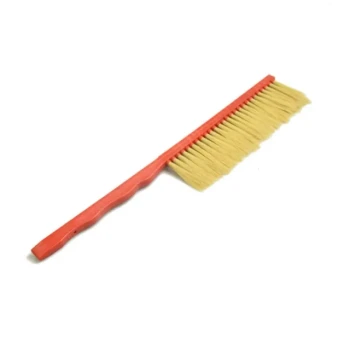
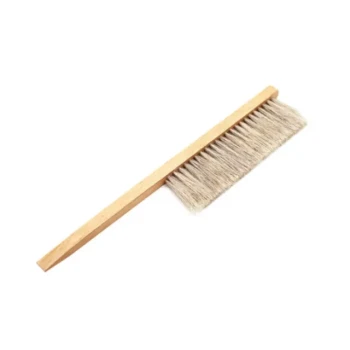
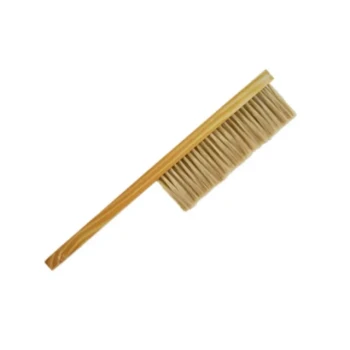
A bee brush is essential for protecting the colony's future while clearing a workspace. It allows apiarists to gently sweep adult worker bees off the frame surface without crushing them or accidentally injuring the delicate larvae developing within the honeycomb cells.
The bee brush serves a dual purpose: it clears the visual field for precise tasks like larval marking, while its soft bristles ensure the physical integrity of the vulnerable larvae remains intact.
The Mechanics of Gentle Extraction
Safeguarding Adult Worker Bees
The primary challenge when handling a frame is the density of adult bees covering the comb. A bee brush utilizes soft bristles designed specifically to interact with these insects.
This allows for the removal of the adult workforce from the frame without causing physical injury or crushing them, which keeps the colony calmer during the inspection.
Preserving Larval Integrity
Larvae located inside the honeycomb cells are extremely fragile and susceptible to physical trauma.
The soft bristles of the brush glide over the surface of the comb without penetrating the cells. This ensures the larvae are not touched, jostled, or damaged during the clearing process.
Enabling Precision Tasks
Once the adult bees are cleared, the beekeeper has an unobstructed view of the brood.
This visibility is critical for subsequent procedures mentioned in technical literature, such as larval marking, which requires high accuracy. A clear frame ensures you can identify the correct larvae without visual obstruction or the interference of moving bees.
Understanding the Trade-offs
The Brush vs. The Grafting Tool
It is important to distinguish between clearing the frame and moving the larvae.
The bee brush is strictly for surface preparation; it does not extract the larvae themselves. If your goal is to transfer larvae for queen rearing, you must switch to a grafting tool after brushing.
Tool Limitations
While the bee brush protects the larvae in the comb, it cannot support them during transfer.
A grafting tool is required to physically support the delicate 12 to 24-hour-old larvae and include original royal jelly, which prevents injury during movement and ensures acceptance by nurse bees.
Making the Right Choice for Your Goal
To ensure the safety of your hive during inspections or rearing, apply the following principles:
- If your primary focus is frame inspection or larval marking: Use the bee brush to gently clear adult bees, providing a clear line of sight without risking damage to the brood.
- If your primary focus is queen rearing or grafting: Use the bee brush first to expose the comb, then immediately switch to a high-precision grafting tool to safely transfer the larvae.
Mastering the use of the bee brush is the first step in performing advanced colony management without sacrificing the health of the brood.
Summary Table:
| Feature | Bee Brush | Grafting Tool |
|---|---|---|
| Primary Use | Surface clearing & bee removal | Larval transfer for queen rearing |
| Action | Sweeping adult bees gently | Lifting & supporting 12-24h larvae |
| Safety Focus | Prevents crushing adults & larvae | Maintains larval integrity & royal jelly |
| Visibility | Clears field for larval marking | High precision for individual cells |
| Material | Soft bristles to glide over comb | Fine tip for physical support |
Elevate Your Apiary Efficiency with HONESTBEE
Successful colony management begins with the right tools. At HONESTBEE, we specialize in supporting commercial apiaries and distributors with high-quality, professional-grade beekeeping solutions. Whether you need specialized bee brushes for brood protection, high-precision grafting tools, or large-scale honey-filling machines, our comprehensive wholesale portfolio has you covered.
Our Value to You:
- Full Spectrum Supply: From hive-making machinery to essential consumables.
- Industry Expertise: Hardware designed to protect your colony's health and productivity.
- Wholesale Excellence: Competitive offerings tailored for distributors and large-scale operations.
Ready to scale your production and safeguard your hives? Contact us today to discuss your wholesale needs and discover how HONESTBEE can streamline your beekeeping business.
References
- Chong-Yu Ko, Yu‐Shin Nai. Evaluating the Effect of Environmental Chemicals on Honey Bee Development from the Individual to Colony Level. DOI: 10.3791/55296
This article is also based on technical information from HonestBee Knowledge Base .
Related Products
- Wooden Bee Brush with Triple Row Artificial Fiber for Beekeeping
- Classic Wooden Bee Brush with Double-Row Boar Bristles
- Premium Triple-Row Horsehair Bee Brush
- Plastic Handle Single Row Artificial Fiber Bee Brush
- Wooden Bee Brush with Double-Row Horsehair Bristles
People Also Ask
- What is the specific function of a bee brush? Ensure Pure Harvests and Colony Welfare During Honey Extraction
- What are the key characteristics of the bristles on a bee brush? Master Gentle and Efficient Bee Removal
- What is the purpose of using a bee brush during the inspection of hive components? Safe & Precise Hive Management
- What problem does a bee brush solve? Protect Your Colony with Gentle Precision Tools
- What is the correct way to use a bee brush and what actions should be avoided? Master Gentle Hive Management