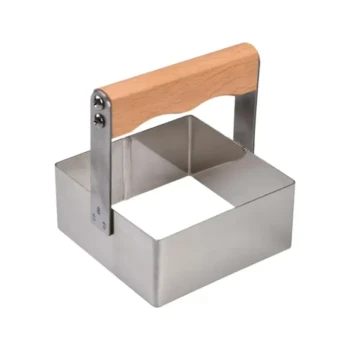
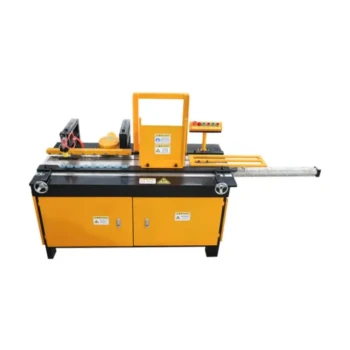
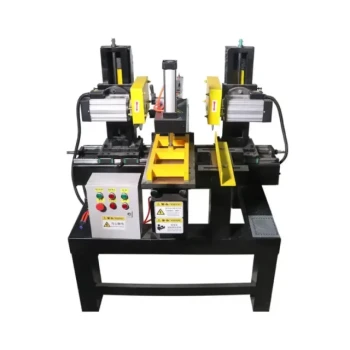
Mechanical crushing equipment equipped with equidistant metal blades functions as a precision sample preparation tool for beeswax analysis. Its primary role is to physically refine solid beeswax blocks into consistent, uniform granules. This physical transformation is a prerequisite for generating specific optical conditions required for high-sensitivity testing.
By converting smooth beeswax blocks into granular surfaces, this equipment facilitates the generation of diffuse reflection spectra. This optical shift unmasks spectral details that are typically invisible on smooth surfaces, significantly enhancing the detection of impurities.
The Mechanics of Spectral Enhancement
Precision Granulation
The equipment utilizes equidistant metal blades to ensure the beeswax is cut evenly.
This specific mechanical configuration is necessary to produce granules of uniform size. Uniformity is critical for ensuring consistent interaction with light during analysis.
Shifting Reflection Modes
The primary objective of crushing the beeswax is to alter its light reflection characteristics.
Solid blocks typically produce specular (mirror-like) reflection, which can obscure data. The granular surface created by the blades generates diffuse reflection spectra, where light scatters in many directions.
Why Granulation Matters for Analysis
Revealing Hidden Wavelengths
Smooth beeswax surfaces often mask specific wavelength bands, making them difficult to observe.
The granular texture changes the intensity distribution of the reflected light. This allows analysts to clearly see wavelength differences in bands that were previously undetectable.
Preserving Chemical Identity
Crucially, while the physical form of the wax changes, the chemical data remains intact.
The process alters the signal intensity but does not alter the core spectral peak positions. This ensures that the chemical "fingerprint" of the beeswax is preserved while the clarity of that fingerprint is improved.
Understanding the Limitations
Dependence on Surface Texture
This method relies entirely on the manipulation of physical surface texture to improve data.
It does not chemically treat the sample. Therefore, if the granulation is inconsistent due to blade wear or misalignment, the resulting diffuse reflection spectra may become unreliable.
Specificity of Detection
The enhanced sensitivity is achieved through changes in intensity distribution.
This method is specifically optimized for detecting impurities that are otherwise hidden by the optical properties of smooth surfaces. It is a targeted approach for surface-sensitive spectral analysis.
Making the Right Choice for Your Goal
To maximize the effectiveness of your beeswax analysis, consider the following:
- If your primary focus is detecting subtle impurities: Use this equipment to process samples, as the diffuse reflection will expose wavelength bands hidden on smooth blocks.
- If your primary focus is maintaining chemical data integrity: Rest assured that this mechanical processing enhances signal clarity without shifting the core spectral peak positions of the beeswax.
Mechanical granulation is not just a size-reduction step; it is an optical enhancement technique that bridges the gap between raw material and precise spectral analysis.
Summary Table:
| Feature | Role/Benefit in Beeswax Processing |
|---|---|
| Mechanism | Equidistant metal blades for precision granulation |
| Optical Effect | Converts specular reflection to diffuse reflection spectra |
| Data Integrity | Increases signal intensity without shifting spectral peaks |
| Key Advantage | Unmasks hidden wavelength bands to detect subtle impurities |
| Final Output | Uniform granules optimized for high-sensitivity optical testing |
Optimize Your Beekeeping Operations with HONESTBEE
Are you looking to scale your beeswax processing or enhance the quality of your hive products? HONESTBEE is your dedicated partner in the beekeeping industry. We cater specifically to commercial apiaries and distributors, offering a comprehensive wholesale catalog that includes everything from precision beeswax processing machinery to specialized honey-filling machines and hive-making equipment.
Our expertise goes beyond hardware; we provide a full spectrum of industry consumables and honey-themed cultural merchandise to help your brand stand out. Discover how our professional-grade tools can improve your efficiency and analytical accuracy.
Ready to elevate your production? Contact us today to explore our wholesale solutions and expert equipment!
References
- Volodymyr Vyshniak, Valeriy Dombrovskiy. Identification of beeswax and its falsification by the method of infrared spectroscopy. DOI: 10.24263/2304-974x-2018-7-3-7
This article is also based on technical information from HonestBee Knowledge Base .
Related Products
- Electric Flatting and Embossing Machine with Tray for Beekeeping
- Fully Automatic Beeswax Embossing Machine Foundation Mill
- Manual Beeswax Flat Sheet Machine for Beeswax Processing
- Electric Beeswax Foundation Machine With Operating Tray and Wax Foundation Roller
- Economy Manual Beeswax Embossing Mill Wax Foundation Machine Roller
People Also Ask
- What are the advantages of implementing a pulley and belt drive system in beeswax foundation machinery? Master Quality.
- What are the primary technical challenges faced by beeswax foundation production machinery? Tackling Lipophilic Residues
- How does the beeswax flatting and embossing machine prepare the wax for processing? Achieve Perfectly Uniform Wax Sheets
- What is the purpose of the beeswax flatting and embossing machine? Boost Hive Efficiency & Honey Production
- What are the sequential stages of operation for a beeswax flatting and embossing machine? Master High-Quality Wax Sheets