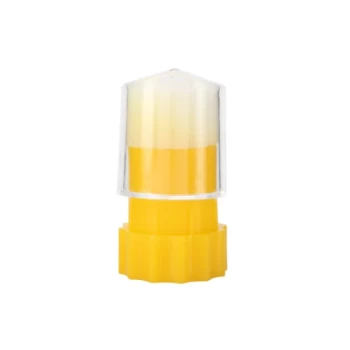
Non-toxic markers function as the primary control mechanism for ensuring accuracy in honey bee transport research. By applying unique colors or symbols to the thorax of specific bees, researchers can visually distinguish a specific cohort—such as newly emerged bees—from the rest of the colony to monitor them over time.
Core Insight: The use of non-toxic markers moves research from general observation to precise, age-controlled analysis. It allows scientists to track specific bees through transport stress and verify their development into foragers, ensuring that subsequent molecular data is derived from a strictly defined sample group rather than a random cross-section.
The Mechanics of Cohort Tracking
Visual Identification of Age Groups
In complex colony environments, bees of different ages intermingle freely. Non-toxic markers create a visual "tag" on the thorax that remains visible as the bee matures.
This simple visual cue enables researchers to instantly identify bees that were marked at a specific point in time, such as immediately upon emergence.
Defining the Time Interval
Transport studies often require analyzing the long-term effects of stress. Markers allow researchers to establish a clear timeline.
For example, researchers can return to the colony exactly 22 days after transport and locate the specific bees that underwent the stress event as newly emerged adults.
Ensuring Scientific Rigor
Controlling for Age Variables
Biological responses to transport stress can vary significantly depending on the age of the bee. Without isolation, data becomes noisy.
Markers ensure that every bee collected for analysis belongs to the exact same age cohort. This guarantees that the sample is age-matched, eliminating age as a confounding variable in the study.
Validating Developmental Transitions
Research often focuses on how transport affects a bee's transition from hive duties to foraging.
By tracking marked bees over a period (e.g., 22 days), scientists can confirm that the bees selected for molecular analysis have successfully transitioned into foragers. This validates that the biological samples represent the correct developmental stage.
Common Pitfalls to Avoid
The Risk of Random Sampling
The most significant error in transport studies is relying on random sampling without markers.
If researchers simply collect foragers without prior marking, there is no way to verify their age or their exposure to the transport event. This leads to uncontrolled variables that can invalidate molecular analyses.
Overlooking the "Transition" Window
It is critical to account for the time required for bees to mature.
Collecting samples too early or too late misses the target developmental phase. Markers provide the necessary timeline to ensure collection happens only after the bees have had sufficient time to transition into the forager caste.
Making the Right Choice for Your Research
To ensure your transport study yields valid, publishable molecular data, apply these tracking principles:
- If your primary focus is reducing variables: Mark bees immediately upon emergence to create a strictly defined "zero-day" cohort.
- If your primary focus is molecular analysis: Only collect marked bees at the specific interval (e.g., 22 days) to guarantee the sample is age-matched and stage-appropriate.
By using non-toxic markers, you transform a chaotic colony environment into a controlled laboratory setting, ensuring every data point reflects the true impact of transport stress.
Summary Table:
| Tracking Aspect | Role of Non-Toxic Markers | Research Benefit |
|---|---|---|
| Identification | Visual tagging of the thorax with unique colors | Distinguishes specific cohorts in complex colonies |
| Timeline Control | Establishes a clear "zero-day" starting point | Enables collection at exact intervals (e.g., 22 days) |
| Variable Control | Eliminates age as a confounding factor | Ensures all samples are age-matched for accuracy |
| Development | Verifies transition from hive duties to foraging | Validates the biological stage for molecular analysis |
Elevate Your Commercial Apiary with HONESTBEE
Precise research and high-quality equipment are the foundations of successful beekeeping at scale. At HONESTBEE, we specialize in supporting commercial apiaries and distributors with a comprehensive wholesale range designed for efficiency and durability.
From advanced hive-making and honey-filling machinery to essential industry consumables and specialized beekeeping tools, we provide everything you need to optimize your operations. Whether you are scaling a professional pollination service or managing a global distribution network, our expertise in high-performance hardware and honey-themed cultural merchandise ensures your success.
Ready to upgrade your equipment or expand your inventory?
Contact HONESTBEE today to discover how our wholesale solutions can drive your productivity forward.
References
- Maurice Fabian Scaloppi, Ricardo de Oliveira Orsi. Colony Transport Affects the Expression of Some Genes Related to the Apis mellifera L. Immune System. DOI: 10.13102/sociobiology.v69i4.7522
This article is also based on technical information from HonestBee Knowledge Base .
Related Products
- Queen Bee Marking Pen POSCA Queen Marking Pens for Beekeeping Bee Markers
- Queen Bee Marking Pen UNI Medium Point for Queen and Bee Marking
- Queen Bee Catcher Plastic Bee Marker Bottle with Piston Marking Tube
- Queen Bee Marking Tube Cage Bottle Catcher Holder with Clear Plastic Plunger Marker
- Galvanized Beekeeping Smoker for Honey Bee and Apiculture
People Also Ask
- What role do specialized marking pens and color-coding systems play in honeybee tracking? Enhance Research Precision
- Why are specialized marking pens used for stingless bee queens? Essential Tools for Large-Scale Breeding Success
- How should a new paint pen be primed before marking a queen bee? Essential Tips for Safe & Clear Markings
- How should a queen bee marking pen tip be properly primed? Master the Art of Safe Queen Marking
- What specifications are required for a high-quality queen bee marking pen? Ensure Safety and Precision for Your Colony