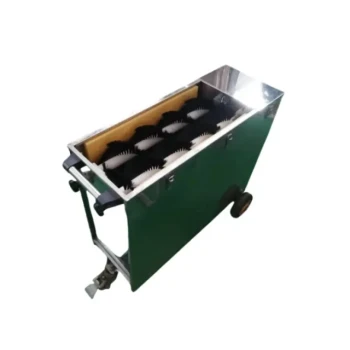
Specialized bee sample collection tools are the primary mechanism for securing valid biological data. Their specific role is to extract precise quantities of live or fresh honeybees from a colony in a manner that ensures safety and strictly prevents contamination. By maintaining the physical integrity of the sample during the extraction phase, these tools provide the necessary foundation for the accurate laboratory diagnosis of diseases such as Nosemosis and Varroosis.
Diagnosis is only as reliable as the sample provided. Specialized collection tools eliminate variables like physical damage and environmental contamination, ensuring that laboratory results reflect the true health status of the colony.
Ensuring Diagnostic Integrity
Preserving Sample Quality
The accuracy of a laboratory diagnosis relies heavily on the condition of the specimen. Specialized tools are engineered to collect bees without crushing them or damaging external parasites. This preservation is critical because damaged samples can obscure the presence of pathogens or make microscopic analysis impossible.
Preventing Cross-Contamination
Inaccurate diagnoses often stem from samples contaminated by external factors. These tools allow for extraction in a controlled manner, isolating the specific sample from the surrounding environment. This ensures that the pathogens detected in the lab originated from the specific colony being tested, rather than from cross-contamination during the collection process.
Facilitating Accurate Lab Analysis
Laboratory technicians rely on microscopes to identify viruses, bacteria, fungi, and mites. However, high-end optical equipment cannot compensate for a poor sample. By delivering fresh, intact specimens, collection tools enable the precise pathological analysis required to formulate targeted treatment plans.
The Role in Macro-Level Monitoring
Standardizing Data Collection
For large-scale operations, data must be comparable across different hives and time periods. Using standardized collection tools ensures that every sample represents a consistent spatial and quantitative reference. This uniformity allows apiary managers to track disease trends reliably over long periods.
Securing Samples for Transport
Effective diagnosis often requires moving samples from the field to a remote laboratory. When used in conjunction with sealed containers, collection tools ensure that parasites do not escape during transit. This containment is essential for maintaining sample integrity and preventing the accidental spread of pests between regions.
Critical Considerations and Risks
The Vector Risk
While these tools are essential for detection, they possess a paradox: they can become vectors for the very diseases they help identify. Pathogens can adhere to the surfaces of used equipment, including wax debris or honey residues on the tool.
The Requirement for Sterilization
If a collection tool is used on an infected colony and then immediately on a healthy one, it will likely transmit the infection. Strict management and disinfection protocols are required. Physical barriers to disease spread are only effective if the tools themselves are rigorously sterilized between uses.
Optimizing Your Disease Management Strategy
To ensure your sampling efforts lead to actionable insights, align your tool usage with your specific objectives:
- If your primary focus is accurate individual diagnosis: Prioritize tools designed for the gentle extraction of live specimens to ensure the viability of the bees for immediate microscopic analysis.
- If your primary focus is regional pest mapping: specific attention must be paid to the integration of collection tools with sealed transport systems to prevent parasite escape and ensure accurate occurrence data.
The precision of your collection method dictates the success of your disease control program.
Summary Table:
| Key Feature | Role in Diagnosis | Impact on Lab Results |
|---|---|---|
| Physical Integrity | Prevents crushing or damaging bees/parasites | Enables precise microscopic analysis |
| Contamination Control | Isolates specimens from external environmental factors | Ensures pathogens detected belong to the specific colony |
| Standardization | Provides consistent quantitative and spatial data | Allows for reliable long-term disease trend monitoring |
| Transport Security | Seals samples to prevent parasite escape during transit | Protects regional biosecurity and sample validity |
Maximize Your Apiary Health with HONESTBEE
Precise diagnosis starts with the right equipment. As a leading provider for commercial apiaries and distributors, HONESTBEE delivers a comprehensive wholesale range of professional beekeeping tools, hive-making machinery, and essential consumables designed for scale and reliability.
Whether you are mapping regional pest trends or managing large-scale honey production, our specialized hardware ensures your operations remain productive and pathogen-free. Partner with us to secure the highest quality equipment for your business.
Contact HONESTBEE Today for Wholesale Solutions
References
- Şule Yaman, Mustafa Yaman. Development of an Innovative Application for Nosemosis and Varroosis Rates in Bolu Beekeeping Locations by using Google Earth Engine. DOI: 10.29329/ijiaar.2024.1109.3
This article is also based on technical information from HonestBee Knowledge Base .
Related Products
- Full Set Beekeeping Electronic Bee Venom Collector Machine Device for Bee Venom Collecting
- HONESTBEE Professional Multi-Functional Hive Tool with Ergonomic Wood Handle
- HONESTBEE 15-in-1 Beekeeper Multi-Tool with Hammer and Pliers for Beekeeping
- Stainless Steel Pollen Shovel with Wooden Handle
- HONESTBEE Professional Long Handled Hive Tool with Precision Cutting Blade
People Also Ask
- How does the glass plate integrated into a bee venom collector contribute to maintaining quality and purity?
- What is the function of specialized collection equipment in the production process of bee venom? Expert Guide
- What is the significance of using specialized bee venom collection devices in commercial beekeeping operations?
- Why are bee venom collection devices typically mounted on specialized wooden carrier boards? Maximize Yield & Purity.
- How does a dedicated bee venom collection device operate? Extract Pure Venom Safely Without Harming Your Bees