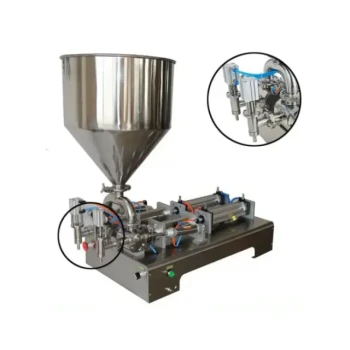
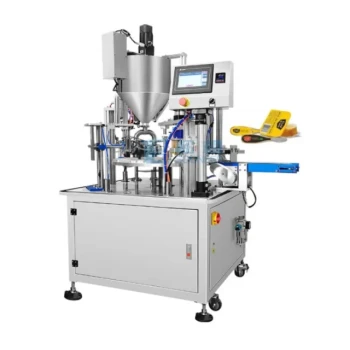
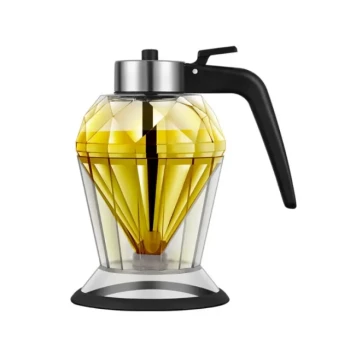
The pump serves as the central engine of the honey filling process, strictly dictating both the speed of production and the quality of the final product. It is responsible for moving high-viscosity liquid at a controlled flow rate while ensuring the honey’s physical structure remains unaltered.
Success in honey filling relies on balancing throughput with gentle handling. The pump must provide the force necessary to move thick liquid without introducing shear stress that could degrade the honey's natural properties.
Managing High Viscosity and Integrity
The Importance of Positive Displacement
For thick liquids like honey, positive displacement pumps are the preferred choice. Unlike other designs, they move fluid by trapping a fixed amount and forcing it into the discharge pipe, which is essential for handling resistance.
Minimizing Shear Damage
Honey is sensitive to mechanical stress. The primary role of the pump design is to transport the product with minimal agitation to avoid shear damage. This approach maintains the honey's integrity and quality throughout the filling process.
Determining Throughput
The pump's capacity and design directly influence the flow rate. A properly sized pump ensures the production line meets volume targets without stalling due to the liquid's thickness.
Versatility and Hygiene Standards
Variable Rate Control
Integrating pumps with regulated pumping rates adds essential versatility to a production line. This capability enables the machine to fill bottles of various sizes with different quantities without requiring a complete equipment overhaul.
Precise Volumetric Control
Specialized machinery utilizes the pump to achieve high precision in fill volume. This ensures product consistency across large-scale batches, which is critical for meeting standardization requirements.
Reducing Contamination Risks
By mechanizing the transfer of honey, the pump eliminates the need for manual handling. This minimizes the risk of secondary contamination, ensuring the product retains its natural properties during storage and transport.
Common Pitfalls in Pump Selection
Ignoring Viscosity Dynamics
A common mistake is selecting a pump based solely on speed rather than its ability to handle viscosity. If the pump cannot generate enough force for thick honey, flow rates will be inconsistent and production will bottle-neck.
The Risk of Over-Agitation
Using a pump that operates too aggressively or uses the wrong mechanism can physically damage the honey. This degradation can alter the physical and chemical properties required for high-end retail markets, effectively lowering the product's value.
Making the Right Choice for Your Goal
To optimize your filling line, align your pump selection with your specific production targets:
- If your primary focus is product quality: Prioritize positive displacement pumps to minimize shear damage and maintain the honey's natural structure.
- If your primary focus is production flexibility: Ensure your system features a regulated pumping rate to efficiently handle various bottle sizes.
- If your primary focus is market compliance: Leverage mechanized pumping to ensure a sterile environment and prevent human contact contamination.
Selecting the correct pump transforms the filling process from a simple transfer task into a precise operation that safeguards the value of your honey.
Summary Table:
| Feature | Primary Role in Honey Filling | Key Benefit |
|---|---|---|
| Positive Displacement | Moves thick, high-viscosity liquid efficiently | Prevents line stalling and bottlenecks |
| Low-Shear Design | Transports honey with minimal agitation | Preserves natural physical/chemical properties |
| Variable Rate Control | Adjusts flow for different bottle sizes | Enhances production line versatility |
| Volumetric Precision | Ensures exact honey weight per container | Guarantees batch consistency and compliance |
| Mechanized Transfer | Eliminates manual handling of product | Reduces secondary contamination risks |
Elevate Your Honey Production with HONESTBEE
Are you a commercial apiary or distributor looking to scale your operations without compromising product quality? HONESTBEE specializes in providing the global beekeeping industry with the high-precision machinery needed to thrive. From advanced honey-filling machines equipped with specialized positive displacement pumps to comprehensive hive-making hardware and essential consumables, we offer the complete spectrum of tools for your success.
Why partner with HONESTBEE?
- Expert Engineering: Our equipment is designed specifically for honey’s unique viscosity and sensitivity.
- Wholesale Solutions: We cater to large-scale operations and distributors with competitive pricing and robust support.
- End-to-End Portfolio: Beyond machinery, we provide cultural merchandise and industry consumables to help grow your brand.
Don't let inefficient equipment bottleneck your growth. Contact us today to discuss how our specialized honey filling solutions can protect your honey's value and boost your throughput!
Related Products
- Precision Durable Efficient HONESTBEE Rotary Honey Filling Machine
- Economy Small Honey Filling Machine Honey Bottle Filler Packaging Machine
- Automatic Honey Filling and Filtering Machine for Beekeeping Bottle Filling
- Semi Automatic Small Honey Bottle Filling Machine Honey Filler
- Fully Automatic Honey Filling Packaging Machine for Processing Line
People Also Ask
- What are the common types of bottling machines used for honey? Choosing the Right Solution for Your Apiary
- What quality control role does professional honey filling equipment perform? Ensure Consistency and Product Stability
- How do honey filling machines work? Achieve Precision & Speed for Your Apiary
- What is a key feature of the new generation of the honey filling machine? The Advanced Electronic Control Unit
- How do high-precision honey filling machines ensure quality? Optimize Your Commercial Production with HONESTBEE