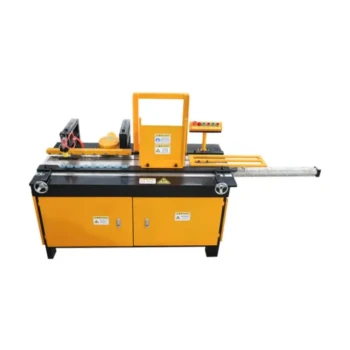
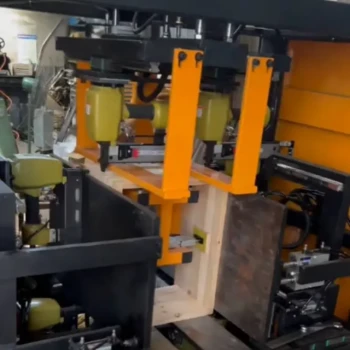
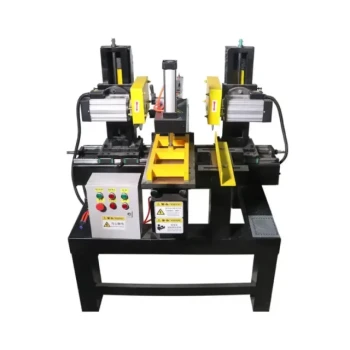
Professional hive-making machines are the primary catalyst for democratizing advanced beekeeping, serving as the critical link between scientific hive design and practical affordability. By automating the production of complex components like brood chambers and supers, these machines significantly lower the high initial investment costs that often prevent beekeepers from adopting improved wooden hives.
The core significance lies in the intersection of economics and biology: these machines remove the financial barrier to entry by reducing manufacturing costs, while simultaneously enforcing the mechanical precision required to maintain a healthy, manageable colony.
Overcoming Economic Barriers
The most immediate impact of professional hive-making machines is the reduction of financial friction. High-quality wooden hives are complex assemblies that are traditionally expensive to produce manually.
Reducing High Initial Costs
Manual woodworking requires significant time and skilled labor, driving up the price per unit. Professional machines streamline this into a standardized production process, drastically lowering the cost of essential parts like bottom boards and inner covers.
Mitigating Capital Shortages
Many beekeepers are deterred from upgrading their equipment due to a lack of capital. By enabling localized mechanical manufacturing, these machines make high-performance equipment accessible to producers who previously could not afford the overhead.
The Critical Role of Mechanical Precision
Beyond cost, the biological success of a hive depends on geometry. Bees are highly sensitive to the space within their home, and machine-grade precision is necessary to respect these biological constants.
Adhering to "Bee Space" Principles
A beehive is not just a box; it is a precise instrument. Machines ensure that gaps between components strictly adhere to Bee Space principles.
Preventing Functional Issues
If the internal dimensions are incorrect, bees will seal gaps with propolis or build irregular "burr comb." Machine precision prevents this, ensuring the hive remains modular and components can be easily manipulated without damaging the colony.
Ensuring Interchangeability
For commercial apiaries, every frame must fit every box. Industrial-grade machines guarantee that internal dimensions remain uniform across thousands of units, allowing for the seamless exchange of components and simplified colony management.
Understanding the Trade-offs
While automation offers immense benefits, relying on machine manufacturing introduces specific considerations that beekeepers and manufacturers must manage.
The Risk of Mass-Produced Errors
Precision is a double-edged sword. If a machine’s calibration drifts even slightly, it results in the mass production of defective units that may all violate bee space, rendering large batches of equipment difficult to use.
Dependence on Material Quality
Machines apply high force and tight tolerances that require consistent timber quality. Using improved machinery often necessitates better-cured wood to prevent warping, which can sometimes offset the initial cost savings if raw material supply chains are poor.
Making the Right Choice for Your Goal
Whether you are a local manufacturer or an apiary manager, understanding the value of these machines helps in selecting the right equipment strategy.
- If your primary focus is Reducing Start-up Costs: Prioritize suppliers utilizing localized machine production to avoid the premium pricing of hand-crafted or imported equipment.
- If your primary focus is Commercial Scalability: Ensure your equipment is manufactured on industrial-grade machines that guarantee 100% component interchangeability to streamline future maintenance.
Ultimately, professional hive-making machines transform beekeeping from a craft-limited practice into a scalable, scientifically managed industry.
Summary Table:
| Feature | Significance | Impact on Beekeeping |
|---|---|---|
| Cost Reduction | Automates production and lowers labor costs | Reduces initial investment and democratizes access to improved hives |
| Precision Engineering | Adheres strictly to "Bee Space" principles | Prevents propolis buildup and irregular burr comb formation |
| Standardization | Ensures uniform internal dimensions | Allows for 100% component interchangeability across large-scale operations |
| Scalability | Transforms manual craft into industrial process | Supports the growth of commercial apiaries and regional distributors |
Elevate Your Apiary Standards with HONESTBEE
Transitioning to professional, high-precision equipment shouldn't be a financial burden. HONESTBEE is dedicated to supporting commercial apiaries and distributors by bridging the gap between quality and affordability.
As a comprehensive wholesale provider, we supply everything from industrial-grade hive-making and honey-filling machinery to essential consumables and honey-themed merchandise. Our advanced manufacturing solutions ensure every hive component meets exact biological standards, helping you scale your operations with confidence.
Ready to optimize your production or expand your wholesale inventory?
Contact HONESTBEE Today to discover how our specialized beekeeping tools and machinery can drive your business forward.
References
- Zerihun Goa. Determinant factors affecting adoption of modern bee hive technology towards smallholder farmers: The case of Sodo Zuria Woreda, Wolaita Zone, Southern Ethiopia. DOI: 10.33545/26631067.2022.v4.i2a.108
This article is also based on technical information from HonestBee Knowledge Base .
Related Products
- High-Efficiency Pneumatic Bee Hive Making Machine for Rapid Box Assembly
- Mini Desktop Bee Hive Frame Forming Making Machine
- Beehive Handle and Frame Rest Cutting Machine: Your Specialized Hive Machine
- Automatic High-Speed Bee Hive Box Stapling Machine
- Beehive Machine Double End Saw for Precision Hive Component Manufacturing
People Also Ask
- How does the introduction of professional beehive-making machinery benefit sustainable beekeeping? Scale Your Apiary
- Why is specialized beehive-making machinery critical for low-defense breeding? Enhance Selection with Precision Tools
- How does the introduction of specialized beehive making machinery contribute to increasing the scale of regional beekeeping industries?
- What is the importance of specialized beehive making machinery in a circular bio-economy? Build Local Sustainability
- Why is specialized beehive-making machinery essential? Scale Your Apiary with Precision Industrial Standards