The presence of a queen is the single most critical biological factor in a successful venom collection operation. Research confirms that without a queen, a colony's social structure degrades, leading to a significant drop in the defensive instincts required for venom secretion. Maintaining a "queenright" status—where a healthy queen is present—is essential for maximizing the yield from electro-stimulation devices.
While collection technology is important, the biological drive of the colony dictates the output. Queenless colonies lack the necessary defensive organization, resulting in drastically lower venom production compared to queenright hives.
The Biological Connection to Yield
Regulating Social Structure
The queen is more than a reproductive engine; she is the chemical center of the hive. Her pheromones maintain the organization and cohesion of the worker bees.
Without these chemical signals, the strict social hierarchy required for efficient colony operations begins to dissolve.
The Defensive Instinct
Venom collection relies entirely on the bees' natural instinct to defend the hive against threats. Electro-stimulation devices simulate an attack to trigger this response.
However, defense is a priority only when there is a queen to protect. In queenless colonies, the collective aggression required to sting the collection plate is significantly reduced.
Impact on Secretion Rates
The correlation between the queen's presence and production volume is direct. Data indicates that queenless colonies produce significantly less venom when stimulated.
If the workers are not motivated to defend, they will not secrete venom, rendering the collection equipment ineffective regardless of its technical settings.
Active Management Strategies
Systematic Replacement
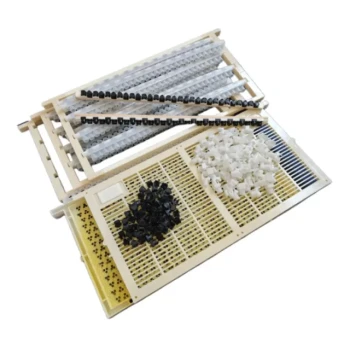
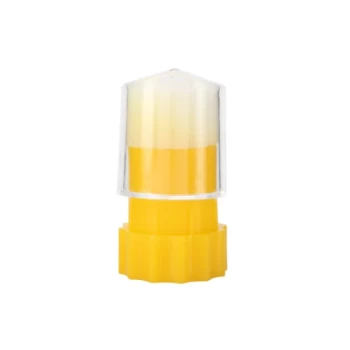
Relying on natural replacement is often too slow for a commercial operation. Beekeepers utilize queen rearing equipment—such as grafting needles and mating boxes—to intervene proactively.
By regularly replacing older queens, you ensure the colony maintains high egg-laying capacity and the vitality needed for active defense.
Genetic Selection for Efficiency
A queen's genetic makeup determines the behavior of her offspring. Through controlled rearing, operators can select for superior traits.
This technical approach improves the overall production efficiency of the apiary by ensuring the workforce is genetically predisposed to high foraging motivation and robust health.
Understanding the Trade-offs
The Cost of Intervention
While active queen management boosts yield, it requires significant technical skill and equipment. Implementing a rearing program adds complexity and labor costs to the operation.
Aggression vs. Manageability
Selecting for traits that increase defensive responses—and therefore venom yield—can make the colony more difficult to manage during routine inspections.
Operators must find a balance where the colony is defensive enough to produce venom but calm enough to handle safely.
Ensuring Operational Success
To translate these biological principles into production goals, apply the following strategies:
- If your primary focus is maximizing immediate venom yield: Prioritize daily inspections to verify that every colony subjected to electro-stimulation is confirmed as queenright.
- If your primary focus is long-term apiary stability: Invest in queen rearing equipment to systematically replace aging queens with genetically superior stock.
Ultimately, while the equipment collects the product, it is the queen who provides the motivation to produce it.
Summary Table:
| Factor | Queenright Colony | Queenless Colony |
|---|---|---|
| Pheromone Regulation | High social cohesion | Dissolving social structure |
| Defensive Instinct | Strong (Protects the queen) | Significantly reduced |
| Venom Secretion | Maximum yield via stimulation | Drastically lower output |
| Management Strategy | Regular queen replacement | High risk of collection failure |
Elevate Your Venom Production with HONESTBEE
Maintaining a queenright colony is the foundation of a profitable venom collection business. At HONESTBEE, we empower commercial apiaries and distributors with the specialized tools needed to sustain peak productivity. From advanced electro-stimulation collection devices to precision queen rearing equipment like grafting needles and mating boxes, we provide everything required to optimize your colony's biological output.
As a comprehensive wholesale partner, we offer the full spectrum of beekeeping machinery—including honey-filling machines and hive-making hardware—alongside essential industry consumables. Let us help you balance colony health with high-volume production.
Contact HONESTBEE today to upgrade your apiary’s performance!
References
- A. El-Saeady, Amira Metwaly. Effect of Bee Venom Collecting on The Behavior of Honeybee Colonies. DOI: 10.21608/jppp.2016.50576
This article is also based on technical information from HonestBee Knowledge Base .
Related Products
- Full Set Beekeeping Electronic Bee Venom Collector Machine Device for Bee Venom Collecting
- No Grafting Queen Rearing Kit: System for Royal Jelly Production and Queen Rearing
- Wooden Queen Bee Excluder for Beekeeping
- Black 2 Pack Beekeeper Queen Grafting Tool for Bee Queen Larva Transferring Needle
- Premium Nicot Style Queen Rearing Kit with Hair Roller Bee Cages
People Also Ask
- How does the glass plate integrated into a bee venom collector contribute to maintaining quality and purity?
- What is the function of specialized collection equipment in the production process of bee venom? Expert Guide
- What is the significance of using specialized bee venom collection devices in commercial beekeeping operations?
- Why are bee venom collection devices typically mounted on specialized wooden carrier boards? Maximize Yield & Purity.
- How does a dedicated bee venom collection device operate? Extract Pure Venom Safely Without Harming Your Bees