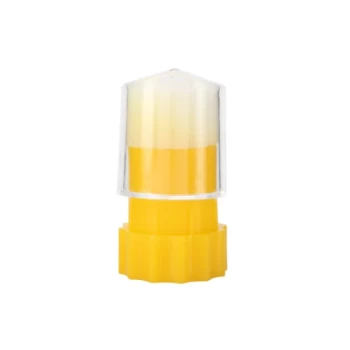
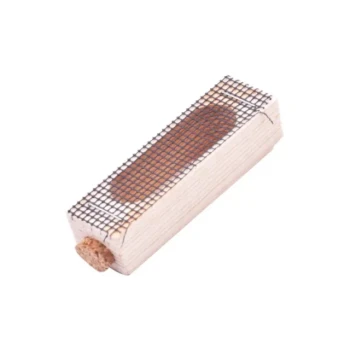
The safe capture of the queen bee is the single most critical variable in successful swarm management. She acts as the biological anchor for the entire colony due to the specific pheromones she emits. By securing her first, you leverage the colony's natural instincts, ensuring that the worker bees voluntarily follow her into the new hive and remain there rather than fleeing.
The queen’s presence transforms swarm capture from a chaotic containment effort into a controlled biological process. By confining the queen, you utilize her pheromones to guide the workforce and guarantee they accept the new hive as their permanent home.
The Pheromone Principle
The behavior of a honeybee swarm is dictated by chemical signals. Understanding this biological mechanism is the key to efficient hiving.
The Chemical Tether
The queen emits specific pheromones that serve as a rallying point for the swarm. She is not just a reproductive member of the colony; she is the center of their navigational focus.
The Fanning Response
Once the queen is safely inside the new hive or capture box, the worker bees will detect her scent. In response, they will typically fan their wings at the entrance.
Signaling the Population
This fanning behavior distributes the queen's pheromones into the surrounding air. This signals the exact location of the queen to the remainder of the airborne swarm, instructing them to land and enter the box.
Ensuring Colony Retention
Capturing the bees is only half the battle; keeping them is the other. A swarm has no initial loyalty to a new box and may attempt to leave.
Preventing Absconding
If the queen is free to fly immediately after capture, the colony is at high risk of "absconding," or abandoning the new hive to seek a different location. The workers will follow the queen wherever she goes.
The Role of Confinement
To counteract this, beekeepers utilize a queen cage to temporarily confine the queen within the new hive. This physical restriction prevents her from leaving.
Biological Adaptation
Confinement typically lasts for approximately one week. This forces the swarm to remain in the new environment long enough to adapt, draw comb, and accept the box as their settled home.
Common Pitfalls to Avoid
While securing the queen is the most effective strategy, there are specific risks and nuances to consider during the process.
Fragility During Transfer
The queen is larger but often more physically vulnerable than workers. Rough handling during the transfer into a cage or catching tool can injure or kill her, which will likely cause the swarm to disperse or fail to establish.
Reliance on Equipment
While a queen cage is vital, it works best when paired with a proper environment. Using drawn comb (which has the scent of beeswax) and essential oils like lemongrass can assist the queen's pheromones in making the hive attractive to the bees.
Making the Right Choice for Your Goal
To ensure the highest success rate when hiving a swarm, align your actions with your specific management goals.
- If your primary focus is rapid containment: Secure the queen in a catching tool immediately; the worker bees will quickly identify her location and march into the box on their own.
- If your primary focus is long-term establishment: Keep the queen confined in a cage within the hive for one week to prevent the colony from absconding before they have settled.
Mastering the transfer of the queen allows you to work with the biology of the bee, rather than against it.
Summary Table:
| Key Factor | Biological Role/Impact | Management Action |
|---|---|---|
| Pheromone Signal | Acts as a chemical tether and rallying point for the colony. | Secure queen first to guide the workforce. |
| Fanning Response | Workers distribute queen scent to signal the swarm to land. | Place queen in hive to trigger entry. |
| Colony Retention | Prevents the swarm from absconding to a new location. | Use queen cages for temporary confinement. |
| Physical Fragility | Queen is vulnerable to injury during manual transfer. | Use specialized queen catching & marking tools. |
Scale Your Beekeeping Operation with HONESTBEE
At HONESTBEE, we understand that successful swarm management is the foundation of a productive apiary. Whether you are a commercial beekeeper or a wholesale distributor, our comprehensive range of beekeeping tools, machinery, and equipment is designed to help you work with bee biology, not against it.
From high-precision queen cages and catching tools to industrial-grade honey-filling machines and hive-making equipment, we provide the hardware and consumables you need to ensure long-term colony establishment and operational efficiency.
Ready to elevate your inventory? Contact us today to explore our wholesale offerings and see how HONESTBEE can support your growth in the honey industry.
Related Products
- Durable Galvanized Steel Spring Queen Bee Cage
- Portable Queen Bee Incubator with 12V Car Adapter for Safe Transport
- Professional Queen Bee Introduction and Transport Cage
- Heavy Duty Stainless Steel Queen Bee Catcher Clip
- Queen Bee Catcher Plastic Bee Marker Bottle with Piston Marking Tube
People Also Ask
- Why are specialized queen bee cages used for the banking of mated queen bees? Maximize Commercial Apiary Storage Efficiency
- What is the mechanism of action for using temporary queen bee cages? Master Successful Queen Introduction
- What is the step-by-step process for installing a queen bee's cage onto a frame? Ensure Hive Acceptance Safely
- What is the optimal placement for a queen bee cage? Essential Strategies for Successful Re-queening
- What are the advantages and disadvantages of introducing a queen bee by embedding the cage? Boost Your Queen Acceptance