Quantifying pollen storage area transforms pollination from a subjective observation into a measurable technical metric.
Using measuring tools to calculate stored pollen provides a definitive data point for assessing foraging activity and the quality of pollination services. It serves as a core indicator of how effectively a colony is interacting with a target crop, allowing professional distributors to offer solutions that demonstrably improve both crop yields and colony development potential.
Precision measurement of pollen storage provides a standardized, quantitative way to evaluate colony health and pollination efficiency, ensuring that commercial bee products meet professional performance benchmarks.
The Technical Significance of Quantified Foraging
Translating Foraging Activity into Data
Measuring tools like tape measures or precision area-measuring devices convert irregular pollen patches into standardized units. This allows for a precise analysis of how well a colony is foraging in a specific agricultural environment.
Validating Performance-Enhancing Odors
For colonies conditioned with mimic odors to target specific crops, an increased pollen area confirms the success of the conditioning. This technical validation is vital for wholesalers who market high-end pollination solutions and need to prove the efficacy of their products.
Driving Crop Yield Certainty
Higher pollen storage levels are directly correlated with an enhanced foraging capacity. For B2B clients, this quantitative data provides the assurance that the pollination service will result in the expected crop yield, protecting their investment.
Analyzing Colony Development Potential
Evaluating Larval Development and Nutrition
Pollen is the primary protein source for a colony, essential for feeding brood. Quantifying these stores allows for accurate predictions regarding larval development and the queen's oviposition rates.
Standardizing Field Assessments
Measurement grid frames, featuring standardized 5x5 cm or 2.5x2.5 cm divisions, allow technicians to convert scattered stores into occupied cell counts. This standardization is necessary for comparing the performance of different colonies across various locations.
Supporting Long-Term Colony Health
By monitoring the pollen-to-brood ratio, beekeepers can ensure the colony has sufficient nutritional reserves for sustainable growth. This deep insight helps distributors recommend the right supplementary products or management tools at the right time.
Understanding the Trade-offs and Pitfalls
Manual Error vs. Digital Precision
Manual measurements using tape measures can be prone to human error if not conducted by trained technicians. Offering precision area-measuring devices reduces this risk but requires a higher initial investment from the end-user.
Disruption of Colony Activity
Frequent measurements can temporarily disturb the hive environment and disrupt the bees' workflow. Professional-grade grid overlays are designed to minimize this disruption, ensuring that the evaluation process does not inadvertently hinder the colony's actual performance.
Environmental Variables
While pollen area is a critical metric, it can be influenced by external factors like weather or competing floral sources. Professional expertise is required to interpret this data within the broader context of the specific pollination environment.
How to Apply This to Your Product Portfolio
As a B2B partner, your goal is to provide your clients with the data-driven tools they need to succeed in commercial pollination through efficient, one-stop sourcing.
- If your primary focus is maximizing client crop yields: Provide precision measuring devices and odor-conditioned colonies that allow for the quantitative validation of foraging performance.
- If your primary focus is ensuring long-term colony health: Offer standardized grid frames and comprehensive nutritional profiles that help beekeepers track queen productivity and larval development.
- If your primary focus is operational efficiency: Source through a partner that offers ultra-fast delivery and a full-spectrum portfolio of both biological and mechanical hive evaluation tools to minimize supply chain delays.
Integrating technical measurement tools into your inventory establishes your position as a professional expert capable of delivering verifiable results in the competitive global pollination market.
Summary Table:
| Key Aspect | Significance of Measurement | B2B Impact & Value |
|---|---|---|
| Foraging Data | Converts observations into technical metrics. | Validates performance of premium pollination solutions. |
| Yield Assurance | Correlates storage area with crop productivity. | Provides clients with data-driven investment security. |
| Colony Health | Predicts larval development and nutritional status. | Identifies demand for supplementary nutrition products. |
| Standardization | Enables performance comparisons across locations. | Streamlines field assessments for large-scale operations. |
| Technical Tools | Minimizes manual error and hive disruption. | High-margin opportunities for precision hardware sales. |
Scale Your Success with HONESTBEE’s Professional Sourcing Solutions
Partner with HONESTBEE to elevate your B2B beekeeping portfolio. As a premier one-stop sourcing partner for commercial apiaries and distributors, we provide a comprehensive, full-spectrum product portfolio—ranging from precision beekeeping tools and specialized hive-making machinery to advanced honey-filling equipment and essential industry consumables.
By choosing HONESTBEE, you benefit from:
- Deep Industry Expertise: Technical support to help you recommend the right tools for data-driven beekeeping.
- Optimized Profit Margins: Competitive wholesale pricing and flexible OEM/ODM support tailored to your brand.
- Unmatched Reliability: Ultra-fast delivery and efficient order fulfillment to keep your supply chain running smoothly.
- Premium Service: Rapid response times and dedicated account management for B2B resellers.
Ready to enhance your product offering with high-performance beekeeping hardware and machinery? Contact our expert team today to discover how we can drive your business growth!
References
- Walter M. Farina, Andrés González. Conditioning honeybees to a specific mimic odor increases foraging activity on a self-compatible almond variety. DOI: 10.1007/s13592-023-01019-7
This article is also based on technical information from HonestBee Knowledge Base .
Related Products
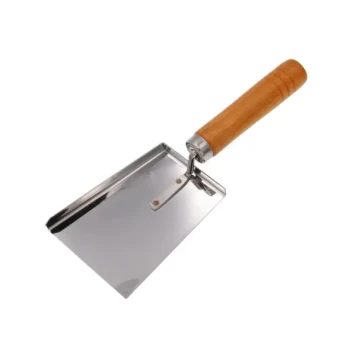
- Stainless Steel Pollen Shovel with Wooden Handle
- Ergonomic Plastic Frame Spacer Tool for Rapid Hive Management Beekeeping
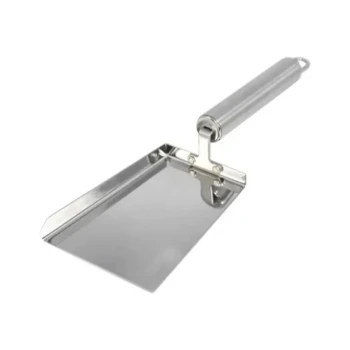
- Heavy-Duty Ergonomic Stainless Steel Pollen Shovel
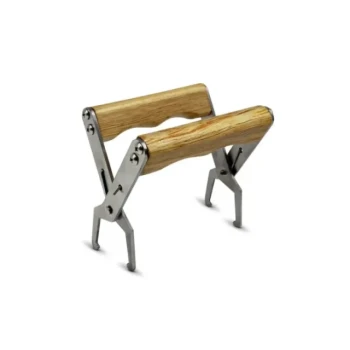
- Multi-Function Plier-Style Frame Grip Hive Tool
- Professional Frame Comb Fork and Lifter for Efficient Handling
People Also Ask
- How do bee pollen collection tools affect the quality of bee pollen used in functional dairy ice cream production?
- Why should commercial apiaries focus on the collection of diversified bee products? Maximize Your Hive’s Profit Potential
- How does a specialized pollen collector facilitate the harvesting of diverse bee products? Automate High-Value Yields
- What is the impact of pollen collectors and associated equipment on the cost structure of pollen production? Maximize ROI
- What is the technical significance of using specialized cutting tools for propolis? Master Precision Pollen Harvesting