The international standard for marking queen bees relies on a five-year repeating color rotation determined by the last digit of the year the queen was born. The specific sequence is White (years ending in 1 or 6), Yellow (2 or 7), Red (3 or 8), Green (4 or 9), and Blue (5 or 0).
By marking a queen, you create an immediate, visual record of her age, which is vital for managing hive productivity and making replacement decisions. A common mnemonic to remember the sequence is "What, You Raise Green Bees?" (White, Yellow, Red, Green, Blue).
The Mechanics of the Color Code
The Five-Year Cycle
The system is designed to repeat every five years. Because queens rarely live longer than three to four years, there is virtually no risk of confusing a young queen with a very old one of the same color.
The current rotation is defined as follows:
- White: Years ending in 1 and 6 (e.g., 2021, 2026)
- Yellow: Years ending in 2 and 7 (e.g., 2022, 2027)
- Red: Years ending in 3 and 8 (e.g., 2023, 2028)
- Green: Years ending in 4 and 9 (e.g., 2024, 2029)
- Blue: Years ending in 5 and 0 (e.g., 2025, 2030)
Remembering the Order
Memorizing the colors is easier with a simple phrase. The first letter of each word corresponds to the color in the sequence.
The standard mnemonic used by beekeepers is "What, You Raise Green Bees?" This helps ensure you always apply the correct color for the current season.
Tools and Application Standards
Industry Standard Markers
While the color code is universal, the tool used to apply it matters for the queen's safety. Water-based acrylic paint markers (such as Posca pens) are the industry standard.
These markers are preferred because they are non-toxic and possess low solvent content. High-solvent paints can harm the queen or overwhelm the colony with chemical scents.
Durability and Visibility
The paint used must be highly pigmented. This ensures the mark remains vibrant and easily spotting amidst thousands of worker bees.
When applied correctly, these water-based acrylics are durable enough to last the queen's entire productive lifespan.
Common Pitfalls and Safety
The Risk of Improper Application
The goal is a single, gentle touch on the thorax (the middle section). Using a marker with a soft tip helps prevent physical injury during application.
You must avoid getting paint on the queen's head (eyes/antennae), wings, or spiracles (breathing holes). Paint in these areas can disable or kill the queen.
Handling Stress
Catching and marking a queen induces stress. Beginners often squeeze too hard or take too long, which can damage the queen's reproductive organs.
If you are inexperienced, practice marking drones (male bees) first. They are larger, do not sting, and are less critical to the hive's immediate survival.
Making the Right Choice for Your Goal
Whether you are managing a small apiary or a commercial operation, adhering to this standard ensures your records are universally understood.
- If your primary focus is determining queen viability: Check the color against the current year to instantly calculate her age; queens older than two years often see a decline in laying patterns.
- If your primary focus is marking a new queen: Verify the current year's last digit and select the corresponding water-based acrylic marker (e.g., Green for 2024).
- If your primary focus is purchasing queens: Ensure the breeder follows the international standard so you do not introduce a queen with an ambiguous age history.
Use the "What, You Raise Green Bees?" mnemonic to ensure you never lose track of your hive's most critical asset.
Summary Table:
| Year Digit | Color | Mnemonic | Example Years |
|---|---|---|---|
| 1 or 6 | White | What | 2021, 2026 |
| 2 or 7 | Yellow | You | 2022, 2027 |
| 3 or 8 | Red | Raise | 2023, 2028 |
| 4 or 9 | Green | Green | 2024, 2029 |
| 5 or 0 | Blue | Bees? | 2025, 2030 |
Scale Your Apiary with HONESTBEE Precision Tools
Efficient hive management begins with the right equipment. At HONESTBEE, we specialize in supporting commercial apiaries and distributors with a comprehensive wholesale portfolio. From non-toxic marking tools and protective gear to industrial-grade honey-filling machines and hive-making hardware, we provide everything you need to optimize production.
Whether you are stocking essential industry consumables or upgrading your machinery, our team is ready to deliver high-quality beekeeping solutions tailored to your scale. Contact us today to discuss your wholesale requirements!
Related Products
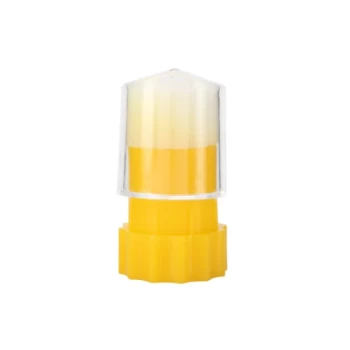
- One Hand Yellow Queen Marking Catcher Tube Cage Beekeeper Tool Accessory for Queen Bee
- Plastic Long Marker Device for Catching and Marking Bees Queen Bee Marking Tube and Cage
- Queen Bee Marking Pen POSCA Queen Marking Pens for Beekeeping Bee Markers
- Queen Bee Marking Pen UNI Medium Point for Queen and Bee Marking
- Queen Bee Marking Tube Cage Bottle Catcher Holder with Clear Plastic Plunger Marker
People Also Ask
- What tools are available to assist in safely marking a queen bee? Essential Gear for Professional Beekeepers
- What equipment is needed to mark a queen bee? A Simple 3-Tool Guide for Every Beekeeper
- Why are high-quality queen bee marking tools essential for pedigree tracking? Master Honey Bee Genetic Integrity
- What are the specific advantages of using international standard marking tools in queen bee production and management?
- What tools are recommended for marking a Queen bee? Ensure a Safe and Successful Mark