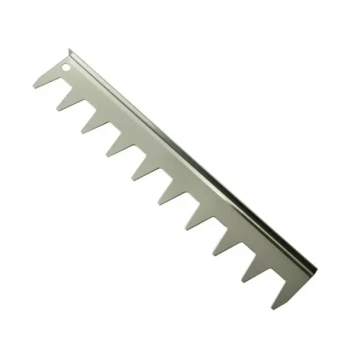
The Langstroth Beehive is a vertical, modular structure defined by its stackability and standardized components. At its simplest, it consists of rectangular boxes known as "supers" stacked on a bottom board, filled with movable frames for comb construction, and topped with a two-part cover system to protect the colony.
The core architectural principle of the Langstroth hive is vertical modularity. This design allows the beekeeper to expand the hive's volume upwards to accommodate colony growth and honey storage without disturbing the brood nest at the bottom.
The Foundation and Entry
The structural integrity of the hive begins at the base. These components control the colony's interaction with the outside environment.
The Hive Stand
Though not always strictly required, a stand is often the first component. It elevates the hive off the ground to protect the timber from moisture and the bees from ground-level pests.
The Bottom Board
This acts as the floor of the hive. It provides the primary landing platform for bee entry and exit. As noted in technical specifications, this can be made of solid wood or screened mesh to assist with ventilation and climate control.
The Entrance Reducer
Placed at the opening of the bottom board, this wooden strip creates a smaller opening. It allows the beekeeper to regulate airflow and helps the colony defend against robbers or pests by narrowing the entry point.
The Vertical Column (Boxes and Supers)
Resting on the bottom board is the "middle section," composed of stackable boxes. This is where the colony lives and stores resources.
The Brood Box (Hive Body)
The deepest boxes are placed at the bottom of the stack. This area is reserved for the queen to lay eggs and for the colony to raise new bees.
The Queen Excluder
Situated directly above the brood box, this is a specialized grid. Its spacing allows worker bees to pass through to the upper levels but is too narrow for the larger queen, keeping her confined to the brood area.
Honey Supers
These are the upper boxes stacked above the excluder. Because the queen cannot reach this area, these supers are used exclusively for storing surplus honey, which ensures a clean harvest for the beekeeper.
Internal Architecture: The Frames
Inside every box—whether a brood box or a honey super—is the most critical internal component: the frame.
Suspended Structure
Frames are rectangular structures consisting of a top bar, bottom bar, and two end bars. They hang on ledges inside the boxes, creating a precise "bee space" that prevents the bees from gluing components together.
Foundation and Comb
Within the frame, a sheet of beeswax or plastic foundation is often installed. This provides a template for the bees to draw out their wax comb in an orderly, manageable pattern.
The Roofing System
The top section of the hive is designed to regulate internal temperature and protect against weather.
The Inner Cover
This sits directly on top of the highest box. Its primary function is to prevent bees from attaching the roof to the frames with propolis (bee glue), ensuring the outer cover remains easy to remove.
The Telescoping Outer Cover
This acts as the roof. It fits over the inner cover and extends down the sides of the top box (telescoping) to ensure rain runs off the hive rather than seeping inside.
Understanding the Trade-offs
While the Langstroth system is the industry standard, its structural configuration presents specific considerations.
Component Dependency
The system relies heavily on the precision of its parts. If a frame or box does not meet standard dimensions (such as the 17 5/8 inch frame length), the "bee space" is violated, leading bees to fuse parts together with burr comb.
Weight Management
The vertical stacking configuration means that to inspect the brood nest at the bottom, you must physically lift and remove every heavy honey super stacked above it.
Configuring Your Setup
The modular nature of the Langstroth hive allows for different configurations depending on your immediate goals.
- If your primary focus is starting a new colony: You will need a "single deep" configuration consisting of a bottom board, one brood box with frames, an inner cover, and a top feeder (often integrated under the roof).
- If your primary focus is honey production: You must add a queen excluder and at least two medium or shallow "supers" above the brood box to provide dedicated space for honey storage.
The Langstroth hive remains the standard because its interchangeable, stackable parts allow the physical structure of the hive to adapt dynamically to the biological needs of the colony.
Summary Table:
| Component | Role | Primary Function |
|---|---|---|
| Bottom Board | Foundation | Provides the hive floor and landing platform |
| Brood Box | Living Quarters | Lower deep boxes for egg-laying and bee development |
| Honey Supers | Storage | Upper boxes for surplus honey collection |
| Movable Frames | Internal Support | Allows bees to build comb in a manageable, removable way |
| Queen Excluder | Control Grid | Restricts the queen to the brood nest while allowing workers through |
| Telescoping Cover | Roof | Protects the colony from weather and regulates temperature |
Scale Your Apiary Operations with HONESTBEE
Maximize your honey production and hive efficiency with HONESTBEE’s comprehensive range of Langstroth solutions. As a dedicated partner to commercial apiaries and global distributors, we provide everything from high-precision hive-making machinery and honey-filling equipment to a full spectrum of standardized beekeeping tools and essential industry consumables.
Whether you are stocking up on wholesale hardware or expanding your portfolio with honey-themed cultural merchandise, our expertise ensures your business stays productive and profitable.
Ready to elevate your wholesale sourcing? Contact HONESTBEE Today
Related Products
- Australian Langstroth Beehive Boxes for Beekeeping Wholesales
- High-Performance Langstroth Bee Hives for Global Professional Beekeeping
- Langstroth Honey Bee Box Hive Boxes for Different Depths
- Plastic Bee Hive Stand for Beekeeping
- Solid Bottom Board Australian Pine Wood Langstroth Bottom Board for Wholesale
People Also Ask
- What are the differences between the three standard depths of Langstroth boxes? Choose the Best Size for Your Apiary
- What are the primary advantages of using standardized Langstroth boxes? Scale Your Commercial Beekeeping Operation
- What role do standardized Langstroth boxes play in commercial apiary management and honey bee research? | HONESTBEE Guide
- How many beehive boxes are needed when starting a new hive? A Guide to Proper Hive Setup
- What are the disadvantages of using a combination of deep and medium boxes? Avoid Costly Incompatibility Issues