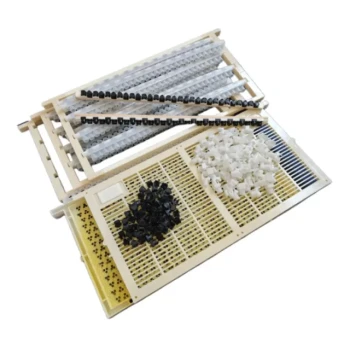
The technical procedure for extracting Royal Jelly centers on the precise harvesting of surplus material using non-destructive suction methods. The process requires the careful removal of the developing bee larva from the queen cup, followed immediately by the use of a syringe to extract and collect the remaining gelatinous substance.
Core Takeaway Extraction is a resource-sensitive procedure that should only be performed when a confirmed surplus exists within the colony. The technical priority is the preservation of the jelly for future hive maintenance, achieved through delicate larval removal and vacuum-based collection.
Assessing Colony Readiness
Identifying Surplus
The first technical requirement is establishing that the hive has produced more Royal Jelly than is immediately required for queen development.
Extraction must only occur when a surplus is available.
Proceeding without this confirmation risks depleting the colony's essential nutritional reserves, which are vital for maintaining overall hive health.
The Extraction Process
Step 1: Delicately Remove the Larva
Before the jelly can be accessed, the developing bee larva situated inside the queen cup must be removed.
This step requires extreme precision and a delicate tactile feel.
While specific grafting tools are often used to insert larvae, the same principle of minimizing physical damage applies here; the goal is to clear the cup without contaminating the jelly with larval fluids.
Step 2: Collection via Aspiration
Once the cup is clear of the larva, the actual extraction of the Royal Jelly begins.
A syringe is the primary tool used to collect the substance from the base of the queen cup.
Using a syringe allows the operator to aspirate the jelly cleanly, minimizing waste and avoiding the inclusion of wax or debris from the comb walls.
Step 3: Storage for Hive Health
The extracted Royal Jelly is typically not processed for immediate consumption but rather stored for reintroduction to the hive.
Beekeepers often save this substance to support hive health during periods of scarcity or stress.
Proper storage immediately after syringe collection is critical to maintain the bioactive properties of the jelly.
Common Pitfalls and Trade-offs
Risk of Colony Depletion
The most significant technical risk is over-extraction.
Removing Royal Jelly without a verified surplus can stunt the development of new queens and weaken the colony's regenerative capabilities.
Precision vs. Speed
The process is labor-intensive because it requires the individual handling of each queen cup.
Rushing the removal of larvae can lead to contamination of the jelly or damage to the cup structure, rendering the harvest unusable.
High precision is required to ensure the purity of the collected material.
Making the Right Choice for Your Goal
Whether you are managing a single hive or a small apiary, your approach to extraction should align with your long-term objectives.
- If your primary focus is Colony Sustainability: Prioritize the "Surplus Only" rule and immediately store the extracted jelly to supplement the hive during future dearths.
- If your primary focus is Purity of Harvest: Invest time in the larval removal stage to ensure the syringe collects only clean jelly, free from larval damage or organic debris.
Technical success in Royal Jelly extraction is defined not by the volume harvested, but by the precision of the removal and the sustained health of the hive.
Summary Table:
| Stage | Key Action | Technical Priority | Tool Used |
|---|---|---|---|
| Assessment | Identify Surplus | Colony health preservation | Observation |
| Preparation | Larval Removal | Precision & zero contamination | Grafting tool/Forceps |
| Extraction | Aspiration | Minimizing waste & debris | Syringe/Vacuum |
| Storage | Bioactive Preservation | Maintaining hive nutrient reserves | Sealed containers |
Scale Your Royal Jelly Production with HONESTBEE
At HONESTBEE, we specialize in empowering commercial apiaries and distributors with the professional tools needed for high-precision tasks like royal jelly extraction. From specialized queen rearing equipment to advanced honey-filling machines and hive-making hardware, we provide the full spectrum of beekeeping machinery and essential industry consumables.
Whether you are looking to optimize your harvest purity or scale your wholesale operations, our comprehensive portfolio is designed to enhance your efficiency and output.
Ready to elevate your beekeeping operations? Contact us today to discover how our premium equipment and global distribution expertise can grow your business.
Related Products
- No Grafting Queen Rearing Kit: System for Royal Jelly Production and Queen Rearing
- Plastic Chinese Queen Grafting Tool for Bee Queen Rearing
- Professional Plastic Honey Dipper for Easy Honey Drizzling
People Also Ask
- What is the primary function of a queen rearing kit? Eliminate Manual Grafting for Superior Bee Breeding
- How do specialized queen rearing kits and queen management tools improve the success rate of bee colony expansion?
- What are some alternative methods to grafting for queen cell production? Discover Graft-Free Queen Rearing Systems
- Are queen rearing systems generally suitable for all honeybee species? Master Efficient Breeding Methods
- Are queen rearing systems suitable for all beekeepers? Modern Tools for Every Experience Level