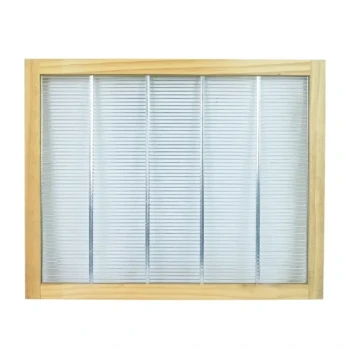
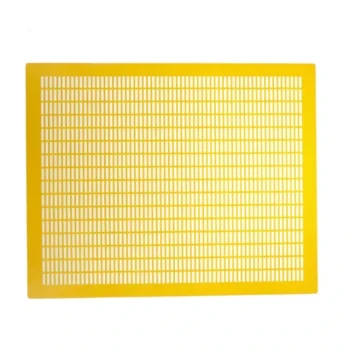
The primary technical purpose of a Queen Grid in a laboratory observation hive is to act as a selective physical filter that partitions the colony's living space.
This device creates a designated boundary between the brood chamber and the food storage resources. By sizing the grid openings precisely, it allows smaller worker bees to traverse the hive freely while physically restricting the larger queen to the lower section.
Core Takeaway The Queen Grid is an essential control mechanism for experimental consistency; it forces the queen to lay eggs exclusively in the visible brood area for uninterrupted camera monitoring while simultaneously protecting automated feeding equipment in the upper hive from queen interference.
Optimizing Data Acquisition
Centralizing the Brood for Optical Sensors
For observation hives relying on computer vision or continuous video recording, the location of biological activity is critical.
The Queen Grid confines the queen to the lower brood area.
This ensures that all stages of egg-laying and larval development occur strictly within the effective field of view of the monitoring cameras.
Enhancing Sensor Validity
By locking the brood into a specific zone, the grid also stabilizes the variables for other environmental sensors.
High-sensitivity temperature sensors are typically positioned near the brood to monitor the colony's thermal regulation and health status.
The grid ensures the brood—and the heat they generate—remains adjacent to these fixed sensors, guaranteeing that data regarding thermal balance and the Health Status Index (HSI) is accurate and consistent.
Protecting Hive Infrastructure
Safeguarding Automated Systems
Modern laboratory hives often utilize automated feeding devices located at the top of the structure.
If the queen were allowed to roam freely, she might attempt to lay eggs near or inside these mechanisms, potentially causing clogs or mechanical failure.
The Queen Grid creates a physical "exclusion zone" that preserves the integrity of these upper-level systems.
Separating Functional Zones
The grid enforces a standardized vertical organization within the hive.
It artificially replicates a natural tendency by keeping food storage (honey/syrup) in the upper compartment and brood rearing in the lower compartment.
This separation simplifies colony management and prevents the mixing of biological stages with food stores, which could complicate nutritional analysis.
Understanding the Trade-offs
Artificial Constraints vs. Natural Behavior
While the Queen Grid is vital for data integrity, it imposes an artificial physical constraint on the colony.
In a wild setting, a queen moves dynamically based on temperature and space availability; the grid overrides this natural expansion logic to prioritize experimental observation.
Maintenance Considerations
The grid is a physical barrier that must be maintained.
Because it restricts the largest bee in the colony, it creates a choke point that must remain free of burr comb or propolis to ensure worker bees can still traffic food effectively between the upper and lower sections.
Making the Right Choice for Your Goal
The decision to install a Queen Grid depends on the specific data fidelity required by your experiment.
- If your primary focus is Visual or Thermal Data: Install the grid to lock the brood into the focal plane of your cameras and the detection radius of your temperature sensors.
- If your primary focus is Automation Reliability: Use the grid to ensure the queen cannot physically access or disrupt delicate feeding machinery in the upper hive.
Ultimately, the Queen Grid transforms a chaotic biological environment into a structured, observable system suitable for rigorous scientific study.
Summary Table:
| Feature | Technical Purpose | Benefit to Research |
|---|---|---|
| Spatial Partitioning | Restricts the Queen to the lower brood chamber | Ensures brood activity remains in the camera's field of view |
| Sensor Alignment | Keeps brood near fixed thermal/environmental sensors | Guarantees consistent and accurate Health Status Index (HSI) data |
| System Protection | Creates an exclusion zone for upper-level machinery | Prevents mechanical clogs in automated feeding and monitoring systems |
| Zone Organization | Separates food storage from brood rearing | Standardizes hive structure for easier nutritional and biological analysis |
Elevate Your Apiary Operations with HONESTBEE
Precision is the backbone of successful beekeeping, whether in a high-tech laboratory or a commercial honey farm. HONESTBEE is dedicated to supporting commercial apiaries and distributors with a comprehensive range of professional-grade solutions. From specialized hive-making and honey-filling machinery to high-durability beekeeping tools and essential consumables, we provide the hardware you need to scale your business.
Whether you are looking to source wholesale equipment or enhance your facility with cutting-edge honey-themed cultural merchandise, our team is ready to deliver quality and value to your doorstep. Contact us today to discuss your inventory needs and discover how HONESTBEE can streamline your production!
References
- Paul Siefert, Bernd Grünewald. Chronic within-hive video recordings detect altered nursing behaviour and retarded larval development of neonicotinoid treated honey bees. DOI: 10.1038/s41598-020-65425-y
This article is also based on technical information from HonestBee Knowledge Base .
Related Products
- JZBZ Langstroth Queen Rearing Frame for Beekeeping
- Premium Nicot Style Cell Bar Holder and Queen Cell Cup Holder System
- Premium Wood Framed Metal Wire Queen Bee Excluder
- Professional Queen Bee Introduction and Transport Cage
- Hexagonal Direct Comb Introduction Queen Bee Cage
People Also Ask
- Why use finishing colonies for queen cell capping? Secrets to Superior Queen Quality and Performance
- How do queen rearing frames and grafting needles function together? Master the Doolittle Method for High-Quality Queens
- What is the purpose of queen rearing frames? Master Controlled Queen Production for Your Apiary
- What are the functions of queen rearing frames and artificial queen cells? Master Bee Genetic Improvement
- What roles do professional queen rearing frames and artificial queen cells play? Scaling Your Queen Bee Production