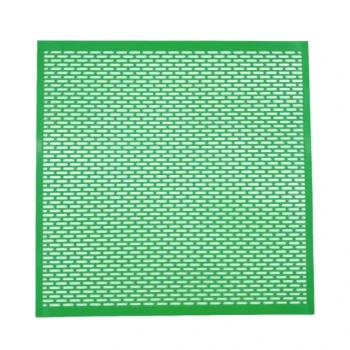
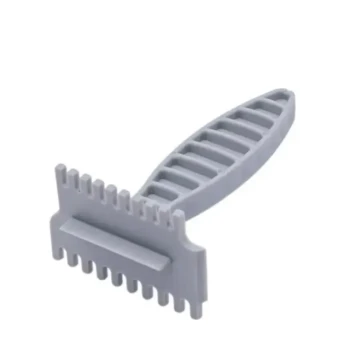
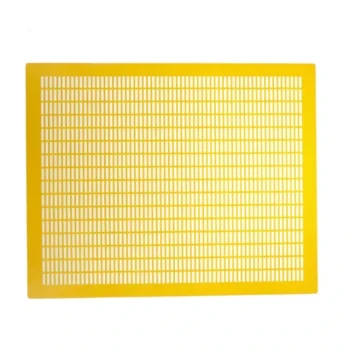
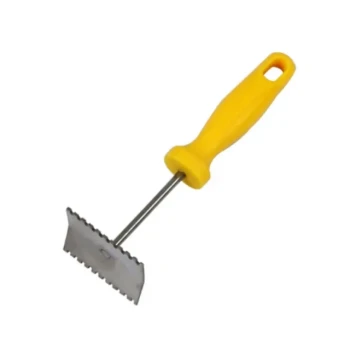
A queen excluder serves as a precise mechanical filter within a beehive. It acts as a physical barrier with gaps engineered to specific dimensions—large enough for smaller worker bees to traverse freely, yet too narrow for the larger abdomen of the queen bee to pass. This allows beekeepers to limit the queen's movement to specific compartments, strictly separating the colony's brood rearing from its honey storage.
The core function of a queen excluder is to segregate the hive into reproductive zones and resource zones. By preventing the queen from entering honey supers, the device ensures that harvested frames contain only pure honey and honeycomb, completely free of eggs or larvae.
The Mechanics of Exclusion
Precision Gap Engineering
The technical design of the excluder relies on the size differential between castes of bees. The gaps are manufactured to precise tolerances that accommodate the thorax of a worker bee while physically blocking the larger queen.
Spatial Compartmentalization
By installing this barrier above the brood box (the bottom section), the queen is confined to the lower level. This dictates exactly where the colony can reproduce, effectively zoning the hive structure.
Technical Benefits for Production
Ensuring Honey Purity
The primary purpose, as noted in standard apiculture guidelines, is to prevent the queen from laying eggs in the honey supers. Without an excluder, a queen may move upward and deposit brood in frames intended for harvest, contaminating the honey crop with larvae.
Increasing Harvest Efficiency
When brood is present in honey frames, extraction becomes difficult and messy. Excluding the queen ensures that the upper frames contain only wax and honey, leading to a faster harvest time and significantly cleaner extraction processes.
Higher Quality Wax
Frames protected by an excluder often produce lighter-colored wax comb. Because these frames are not darkened by the traffic and waste associated with brood rearing, the resulting wax can often fetch a higher market price.
Colony Management Advantages
Resource Allocation
Using an excluder helps manage how the colony spends its energy. By limiting the area available for egg-laying, the colony is forced to allocate remaining space and energy toward honey storage rather than excessive reproduction in the upper supers.
Simplified Queen Location
Confining the queen to the lower brood chambers reduces the search area for the beekeeper. When inspections are necessary, the queen is significantly easier to find because she is physically restricted to a smaller portion of the hive.
Understanding the Trade-offs
Impact on Colony Mobility
While excluders optimize honey production, they restrict the queen's natural instinct to roam and lay eggs freely. In phases where robust colony development is the goal, such as with a newly introduced queen, the barrier can hinder the expansion of the brood pattern.
The "Honey Barrier" Risk
If not managed correctly, excluders can sometimes act as a psychological barrier for worker bees, who may be reluctant to cross it to store honey. This can occasionally lead to congestion in the brood nest if workers do not move up to the supers readily.
Making the Right Choice for Your Goal
Whether you employ a queen excluder depends entirely on your current objective for the hive.
- If your primary focus is Commercial Honey Production: Use an excluder to ensure clean, brood-free supers and to maximize the speed and purity of your harvest.
- If your primary focus is Colony Expansion: Consider removing the excluder to allow the queen unrestricted movement, promoting a larger brood pattern and faster population growth.
Strategic use of the queen excluder allows you to dictate the biological focus of the hive, shifting the balance between reproduction and production.
Summary Table:
| Feature | Technical Function | Benefit to Beekeeper |
|---|---|---|
| Precision Gaps | Filters bees by size (allows workers, blocks queen) | Ensures brood-free honey supers |
| Zoning | Segregates reproduction from resource storage | Faster, cleaner honey extraction |
| Spatial Control | Confines queen to lower brood chambers | Simplifies finding the queen during inspections |
| Wax Protection | Prevents brood traffic in upper frames | Produces higher-quality, lighter-colored wax |
Elevate Your Apiary's Productivity with HONESTBEE
Maximize your commercial honey yield and streamline your operations with professional-grade equipment from HONESTBEE. As a premier partner for commercial apiaries and global distributors, we provide the precision-engineered tools necessary for high-volume success.
From high-tolerance queen excluders and hive-making machinery to advanced honey-filling systems and cultural merchandise, our comprehensive wholesale portfolio covers every facet of the beekeeping industry.
Ready to scale your production? Contact us today to discover how our specialized hardware and essential consumables can enhance your harvest efficiency and product quality.
References
- Simone Athayde, Wemerson Chimello Ballester. Engaging indigenous and academic knowledge on bees in the Amazon: implications for environmental management and transdisciplinary research. DOI: 10.1186/s13002-016-0093-z
This article is also based on technical information from HonestBee Knowledge Base .
Related Products
- High Performance Plastic Queen Excluder for Beekeeping and Apiary Management
- Lightweight Durable Plastic Queen Excluder Scraper for Beekeeping
- Premium Wood Framed Metal Wire Queen Bee Excluder
- Professional Plastic Queen Excluder for Modern Beekeeping
- Metal Queen Bee Excluder for Beekeeping
People Also Ask
- What are the characteristics of a plastic queen excluder? Key Benefits for Cost-Effective Beekeeping
- What are the operational and cost advantages of using plastic queen excluders over metal or wire excluders in commercial hive management? Discover how they reduce labor, prevent wing damage, and lower total costs.
- What types of queen excluders are available for beekeepers? Choose the Right Tool for Your Hive
- Why are standardized hive frames and queen excluders essential for maintaining honey purity and quality? Scale Your Purity
- Do plastic queen excluders work? A Cost-Effective Solution for Modern Apiaries