Queen excluders serve as a fundamental control mechanism in honey bee research by standardizing biological variables. By physically restricting the queen to specific frames, researchers force her to lay eggs within a concentrated area and a narrow window of time. This results in a cohort of larvae that are effectively the same age, allowing for precise measurement of mite predation without the interference of developmental variables.
Core Takeaway In experimental settings, the queen excluder is not just a barrier; it is a synchronization tool. It guarantees the production of uniform-age larvae, which allows researchers to isolate mite predation as the single independent variable and eliminate bias caused by natural variations in brood development.
Establishing Experimental Control
The Mechanism of Restriction
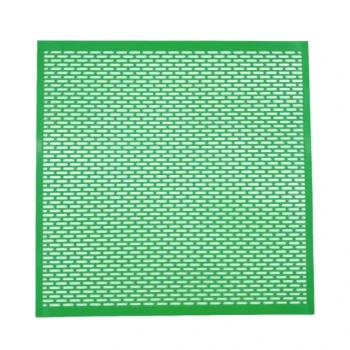
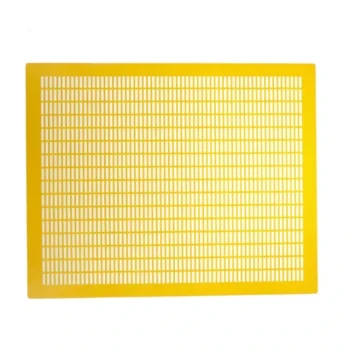
The queen excluder operates on a simple physical principle based on size. It creates a barrier that is too small for the queen to pass through but large enough for worker bees to traverse freely.
Maintaining Colony Support
While the queen is confined, the flow of resources remains uninterrupted. Worker bees can still enter the restricted area to feed and care for the larvae. This ensures that the experimental brood remains healthy and viable despite the artificial confinement of the queen.
Forced Synchronization
By confining the queen to specific empty frames, researchers dictate exactly where and when eggs are laid. Instead of a natural, scattered laying pattern, the queen is forced to utilize the available cells immediately. This results in a "batch" of eggs laid almost simultaneously.
The Critical Role in Mite Impact Analysis
Creating Uniform Cohorts
The primary scientific value of the excluder in this context is the production of larvae of uniform age. In a standard hive, larvae of various developmental stages are mixed together. The excluder removes this heterogeneity.
Quantifying Specific Risks
Predatory mites may impact honey bees differently depending on the larva's developmental stage. Uniform cohorts allow researchers to introduce mites to larvae that are all at the exact same point in their lifecycle. This makes it possible to quantify predation risk specifically for that developmental window.
Eliminating Experimental Bias
If larvae of different ages were present, it would be impossible to tell if a larva survived because of its age or its genetic resilience. Standardizing age removes this confounding variable. Any observed mortality or damage can be confidently attributed to the mites, ensuring the data is statistically valid.
Understanding the Trade-offs
Artificial Density
Using an excluder forces a high density of brood in a specific location, which differs from natural hive organization. While necessary for control, researchers must acknowledge that this is a manipulated environment rather than a purely natural observation.
Stress Factors
Confining the queen can sometimes induce stress or alter the behavior of the colony. Researchers must carefully monitor the setup to ensure that the results reflect mite predation rather than the side effects of hive manipulation or restricted movement.
Designing Your Experiment for Accuracy
To effectively evaluate the impact of predatory mites, the use of queen excluders must be intentional and well-timed.
- If your primary focus is quantifying mortality rates: Use the excluder to generate a synchronized brood batch, ensuring that all subjects are exposed to mites at the exact same vulnerability level.
- If your primary focus is observing natural hive dynamics: Acknowledge that the excluder introduces artificial constraints and may not perfectly reflect wild colony behavior.
- If your primary focus is preventing independent variable errors: Rely on the excluder to eliminate age variance, which is the most common source of statistical noise in brood experiments.
Precision in biological research begins with controlling the chaotic variables of nature.
Summary Table:
| Experimental Component | Role in Research Design | Impact on Mite Analysis |
|---|---|---|
| Physical Barrier | Restricts queen to specific frames | Ensures a concentrated area for egg-laying |
| Worker Accessibility | Allows nurse bees to tend larvae | Maintains brood health and experimental viability |
| Synchronization | Forced laying within narrow windows | Produces uniform-age cohorts to remove age bias |
| Variable Control | Eliminates developmental heterogeneity | Attributes larval mortality directly to mite predation |
Elevate Your Beekeeping Operations with HONESTBEE
Precision in research and commercial productivity requires the right tools. HONESTBEE caters to commercial apiaries and distributors with a comprehensive wholesale offering designed for durability and performance.
Whether you are conducting precise mite impact studies or scaling a commercial honey operation, we supply the full spectrum of equipment you need, including:
- Precision Hardware: High-quality queen excluders, hive-making machinery, and honey-filling systems.
- Essential Consumables: A wide array of industry-standard supplies for daily apiary management.
- Cultural Merchandise: Unique honey-themed products to expand your retail portfolio.
Partner with a supplier that understands the science of beekeeping. Contact HONESTBEE today to discuss our wholesale solutions and how we can support your business growth.
References
- Sabrina Rondeau, Valérie Fournier. Risk assessment and predation potential of Stratiolaelaps scimitus (Acari: Laelapidae) to control Varroa destructor (Acari: Varroidae) in honey bees. DOI: 10.1371/journal.pone.0208812
This article is also based on technical information from HonestBee Knowledge Base .
Related Products
- High Performance Plastic Queen Excluder for Beekeeping and Apiary Management
- Lightweight Durable Plastic Queen Excluder Scraper for Beekeeping
- Premium Wood Framed Metal Wire Queen Bee Excluder
- Professional Plastic Queen Excluder for Modern Beekeeping
- Metal Queen Bee Excluder for Beekeeping
People Also Ask
- What are the characteristics of a plastic queen excluder? Key Benefits for Cost-Effective Beekeeping
- What are the operational and cost advantages of using plastic queen excluders over metal or wire excluders in commercial hive management? Discover how they reduce labor, prevent wing damage, and lower total costs.
- What types of queen excluders are available for beekeepers? Choose the Right Tool for Your Hive
- Why are standardized hive frames and queen excluders essential for maintaining honey purity and quality? Scale Your Purity
- Do plastic queen excluders work? A Cost-Effective Solution for Modern Apiaries