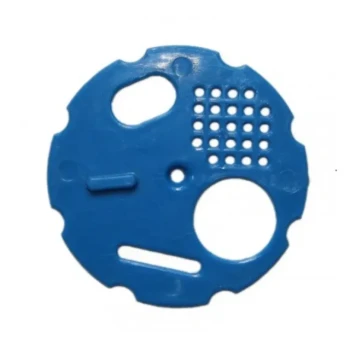
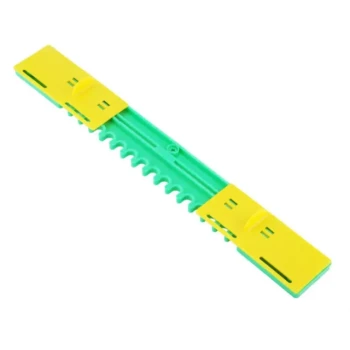
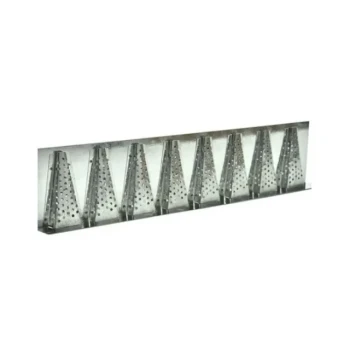
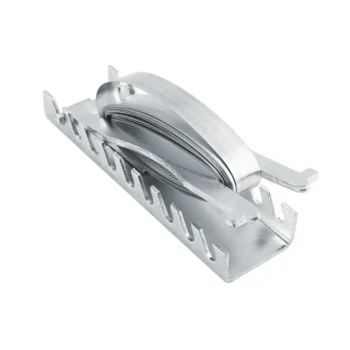
The technical significance of integrating entrance-sealing structures into hive hardware is to provide a mechanical interception mechanism that honeybees cannot reliably construct on their own against this specific predator. By artificially narrowing the hive entrance, these designs simulate the natural use of propolis to restrict access, effectively blocking the Large Hive Beetle from entering. This physical exclusion is vital for disrupting the beetle's lifecycle, specifically preventing them from mating and reproducing within the safety of the hive.
By acting as a surrogate for natural defensive behaviors, these structures compensate for the honeybee’s lack of innate defenses against the Large Hive Beetle, physically preventing the infestation of vulnerable colonies.
The Mechanics of Exclusion
Simulating Natural Defense
Honeybees naturally utilize propolis (a resinous mixture) to seal cracks and narrow the entrance of their hives to protect against intruders.
However, colonies—especially those that are weaker or under stress—may fail to construct these defenses quickly enough.
Integrated hardware structures replicate this biological behavior artificially, ensuring the entrance is permanently restricted to a size that is defensible.
Disruption of the Reproductive Cycle
The primary technical goal of this hardware is not just to keep a single beetle out, but to stop the reproductive cycle before it begins.
By blocking the entry paths, the hardware reduces the probability of adult beetles meeting and mating inside the hive body.
Without access to the hive interior, the beetles cannot lay eggs, thereby preventing the population explosion that typically leads to colony collapse.
Addressing Biological Vulnerabilities
Compensating for Evolutionary Gaps
Honeybees generally lack effective natural defenses or aggressive behaviors specifically targeted at the Large Hive Beetle.
Because the bees cannot physically remove or kill these armored intruders efficiently, the colony relies on mechanical interception at the perimeter.
The entrance-sealing structure serves as this critical physical barrier, doing the work the bees biologically cannot.
Protecting Vital Resources
Once inside, Large Hive Beetles target the colony's most critical assets: bee larvae and food stores.
The hardware defense is designed to create a secure perimeter around these resources.
This is particularly crucial for maintaining the viability of the colony, as the predation on larvae directly impacts the workforce renewal.
Supporting Weaker Colonies
Strong colonies may manage minor intrusions, but weaker colonies are highly susceptible to being overrun.
In these cases, the ratio of guard bees to the size of the entrance is often insufficient for effective defense.
Narrowing the entrance via hardware artificially balances this ratio, giving a smaller population a manageable area to defend.
Understanding the Limitations
Dependence on Mechanical Precision
While effective, these structures function purely as mechanical barriers.
They do not chemically repel the beetles or treat an existing infestation already present within the hive.
Success relies entirely on the physical integrity of the seal; any gaps or misalignment in the hardware can render the defense useless.
Making the Right Choice for Your Goal
To effectively utilize entrance-sealing structures, assess the current state of your apiary and the prevalence of beetle threats.
- If your primary focus is preventing initial infestation: Prioritize hardware that permanently narrows the entrance to simulate a propolis wall, ensuring adult beetles cannot physically enter to mate.
- If your primary focus is supporting a weak colony: Install barriers immediately to artificially boost the colony's defensive capability and protect larvae and food stores from predation.
By integrating these structures, you convert a biological vulnerability into a managed, mechanical strength.
Summary Table:
| Feature | Technical Significance | Primary Benefit |
|---|---|---|
| Mechanical Interception | Replicates natural propolis sealing | Blocks physical entry of adult beetles |
| Cycle Disruption | Prevents indoor mating and egg-laying | Stops population explosions and hive collapse |
| Evolutionary Support | Compensates for lack of innate bee defenses | Provides protection bees cannot build alone |
| Resource Security | Creates a perimeter around larvae/food | Preserves colony workforce and stores |
| Colony Balancing | Artificially narrows the entrance area | Enables weak colonies to defend the hive |
Secure Your Apiary with Professional-Grade Hardware
At HONESTBEE, we understand that protecting your colonies from the Large Hive Beetle requires more than just biological luck—it requires precision engineering. As a dedicated partner to commercial apiaries and distributors, we provide a comprehensive wholesale range of beekeeping tools and hive-making machinery designed to fortify your operations.
From advanced entrance-sealing hardware to honey-filling machines and essential industry consumables, our portfolio empowers you to convert biological vulnerabilities into mechanical strengths. Contact us today to discover how our wholesale solutions and technical expertise can enhance your hive productivity and safeguard your investment.
References
- Hossam F. Abou‐Shaara, Sulaiman Ali Alharbi. Modeling the Invasion of the Large Hive Beetle, Oplostomusfuligineus, into North Africa and South Europe under a Changing Climate. DOI: 10.3390/insects12040275
This article is also based on technical information from HonestBee Knowledge Base .
Related Products
- Multi-Functional Rotary Hive Entrance Disc for Beekeeping
- Beehive Entrance Discs Plastic Bee Entrance Disc for Bee Hives
- Steel Round Disc Entrance Reducer for Flexzion Bee Hive Nuc Box Gate
- Professional Hive Front Entrance Bee Feeder
- Beehive Entrance Reducer Guardian Metal Hive Entrance for Bees
People Also Ask
- What are the main features of the steel top entrance disc for hives? Master Hive Access Control
- What is the purpose of the steel entrance disc? Master Hive Traffic Control & Security
- What role does the size of the entrance play in hive ventilation? Master Beehive Climate Control
- What roles does the hive entrance (piquera) play in beehive management and colony health? Essential Guide for Pro Apiaries
- Where is the hive entrance typically located? Optimize Your Hive's Health and Honey Production