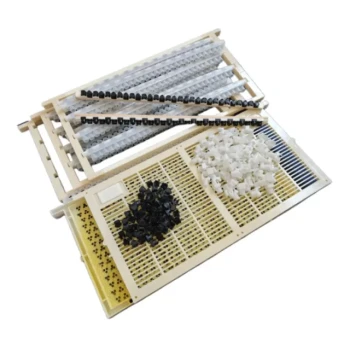
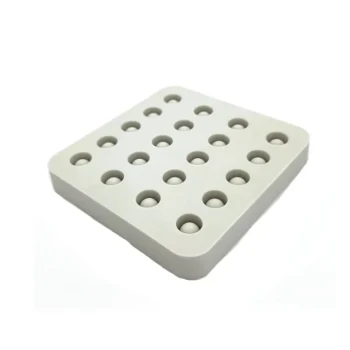
Modular non-grafting queen rearing kits provide a mechanized solution to the most delicate phase of apiary expansion. By confining the queen to a specialized plastic frame with removable cell bottoms, these systems allow eggs to transition naturally to larvae without direct human handling. This eliminates the need for manual grafting, significantly reducing larval damage and lowering the technical skill threshold required for successful queen production.
The Core Value: These kits decouple high-quality queen production from the need for advanced surgical dexterity. They offer a scalable path to genetic consistency by automating the egg-to-larva transfer, ensuring higher viability rates for operations that lack specialized grafting personnel.
The Mechanics of Risk Reduction
Eliminating the Grafting Bottleneck
The primary technical barrier in traditional queen rearing is "grafting"—the manual transfer of delicate larvae from worker cells to queen cups. Modular kits bypass this by allowing the queen to lay directly into removable cups within a plastic frame.
Preventing Physical Larval Damage
Manual grafting often results in unseen physical trauma to the larva, which can affect acceptance rates and future queen quality. Non-grafting systems facilitate a natural transition, where the larva remains untouched on its original bed of royal jelly during the transfer process.
Operational Efficiency and Labor
Democratizing Technical Expertise
Commercial operations traditionally rely on highly skilled breeders to maintain production schedules. Because these kits automate the transfer process, they are highly effective for operations where grafting expertise is limited, allowing general staff to manage queen rearing.
Streamlining Genetic Standardization
While professional Queen Rearing Centers use complex artificial techniques to mass-produce genetics, these kits allow smaller commercial units to replicate those results internally. By removing the variable of human handling error, beekeepers can more reliably propagate specific traits such as disease resistance and gentle temperament.
Understanding the Trade-offs
Equipment Management vs. Speed
While these kits reduce skill requirements, they introduce a new logistical layer: managing specific hardware. Unlike simple wax cups used in traditional grafting, the plastic components (frames, cups, covers) require cleaning, storage, and assembly.
Density Limitations
Supplementary data indicates that professional centers use multi-layered queen-rearing bars to maximize the use of vertical space and thermal gradients. Non-grafting kits are generally fixed-frame systems, which may offer lower larval density per hive compared to the high-volume output of professional grafting bars.
Making the Right Choice for Your Goal
To determine if modular non-grafting kits offer the right technical value for your apiary, consider your labor resources and production targets.
- If your primary focus is reducing labor costs: These kits allow you to utilize entry-level staff for queen production, removing the need to hire or train master grafters.
- If your primary focus is maximum volume: Traditional multi-layered bars may be superior, as they utilize vertical hive space more efficiently for mass production.
- If your primary focus is larval viability: The non-grafting kit is the optimal choice, as it ensures zero physical contact with the developing larva during the critical transfer phase.
For operations prioritizing consistency and ease of use over raw maximum density, these kits represent the most reliable technical investment.
Summary Table:
| Feature | Manual Grafting | Modular Non-Grafting Kit |
|---|---|---|
| Skill Requirement | High (Surgical Precision) | Low (General Staff) |
| Larval Handling | Direct Contact/High Risk | No Contact/Zero Damage |
| Genetic Consistency | Variable (Human Error) | High (Standardized) |
| Efficiency Focus | High-Volume Density | Larval Viability & Ease |
Scale Your Commercial Apiary with HONESTBEE
Maximize your honey production and genetic quality with high-performance beekeeping technology. HONESTBEE caters to commercial apiaries and distributors with a comprehensive wholesale offering. Whether you need specialized modular queen rearing kits, automated honey-filling machines, or heavy-duty hive-making machinery, we provide the full spectrum of equipment to streamline your operations.
Our value to you:
- Reduced Labor Costs: Solutions designed for general staff to achieve professional results.
- Bulk Supply Reliability: A complete portfolio of essential industry consumables and specialized hardware.
- Industry Expertise: From cultural merchandise to advanced machinery, we support every facet of your business growth.
Ready to upgrade your equipment? Contact us today to discuss wholesale solutions!
References
- Ralph Büchler, J. Wilde. Standard methods for rearing and selection of <i>Apis mellifera</i> queens 2.0. DOI: 10.1080/00218839.2023.2295180
This article is also based on technical information from HonestBee Knowledge Base .
Related Products
- No Grafting Queen Rearing Kit: System for Royal Jelly Production and Queen Rearing
- Jenter Queen Rearing Kit Complete Set for Bee Breeding
- Premium Nicot Style Queen Rearing Kit with Hair Roller Bee Cages
- Nicot Queen Rearing Kit for Beekeeping and Grafting in Nicot System
- Retractable Chinese Queen Rearing Grafting Tools Equipment
People Also Ask
- What is the primary function of a queen rearing kit? Eliminate Manual Grafting for Superior Bee Breeding
- How do specialized queen rearing kits and queen management tools improve the success rate of bee colony expansion?
- What are some alternative methods to grafting for queen cell production? Discover Graft-Free Queen Rearing Systems
- Are queen rearing systems generally suitable for all honeybee species? Master Efficient Breeding Methods
- Are queen rearing systems suitable for all beekeepers? Modern Tools for Every Experience Level