For high-volume honey extraction during peak floral bloom seasons, commercial operations should use an integrated processing line: bee-removal equipment, automatic uncapping machinery, large-capacity centrifugal extractors, fine filtration systems, settling or storage tanks, and automated filling equipment. This combination reduces harvest bottlenecks, lowers manual labor, protects honeycomb integrity, and supports hygienic bulk distribution.
The most effective setup is not a single machine but a coordinated workflow—from frame clearing and uncapping through extraction, filtration, settling, storage, and filling. Commercial-grade, scalable equipment is especially valuable when nectar flows create a sudden surge in honey production.
Build the Processing Line Around the Harvest Bottleneck
Start with efficient bee removal
High-volume operations should use forced-air bee blowers or comparable bee-removal tools to clear honey frames quickly before processing. Bee brushes, escape boards, and fume boards remain useful for smaller apiaries or situations requiring more controlled handling.
For migratory operations, protective wire mesh screens and nylon netting can help convert transport vehicles into a secure mobile honey house for on-site processing.
Use automatic uncapping equipment
An automatic uncapping machine is recommended when many frames must be processed in a short period. It provides more consistent removal of wax cappings than manual tools and helps prevent uncapping from becoming the main production constraint.
A heated electric uncapping knife, cappings scratcher, or uncapping roller can support smaller operations or serve as backup equipment. Wax cappings should be collected separately for beeswax recovery.
Select a large-capacity centrifugal extractor
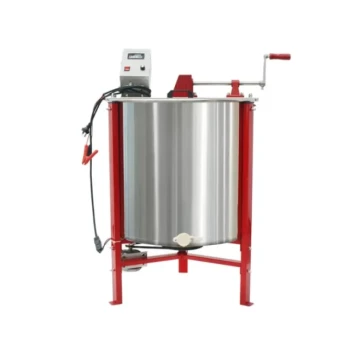
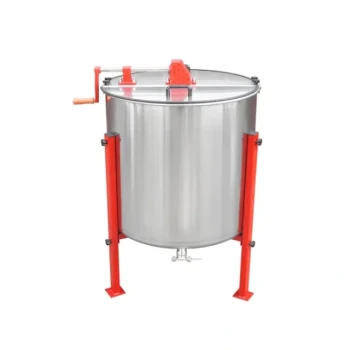
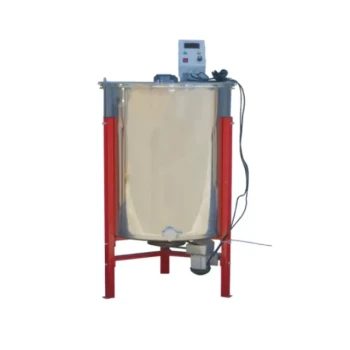
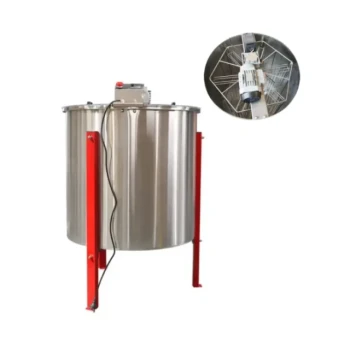
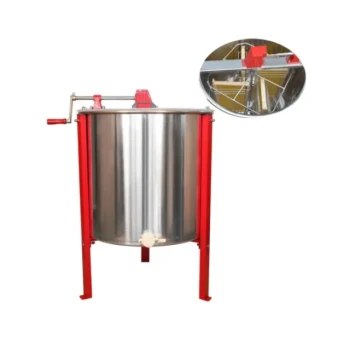
The core machine for high-volume extraction is a motorized or power-driven centrifugal honey extractor. Large-capacity radial extractors can process multiple frames quickly while reducing the physical effort required from operators.
Programmable speed controls are valuable because they allow operators to adjust extraction speed for different honey conditions and help minimize damage to the comb structure. Balanced frame loading is essential for stable operation.
Match Equipment Capacity to Peak-Season Demand
Prioritize throughput and frame capacity
During concentrated flowering periods, extraction equipment must handle the rate at which capped frames arrive from the apiary. A machine that is adequate during normal production may create delays when honey accumulation accelerates after major rainy periods.
Distributors and resellers should therefore offer equipment in different capacity levels, including manual, electric, and commercial power-driven models, so customers can scale equipment to apiary size and seasonal output.
Prepare for warm, fast-moving honey
Warm honey and elevated ambient temperatures generally allow honey to flow more quickly through the extractor discharge outlet. This makes properly sized discharge ports, collection buckets, and transfer containers important parts of the overall setup.
The extractor alone is not enough if honey backs up at the outlet, in the strainer, or in undersized storage containers.
Plan for mobile extraction
Migratory beekeepers may benefit from equipment configured for a mobile honey house. On-site extraction can reduce the need to transport large quantities of full honey frames and allows operations to process honey closer to the apiaries.
Transport vehicles should be fitted with appropriate protective screens and netting to help maintain a controlled work area and reduce the risk of attracting robber bees.
Use Filtration and Settling Equipment to Protect Quality
Install fine filtration after extraction
A fine mesh sieve or stainless-steel honey strainer should be positioned after extraction to remove wax particles, wood fragments, and other debris. Commercial operations may also use dedicated extractor filters or cheesecloth as part of the filtration process.
Filtration should remove unwanted material without unnecessarily disrupting the honey’s natural characteristics.
Include settling containers or tanks
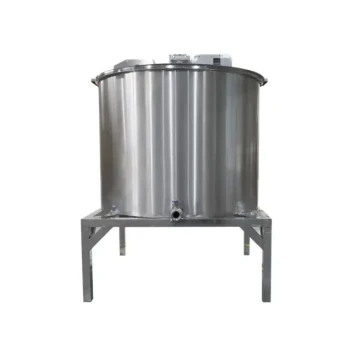
After filtration, honey should rest in settling containers or tanks so air bubbles can rise before final bottling. A settling stage helps produce a cleaner and more consistent packaged product.
Five-gallon bottling buckets with honey gates can support smaller batches, while larger storage or settling tanks are more appropriate for commercial volumes.
Use food-grade storage containers
Peak-season preparation should include enough food-grade containers for temporary storage, transport, and bulk distribution. Insufficient container capacity can interrupt extraction even when the machinery itself has adequate throughput.
Containers should be clean, suitable for honey contact, and compatible with the operation’s filling and logistics process.
Automate Filling for Consistent Packaging
Add automatic honey-filling machines
Automatic filling machines are recommended when the operation supplies retail units, wholesale orders, or repeated product batches. They improve packaging speed and provide more consistent filling than manual bottling.
For smaller or mixed-volume customers, bottling tanks with honey gates can provide a practical intermediate solution before a fully automated filling line is justified.
Support packaging with the right accessories
A complete filling setup may also require:
- Honey bottles and caps
- Labels
- Food-grade transfer containers
- Bottling tanks or buckets
- Honey gates
- Clean work surfaces and protective tarps
These supporting items are operational necessities, not merely accessories, when orders must be fulfilled rapidly during peak production.
Organize the Workflow for Continuous Processing
Follow a clear sequence
A practical high-volume workflow is:
- Remove bees from the honey frames.
- Uncap the frames using automatic or heated equipment.
- Collect wax cappings for beeswax recovery.
- Load and balance frames in the centrifugal extractor.
- Extract both sides of the frames as required by the extractor design.
- Filter the honey through a fine mesh or stainless-steel strainer.
- Settle the honey to allow air bubbles to escape.
- Fill and package the honey for storage or distribution.
- Return emptied frames to hives for bees to clean and reuse.
This sequence prevents one stage from overwhelming the next and makes it easier to identify capacity limitations.
Verify equipment before the bloom peak
Before the major harvest, operators should test extractors, uncapping tools, motors, discharge outlets, filters, and filling equipment. They should also confirm the availability of storage containers and packaging supplies.
For distributors, rapid response depends on maintaining a ready product portfolio rather than sourcing every component only after a customer’s harvest has begun.
Understanding the Trade-offs
Automation improves throughput but increases investment
Automatic uncapping, motorized extraction, and automatic filling can substantially reduce labor and improve processing speed. However, they require higher upfront investment, electrical infrastructure, maintenance, and operator training than manual equipment.
The appropriate decision depends on peak-season volume, labor availability, mobility requirements, and the customer’s expected return on equipment.
Larger systems require better workflow control
A high-capacity extractor can increase output, but it may expose weaknesses in filtration, settling, storage, or packaging capacity. Buying a larger machine without upgrading the rest of the line can simply move the bottleneck downstream.
Equipment should therefore be evaluated as an integrated system rather than as isolated products.
Mobile processing adds flexibility and complexity
A mobile honey house can reduce frame transport and support migratory beekeeping. It also introduces additional requirements for vehicle layout, protective screening, power supply, sanitation, and secure equipment handling.
Mobile systems are most valuable when apiaries are widely distributed or when rapid field processing is a priority.
Manual tools remain useful in smaller or backup operations
Heated knives, scratchers, sieves, buckets, and bottling tanks remain practical for small operations and emergency backup. They are less suitable as the primary solution when large numbers of frames must be processed quickly.
A balanced equipment portfolio should include both commercial machinery and dependable backup tools.
Making the Right Choice for Your Goal
The best equipment package should reflect the customer’s production volume, mobility needs, labor model, and distribution requirements.
- If your primary focus is maximum throughput: Choose automatic uncapping equipment, a motorized large-capacity radial extractor, fine filtration, settling tanks, and automatic filling machinery.
- If your primary focus is migratory beekeeping: Build a mobile honey-house setup with forced-air bee blowers, power-driven extraction, protective vehicle screens, nylon netting, and secure food-grade containers.
- If your primary focus is flexible small-to-medium production: Combine a heated uncapping knife, electric extractor, stainless-steel strainer, settling containers, and bottling buckets with honey gates.
- If your primary focus is wholesale and bulk distribution: Prioritize high-capacity extraction, reliable filtration, adequate food-grade storage, and filling systems that support consistent order fulfillment.
- If your primary focus is equipment supply and resale: Offer a full-spectrum package covering bee removal, uncapping, extraction, filtration, settling, storage, packaging, spare parts, and responsive technical support.
With the right end-to-end equipment line, beekeepers and commercial buyers can turn peak floral blooms into faster, cleaner, and more reliable honey production.
Summary Table:
| Equipment Category | Recommended Machinery | Key Features |
|---|---|---|
| Bee Removal | Forced-air bee blowers | Fast clearing, less stress on bees |
| Uncapping | Automatic uncapping machine | Consistent wax removal, high speed |
| Extraction | Large-capacity centrifugal extractor | Motorized, programmable speed, high throughput |
| Filtration | Fine mesh sieve/stainless steel strainer | Removes debris, preserves quality |
| Settling | Settling containers or tanks | Allows air bubbles to rise, cleaner product |
| Storage | Food-grade storage containers | Adequate capacity for bulk, safe for honey |
| Filling | Automatic honey-filling machines | Consistent, fast packaging |
Ready to Upgrade Your Honey Processing Line?
At HONESTBEE, we specialize in providing complete, wholesale solutions for commercial apiaries and distributors. Our comprehensive product portfolio covers everything from bee removal to automatic filling, ensuring you have the right equipment for peak season. With our one-stop sourcing, rapid response, and expert support, we help you maximize efficiency and profitability. Contact us today to discuss your specific needs and get a tailored quote. Get in touch with us and let's boost your honey production together!
Related Products
- Stainless Steel Manual 8 Frame Radial Honey Extractor Machine for Beehives
- HONESTBEE 6 Frame Three Use Electric Honey Extractor for Beekeeping
- HONESTBEE 72 Frame Industrial Electric Honey Extractor for Beekeeping
- Commercial Electric 12 Frame Honey Extractor Spinner Motorized Honey Extractor
- 10L Stainless Steel Electric Honey Press Machine
People Also Ask
- What types of beehive frames are compatible with honey extractor machines? Find the Perfect Match for Your Apiary
- Which type of honey extractor is generally more durable? Focus on Material & Build Quality for Longevity
- What are the key features and benefits of a stainless steel honey extractor? Upgrade to Professional Purity
- Why are manual extractors popular among beginner beekeepers? A Guide to Starting Simple & Saving Money
- What are the disadvantages of a manual honey extractor? Overcome Efficiency Bottlenecks in Your Apiary