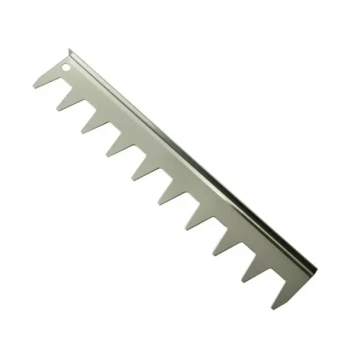
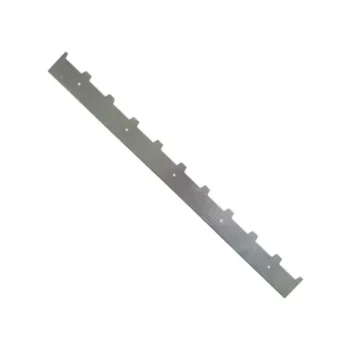
Throughout the history of frame management, several distinct mechanical devices have been utilized to maintain precise spacing. The primary methods include driving staples into the frame bars, utilizing metal spacers that wrap around the end bars, and inserting spring-like slanted wires to center the frame within the super.
Core Insight: While mechanical aids like springs and metal wraps were developed to standardize spacing and improve stability, their long-term effectiveness is often compromised by the natural accumulation of propolis within the hive environment.
The Evolution of Spacing Devices
The Use of Staples
One of the initial methods employed to ensure separation involved simple hardware.
Builders drove staples into the sides of the top bar or the upper sections of the end bars. This created a physical protrusion that prevented frames from touching, maintaining a fixed gap.
Metal Wraparound Spacers
As equipment evolved, more specialized hardware became available.
In 1912, a specific type of metal spacer was introduced to the market. This device fastened directly to the edge of the end bar and wrapped over the frame, offering a more integrated spacing solution than simple staples.
Spring and Wire Mechanisms
Later developments focused on active tension to hold frames in place.
Designers created a "spring" or slanted wire mechanism. This was inserted below the frame's ear (the lug that rests on the super rebate).
The intended function was to push against the hive body, holding the frame firmly in the center of the super.
Understanding the Trade-offs
The Impact of Propolis on Mechanics
While mechanical concepts often work well in theory, environmental factors can degrade their performance.
The "spring" or slanted wire devices specifically faced challenges over time. As bees coated the frames with propolis—a sticky, resinous substance—the mechanisms lost their effectiveness.
The accumulation of this material interfered with the spring action, rendering the device less useful for centering the frames.
Making the Right Choice for Your Goal
Understanding the history of these devices highlights the balance between mechanical precision and practical durability.
- If your primary focus is simplicity: Avoid complex tension mechanisms like springs, as they are prone to failure when exposed to hive debris and propolis.
- If your primary focus is fixed positioning: Historical trends suggest that rigid, physical barriers (like staples or attached metal spacers) offer more consistent spacing than flexible wires.
Ultimately, the most effective spacing method must account for the sticky reality of the hive environment.
Summary Table:
| Spacing Device | Installation Method | Primary Benefit | Major Drawback |
|---|---|---|---|
| Staples | Driven into top or end bars | Simple, low-cost physical barrier | Basic design; lacks refinement |
| Metal Wraparounds | Fastened to end bar edges | Integrated, durable spacing | Adds weight and manufacturing cost |
| Spring/Slanted Wires | Inserted below frame ears | Active centering via tension | Easily jammed by propolis accumulation |
Scale Your Beekeeping Operations with HONESTBEE
Efficient frame management is critical for high-yield honey production. At HONESTBEE, we understand the balance between mechanical precision and the practical realities of the hive. We cater specifically to commercial apiaries and distributors, offering a comprehensive wholesale inventory designed for durability and ease of use.
Whether you need specialized hive-making machines, high-efficiency honey-filling equipment, or a full spectrum of beekeeping tools and consumables, our products are engineered to withstand the sticky challenges of propolis and heavy hive use. Let us provide the professional-grade hardware your business needs to grow.
Ready to upgrade your apiary’s efficiency? Contact HONESTBEE today to discuss our wholesale solutions and bulk equipment offerings.
Related Products
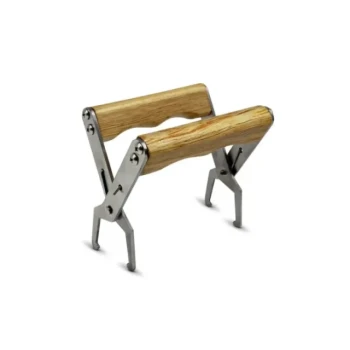
- Ergonomic Plastic Frame Spacer Tool for Rapid Hive Management Beekeeping
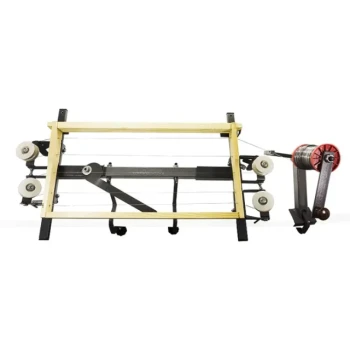
- Professional Bee Frame Machine for Side Bar Shaping
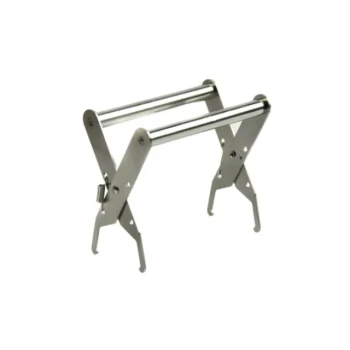
- Stainless Steel 9 Frame Hive Spacer Durable Precise for Commercial Beekeeping
- Durable Plastic Frame Spacer
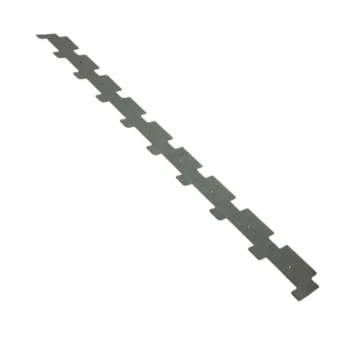
- Professional Castellated Iron Frame Spacer for Multiple Hive Types
People Also Ask
- What specific challenges do beekeeping hive tools address during hive maintenance? Essential Solutions for Apiaries
- How do specialized beehive management tools support high-purity honey production? Master Monofloral Isolation
- How do specialized beehive management tools assist in the routine maintenance of bee colonies? Boost Hive Efficiency
- How do spring inspections for honeybee starvation symptoms guide apiary management? Optimize Colony Survival & Growth
- What are the approximate costs of basic beekeeping tools? Start Your Apiary for Under $85