To efficiently locate a queen bee, you must bypass the outer frames and focus your attention exclusively on the brood nest. Specifically, scan for frames containing fresh eggs and young larvae, as these visual cues serve as a "breadcrumb trail" indicating the queen’s very recent presence.
The most effective strategy is not to search for the bee itself, but to search for the evidence of her work. By identifying fresh eggs, you can narrow your search area to just four or five central frames, drastically reducing the time required to find her.
The Strategy: Targeted Location
Finding a queen is a process of elimination. Instead of inspecting the hive frame-by-frame from one end to the other, you should use biological indicators to zero in on her location.
Identify the Brood Nest
The queen is almost always located within the active brood nest. This is the central area of the hive where eggs and larvae are reared.
Follow the Fresh Eggs
Look for tiny, white eggs standing upright in the bottom of the cells. Because a queen lays eggs continuously, frames with fresh eggs confirm she was there recently.
Narrow the Search Radius
Once you identify the brood nest, limit your intense visual scanning to those specific four or five frames. Ignoring the honey and pollen frames on the periphery saves time and reduces disturbance.
Visual Cues and Identification
Once you are looking at the right frame, you must shift your focus to the physical characteristics of the queen.
Look for the Elongated Abdomen
The queen is physically distinct from worker bees and drones. Her most defining feature is a long, tapering abdomen that extends beyond her wings.
Observe Movement Patterns
The queen moves differently than the frantic worker bees. She often displays a more deliberate, distinct movement pattern as she traverses the comb searching for empty cells.
Common Pitfalls to Avoid
Searching for a queen can be tedious if approached without a system. Understanding the trade-offs of different search methods is critical.
The Risk of Full-Hive Inspection
Searching the entire hive frame-by-frame is inefficient. It increases the time the hive is open, lowers the internal temperature, and agitates the colony.
Missing the "Breadcrumbs"
A common mistake is looking for the queen before looking for eggs. If you are scanning a frame full of capped honey or sealed brood, you are likely searching in an area the queen vacated days ago.
Transitioning to Capture
Locating the queen is only the first step. Once she is spotted, you must be prepared to immobilize her immediately for marking.
On-Frame Capture Tools
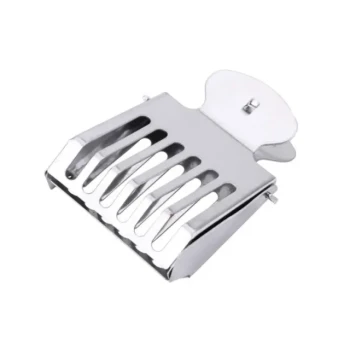
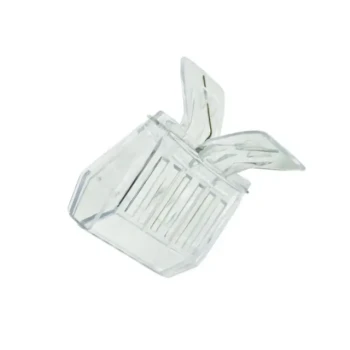
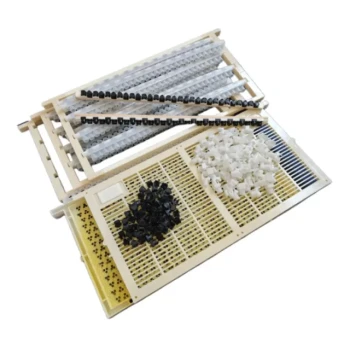
If you prefer not to handle the queen directly, use a Queen Marker Cage (or press-in cage). This device pushes into the honeycomb, trapping the queen on the frame for marking.
Off-Frame Capture Tools
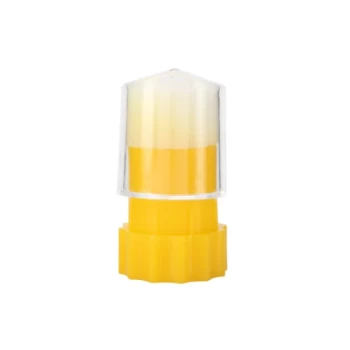
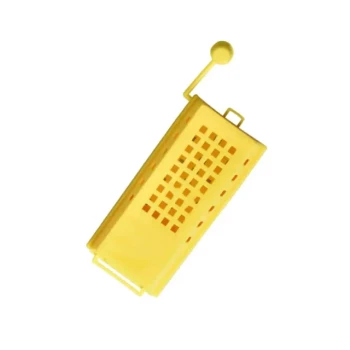
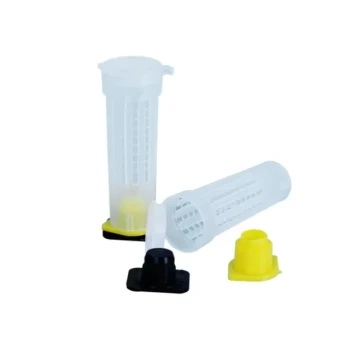
Alternatively, you can capture her for marking away from the hive. A Queen Marking Tube allows you to scoop her up and use a foam plunger to gently hold her against a screen.
Manual Handling
Experienced beekeepers may opt for manual capture. This involves holding the queen gently but firmly between the thumb and forefinger, usually by the thorax, to prevent injury to her abdomen.
Making the Right Choice for Your Goal
- If your primary focus is efficiency: Prioritize locating frames with fresh eggs to immediately restrict your search to the central four or five frames of the brood nest.
- If your primary focus is minimizing hive disturbance: Avoid scanning the outer food frames entirely, as the queen is rarely found outside the active brood area.
- If your primary focus is safe handling: Have a press-in cage or marking tube ready before you begin your search, ensuring you can secure her the moment she is spotted.
Success in finding a queen comes from recognizing the signs of her recent activity, not just scanning for her physical form.
Summary Table:
| Search Method | Key Indicators | Best Tools for Capture | Primary Advantage |
|---|---|---|---|
| Targeted Scanning | Fresh eggs & young larvae | Queen Marker Cage | Drastically reduces search time |
| Physical ID | Long abdomen & distinct gait | Marking Tube | Ensures accurate identification |
| Systematic Exclusion | Active brood nest frames | Manual Handling | Minimizes colony disturbance |
Streamline Your Apiary Operations with HONESTBEE
Efficiently locating and marking queens is the hallmark of a professional beekeeper, and having the right equipment is essential for success. HONESTBEE is dedicated to supporting commercial apiaries and distributors by providing a comprehensive range of high-quality wholesale beekeeping solutions.
From precision queen marking cages and tubes to advanced honey-filling machines and specialized hardware, our portfolio is designed to enhance your productivity and honey production. We empower our partners with everything from essential consumables to honey-themed cultural merchandise.
Ready to scale your beekeeping business? Contact us today to explore our full spectrum of professional tools and equipment!
Related Products
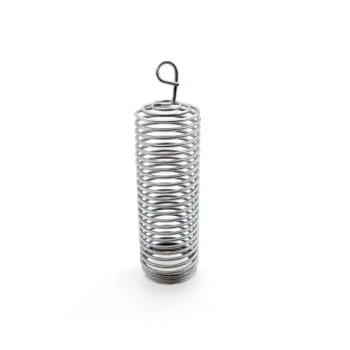
- Durable Galvanized Steel Spring Queen Bee Cage
- Portable Queen Bee Incubator with 12V Car Adapter for Safe Transport
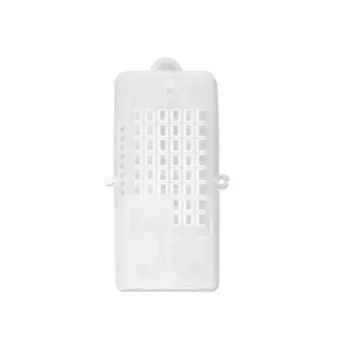
- Professional Queen Bee Introduction and Transport Cage
- Heavy Duty Stainless Steel Queen Bee Catcher Clip
- Queen Bee Catcher Plastic Bee Marker Bottle with Piston Marking Tube
People Also Ask
- Why are specialized queen bee cages used for the banking of mated queen bees? Maximize Commercial Apiary Storage Efficiency
- What is the mechanism of action for using temporary queen bee cages? Master Successful Queen Introduction
- What is the step-by-step process for installing a queen bee's cage onto a frame? Ensure Hive Acceptance Safely
- What is the optimal placement for a queen bee cage? Essential Strategies for Successful Re-queening
- What are the advantages and disadvantages of introducing a queen bee by embedding the cage? Boost Your Queen Acceptance