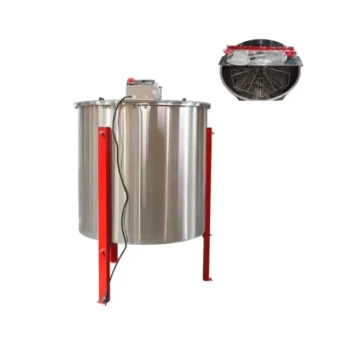
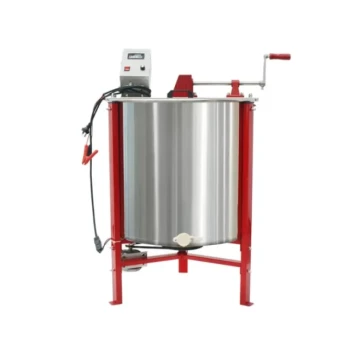
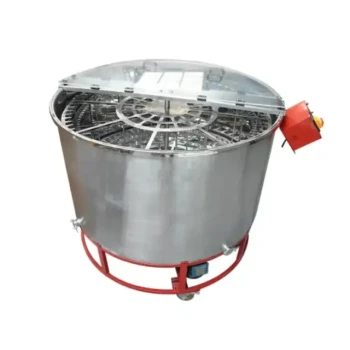
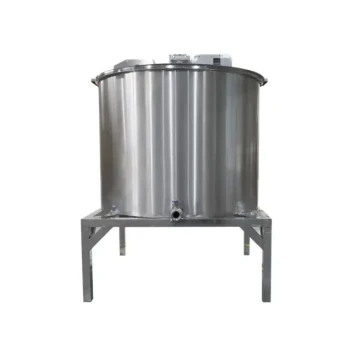
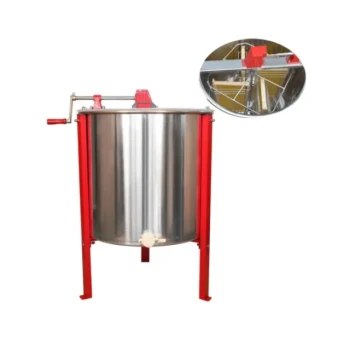
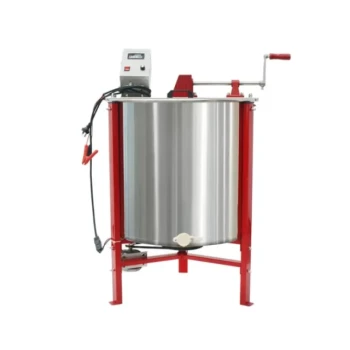
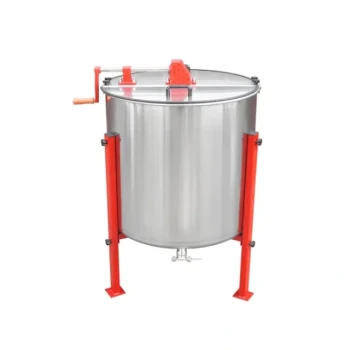
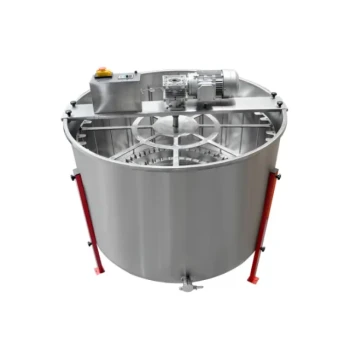
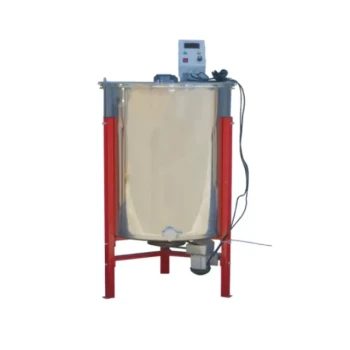
Motorized honey extractors fundamentally shift the extraction workload from the operator to an electric engine, offering significant efficiency gains over manual hand-crank models. The primary operational benefits are the substantial reduction of physical labor and the ability to multitask, allowing beekeepers to uncap new frames or prepare bottling equipment while the machine independently processes the current batch.
Core Takeaway While manual extractors require constant physical engagement, motorized versions decouple the operator from the spinning process. This allows for "parallel processing"—prepping the next load while the current one spins—which drastically reduces total extraction time and minimizes physical fatigue.
Streamlining the Workflow
The Power of Multitasking
The most distinct operational advantage of a motorized extractor is automation.
In a manual setup, the operator is tethered to the machine, required to turn the crank for the duration of the spin.
A motorized unit frees the operator to perform other critical tasks, such as uncapping the next set of frames, while the extraction occurs. This continuous workflow prevents bottlenecks and significantly increases the volume of honey processed per hour.
Reducing Physical Fatigue
Manual extraction is physically demanding, particularly for beekeepers managing a high number of hives.
The repetitive motion of hand-cranking can lead to operator fatigue, which may result in inconsistent spinning speeds as the day progresses.
Motorized units eliminate this physical burden, making them ideal for operators with physical limitations or those engaging in large-scale production where endurance is a factor.
Precision and Yield Quality
Variable Speed Control
Motorized extractors typically feature integrated speed controls, allowing the user to adjust rotation intensity based on the specific viscosity of the honey or the fragility of the combs.
This precision is difficult to replicate manually. Electronic control ensures a stable rotation speed, which is critical for achieving a high honey yield without damaging the comb structure.
Protecting the Wax Combs
The stability provided by an electric motor helps preserve the structural integrity of the wax frames.
Manual cranking can sometimes be jerky or uneven, which risks blowing out the comb foundation.
By maintaining a smooth, controlled spin, motorized extractors ensure the combs remain intact. This allows them to be returned to the colony for immediate reuse, saving the bees the substantial energy required to rebuild wax.
Understanding the Trade-offs
While motorized extractors offer superior efficiency, they introduce specific constraints that manual versions avoid.
Dependency on Power Sources
Motorized units require a reliable electricity supply. This limits their portability, making them unsuitable for field extraction in remote apiaries unless a generator or battery setup is available.
Higher Cost of Entry
The addition of an electric engine and speed control systems makes these units significantly more expensive than their mechanical counterparts.
Maintenance Complexity
An electric motor introduces more points of potential failure compared to the simple gears of a hand crank. Operators must be prepared for potential electrical maintenance or motor repairs over the lifespan of the device.
Making the Right Choice for Your Goal
Selecting the right extractor depends entirely on the scale of your operation and your budget.
- If your primary focus is high-volume efficiency: Choose a motorized extractor to leverage multitasking and reduce the total time spent per harvest.
- If your primary focus is budget or portability: Choose a manual extractor, which is cost-effective and operates independently of power sources.
- If your primary focus is comb preservation: Choose a motorized extractor for its stable, controlled rotation speeds that protect wax integrity.
For the serious beekeeper, the investment in a motor is ultimately an investment in your own time and physical longevity.
Summary Table:
| Feature | Motorized Extractor | Manual Extractor |
|---|---|---|
| Primary Drive | Electric Motor (Hands-free) | Hand Crank (Operator-driven) |
| Workflow | Allows multitasking/parallel processing | Requires constant physical engagement |
| Speed Control | Variable, precise electronic control | Manual, prone to inconsistency |
| Physical Strain | Minimal; ideal for large-scale | High; repetitive motion causes fatigue |
| Portability | Limited by power source access | High; can be used anywhere |
| Comb Safety | High (stable rotation) | Moderate (risk of jerky movement) |
Maximize Your Apiary’s Productivity with HONESTBEE
Transitioning to motorized equipment is a game-changer for commercial growth. HONESTBEE specializes in empowering commercial apiaries and distributors with high-performance honey-filling machines, hive-making equipment, and a full spectrum of professional beekeeping tools.
Our wholesale solutions are designed to reduce your labor costs and protect your wax combs, ensuring your operation runs at peak efficiency. Whether you are scaling up your honey production or stocking the latest industry consumables, we provide the hardware and expertise you need to succeed.
Ready to upgrade your extraction workflow?
Contact HONESTBEE today to explore our comprehensive wholesale offerings!
Related Products
- Commercial Electric 12 Frame Honey Extractor Spinner Motorized Honey Extractor
- 8-Frame Electric Self-Reversing Honey Extractor Spinner for Commercial Honey Extraction Equipment
- HONESTBEE 6 Frame Three Use Electric Honey Extractor for Beekeeping
- Vertical Motor Kits for 2 3 4 Frame Electric Honey Extractors
- HONESTBEE 72 Frame Industrial Electric Honey Extractor for Beekeeping
People Also Ask
- Who are commercial honey extractors designed for? Scaling Your Industrial Beekeeping Success
- What is a commercial honey extractor? The Essential High-Volume Solution for Large Apiaries
- How is honey extracted commercially? Maximize Your Apiary's Efficiency and Honey Yield
- What are commercial honey extractors used for? Boost Your Apiary's Efficiency & Profitability
- What are the advantages of motorized extractors? Boost Honey Production and Save Time