Successful honey harvesting depends on protecting the colony, selecting mature comb, and controlling contamination from hive to package. Specialized extractors, uncapping tools, filtration systems, settling tanks, and filling machinery add value by improving yield, hygiene, consistency, and processing speed while preserving the natural character of the honey.
The core principle is controlled handling: harvest only what the colony can spare, process mature honey through a clean and efficient workflow, and use the right equipment to turn raw comb into a consistent, market-ready product.
Start With the Right Harvesting Decisions
Leave adequate reserves for the colony
Over-extraction is both an operational and biological risk. Sufficient honey reserves must remain in the hive to sustain the colony after harvesting.
This also supports more stable production over time. A harvesting program that maximizes one collection but weakens the colony can undermine future supply and profitability.
Harvest when the honey is mature
Honey is generally considered mature when the comb cells are fully sealed with beeswax. Harvesting at this stage helps reduce the risk of collecting honey with excessive moisture.
Moisture management is critical because it affects fermentation risk, shelf life, and the preservation of honey’s natural properties. The cited operating range is approximately 17% to 21%, although commercial operators should follow the applicable product specification and food regulations for their market.
Minimize colony stress
Bee smokers and electric bee blowers can help manage bees during comb removal and reduce the need for rough manual handling. Used correctly, these tools support a calmer, more controlled harvest.
The objective is not simply speed. Lower colony stress, less comb damage, and fewer bee injuries contribute to cleaner operations and healthier colonies.
Build a Controlled Post-Harvest Workflow
Uncap the comb without unnecessary damage
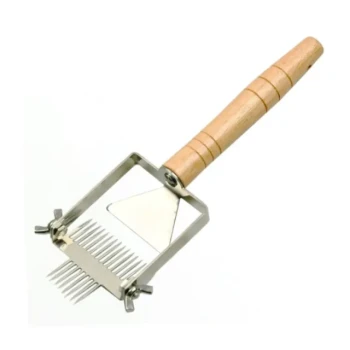
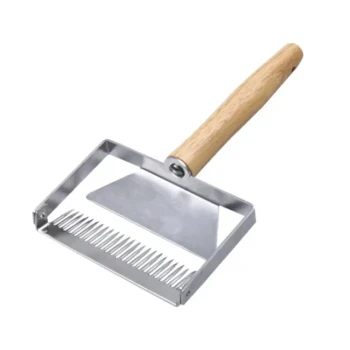
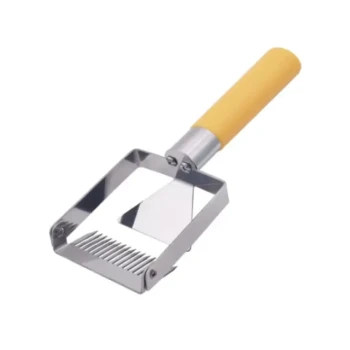
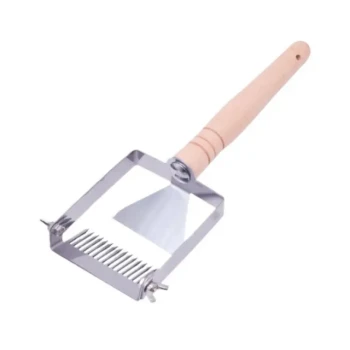
Uncapping is the transition point between hive handling and extraction. Dedicated uncapping tools or machinery remove the wax layer efficiently while helping preserve the underlying comb structure.
Maintaining intact comb can improve handling efficiency and support reuse where the operation’s practices allow it. It also helps reduce loose material entering the extraction stream.
Extract honey efficiently
Centrifugal honey extractors remove honey from the comb through controlled physical force rather than crushing the comb. This protects the comb structure and reduces the amount of honey left behind in the frames.
Efficient extraction improves yield per frame and reduces residue. For commercial apiaries, extractor capacity and operating speed should match the volume generated by the harvesting team so that comb does not accumulate between stages.
Filter and settle before packaging
Filtration devices remove physical materials such as wax debris, larval fragments, and other impurities introduced during harvesting. Settling tanks then allow remaining particles and air bubbles to separate before filling.
These processes improve transparency and perceived purity. They can also support more consistent grading and presentation, which directly influences the product’s commercial value.
Fill and seal with precision
Honey-filling machinery provides more accurate dosing than manual filling and supports consistent package weights. Secure sealing protects the product during storage, transport, and retail handling.
For B2B supply, consistency is especially important. Buyers need repeatable volume, appearance, and packaging performance across batches and purchase orders.
How Specialized Tools Add Commercial Value
They protect product quality
Dedicated harvesting and processing tools reduce unnecessary contact, comb damage, and the introduction of impurities. Clean extraction and controlled clarification help preserve the flavor, appearance, and natural characteristics of raw honey.
This is particularly important when selling premium pure honey, where consumers and buyers can evaluate the product directly through its clarity, aroma, and taste.
They increase usable yield
High-efficiency centrifugal extraction leaves less honey in the frames. The result is greater recovery from the same harvested comb, assuming the equipment is correctly sized and operated.
Improved yield helps offset labor, packaging, and production costs. It also gives suppliers more flexibility when responding to changing customer demand or market prices.
They reduce labor and processing time
Electric blowers, efficient extractors, uncapping equipment, and automated filling systems reduce repetitive manual work. They also shorten the time required to move honey from comb to finished package.
Faster throughput helps commercial apiaries maintain supply responsiveness. For distributors and resellers, that can translate into more reliable replenishment and better fulfillment performance.
They improve batch consistency
Manual processing can produce variation in extraction, filtration, fill volume, and sealing. Specialized equipment standardizes these steps.
Consistency strengthens buyer confidence and makes it easier to serve wholesale, private-label, food-service, and specialty-product customers with predictable specifications.
They support a wider product portfolio
A reliable processing line can support both pure honey and honey-based specialty products. The essential workflow remains the same: comb harvesting, extraction, filtration, and filling.
A supplier with access to a full range of tools can help customers select equipment for their current volume while leaving room for future capacity increases.
Match Equipment to the Operating Model
Small and developing apiaries
Smaller operations may prioritize compact extractors, practical uncapping tools, basic filtration, and dependable filling equipment. The focus should be on hygienic handling and product protection without investing in capacity that will remain underused.
Equipment should still create a logical workflow. A fast extractor provides limited value if filtration or bottling becomes the bottleneck.
Commercial apiaries
Higher-volume operators need coordinated capacity across harvesting, extraction, clarification, and packaging. Extractors, uncapping machinery, settling tanks, and filling systems should be evaluated as an integrated line rather than isolated purchases.
The key question is whether each stage can keep pace with the others. Balanced throughput reduces waiting time, handling, and avoidable labor costs.
Distributors and B2B resellers
Resellers should evaluate more than the equipment specification. Product breadth, technical expertise, response time, order fulfillment, and delivery reliability are also important because customers often need several processing stages supplied together.
A one-stop sourcing model can simplify procurement by covering harvesting tools, extraction equipment, filtration, settling, and filling. This is especially valuable when customers require rapid deployment or replacement equipment.
Understanding the Trade-offs
More automation requires better planning
Automated and high-throughput systems can reduce labor and improve consistency, but they require appropriate installation, operation, cleaning, and maintenance. Buying equipment with excessive capacity can also increase capital cost without improving actual output.
Capacity should be based on harvest volume, seasonal peaks, available labor, and the intended product range.
Faster processing must not compromise handling
High-speed extraction and filling are valuable only when honey remains protected from avoidable contamination and physical degradation. Speed should support a controlled process, not replace one.
Operators still need disciplined handling practices, clean equipment, and appropriate control of each processing stage.
Clarification must match the product objective
Filtration and settling improve cleanliness and appearance, but processing choices should reflect the product’s positioning. The goal is to remove unwanted debris while preserving the characteristics expected by the target market.
Pure honey, premium raw honey, and honey-based specialty products may require different specifications and handling decisions.
Equipment does not eliminate operational risk
Specialized machinery reduces many risks but does not remove the need for trained operators. Poor sizing, incorrect settings, inadequate cleaning, or weak packaging control can still reduce quality and increase waste.
Supplier support matters because technical guidance, spare-part availability, and rapid service can affect equipment uptime during the harvest season.
How to Apply This to Your Project
A practical equipment strategy should connect colony management, product quality, throughput, and market requirements.
- If your primary focus is colony sustainability: Avoid over-extraction, harvest mature capped comb, and use tools that reduce comb damage and colony stress.
- If your primary focus is premium honey quality: Prioritize hygienic extraction, controlled filtration and settling, and processing practices that preserve flavor, appearance, and natural characteristics.
- If your primary focus is higher output: Select coordinated uncapping, extraction, and filling capacity to reduce manual labor, bottlenecks, and honey residue in the frames.
- If your primary focus is wholesale consistency: Use precision filling and secure sealing systems that deliver repeatable package volumes and dependable presentation.
- If your primary focus is equipment distribution: Build a complete sourcing offer across harvesting, extraction, clarification, and bottling, backed by responsive technical support and efficient fulfillment.
The right tools do more than accelerate harvesting—they convert careful colony management into a cleaner, more consistent, and more commercially valuable honey product.
Summary Table:
| Consideration | Description | Impact |
|---|---|---|
| Leave adequate reserves | Keep enough honey for colony survival | Sustains colony health and future production |
| Harvest mature honey | Wait for sealed comb; target 17-21% moisture | Prevents fermentation, extends shelf life |
| Minimize colony stress | Use smokers and blowers for gentle handling | Reduces bee injuries and comb damage |
| Uncap efficiently | Use dedicated tools to remove wax layer | Preserves comb structure, reduces debris |
| Extract with centrifuge | Use centrifugal force to remove honey | Increases yield, protects comb |
| Filter and settle | Remove physical impurities and air bubbles | Improves clarity and perceived purity |
| Fill and seal precisely | Use machinery for accurate dosing and sealing | Ensures consistent package weights and shelf stability |
Looking to streamline your honey processing and deliver premium products consistently? HONESTBEE offers a comprehensive range of beekeeping tools, machinery, and equipment, from harvest essentials to complete bottling lines. As a one-stop source for commercial apiaries and distributors, we ensure fast response, expert guidance, and reliable supply to boost your productivity and profitability. Talk to our specialists today and get tailored solutions that optimize your yield, enhance quality, and support your business growth. Contact us now to discuss your needs!
Related Products
- Professional Wide Blade Honey Scraper for Beekeeping and Honey Processing
- Double Wall Honey Heating Stirring Homogenizer Mixing Machine with Various Capacity
- High Quality Honey Dehumidifier Dryer Thickening Machine for Beekeeping
- 0.5T Capacity Honey Dehumidifier Dryer with Vacuum Heating and Thickening Filtering Machine
- Honey Concentrating and Filtering Dehumidifier Machine 2T Capacity for Honey
People Also Ask
- What tools and machinery are essential to resolve common operational constraints such as equipment shortages and improper honey harvesting? Discover the complete honey-harvesting equipment lineup for commercial apiaries and distributors.
- How does environmental temperature control influence the efficiency of honey scraping equipment? Optimize Your Flow
- What are the core functions of a honey processor? Master Moisture Control and Purification for Quality Honey
- What are the technical requirements for beekeeping equipment used in the production of comb honey compared to filtered honey?
- Why is the utilization of professional beekeeping tools essential? Boost Honey Production and Efficiency