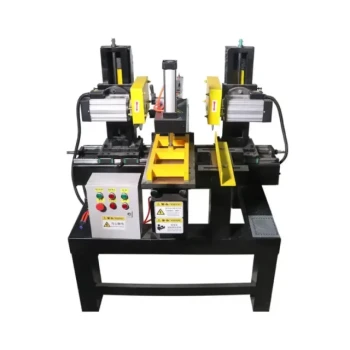
Automated hive-making machines provide the critical standardization required to breed and deploy resistant honey bee species at scale. By ensuring every hive component possesses identical dimensions and spatial structures, these machines eliminate hardware-based variables, allowing researchers to isolate genetic resistance traits and facilitate the seamless integration of monitoring technology.
Success in breeding resistant bees relies heavily on data integrity. Automated manufacturing ensures that observed differences in colony health are due to the bees' genetics, not inconsistent hive construction, paving the way for reliable large-scale adoption.
The Critical Role of Hardware Consistency
Eliminating Environmental Variables
In scientific breeding experiments, validity depends on controlling variables. Standardized hive-making machines manufacture frames and bodies with precise, identical specifications.
This consistency eliminates variations in insulation, ventilation, and internal space. Consequently, researchers can be certain that environmental differences across test colonies are minimized.
Accurately Assessing Resistance
When the physical environment is uniform, biological differences become apparent. Hardware consistency allows for the accurate assessment of natural behaviors, such as mite-clearing capabilities.
By removing the "noise" of structural variation, breeders can clearly identify which colonies possess genuine genetic resistance, rather than those simply benefiting from a better-built hive.
Facilitating Modern Monitoring and Deployment
Enabling Sensor Integration
Modern apiculture relies increasingly on data. Standardized spatial structures are essential for the integration of automatic monitoring sensors and modified bottom board systems.
These advanced tools require precise fits that hand-built hives often cannot provide. Automated manufacturing ensures that every hive is "sensor-ready," facilitating high-tech monitoring of colony health.
Accelerating Regional Adoption
The ultimate goal of breeding resistant species is widespread deployment. Automated machines allow for the large-scale production of these standardized components.
This scalability ensures that once a resistant strain is identified, the supporting hardware can be mass-produced immediately, accelerating the adoption of resistant species across entire regions.
Understanding the Capabilities and Trade-offs
Simulating Environmental Pressures
Standardization creates a baseline, but it also allows for precise manipulation. Researchers can use these standardized configurations to artificially create specific pressures, such as crowded conditions and limited ventilation.
By restricting nest space and withholding foundation frames in a controlled manner, researchers can simulate nature's pre-swarming conditions.
Inducing Physiological States
These technical interventions are used to study specific behaviors, such as "swarming fever." By interfering with pheromone transmission and restricting production, the hive setup itself becomes a tool for inducing physiological changes.
However, it is crucial to note that the machine only provides the framework; the specific configuration and management by the researcher determine the outcome.
Making the Right Choice for Your Goal
To leverage automated hive manufacturing effectively, align the technology with your specific objectives:
- If your primary focus is Breeding Research: Prioritize standardization to eliminate variables in insulation and ventilation, ensuring accurate data on mite resistance.
- If your primary focus is Regional Deployment: Focus on the machine's ability to support scalable production and the seamless integration of monitoring sensors.
Automated manufacturing transforms the beehive from a simple shelter into a precision scientific instrument, enabling the data-driven preservation of honey bee populations.
Summary Table:
| Feature | Benefit for Resistant Species Breeding |
|---|---|
| Dimensional Precision | Eliminates environmental variables like insulation and ventilation. |
| Data Integrity | Ensures health differences are linked to genetics, not hive quality. |
| Sensor Integration | Facilitates 'sensor-ready' hives for high-tech health monitoring. |
| Mass Production | Accelerates regional adoption of resistant strains through scalability. |
| Controlled Testing | Allows researchers to simulate environmental pressures consistently. |
Scale Your Apiary Operations with HONESTBEE Precision Engineering
At HONESTBEE, we empower commercial apiaries and distributors with the high-performance machinery needed to advance modern beekeeping. Whether you are breeding resistant species or scaling regional operations, our automated hive-making and honey-filling machines ensure the standardized precision your business demands.
Why partner with HONESTBEE?
- Wholesale Excellence: Access a comprehensive spectrum of beekeeping tools, specialized hardware, and essential consumables.
- Industry-Leading Machinery: From precision hive construction to honey-themed cultural merchandise, we provide the infrastructure for growth.
- Targeted Solutions: Designed specifically for the rigorous needs of commercial beekeepers and large-scale distributors.
Take the next step in apicultural innovation. Contact us today to explore our wholesale machinery solutions!
References
- Ernesto Guzmán‐Novoa, Matías Maggi. Honey bee populations surviving Varroa destructor parasitism in Latin America and their mechanisms of resistance. DOI: 10.3389/fevo.2024.1434490
This article is also based on technical information from HonestBee Knowledge Base .
Related Products
- Automatic High-Speed Bee Hive Box Stapling Machine
- High-Efficiency Pneumatic Bee Hive Making Machine for Rapid Box Assembly
- Mini Desktop Bee Hive Frame Forming Making Machine
- Beehive Handle and Frame Rest Cutting Machine: Your Specialized Hive Machine
- Beehive Machine Double End Saw for Precision Hive Component Manufacturing
People Also Ask
- How is the Bee Box machine adjusted for different box sizes? Maximize Your Woodworking Versatility and Precision
- How is the Bee Box machine operated? Optimize Your Commercial Hive Production with Scalable Staffing Solutions
- How was the Bee Box machine designed? Industrial Engineering for High-Volume Beekeeping Production
- What is the production capacity of the Bee Box machine? Boost Output up to 1,000 Boxes Daily
- What are the power requirements and control system for the Bee Box machine? Optimize Your Apiary Equipment Production