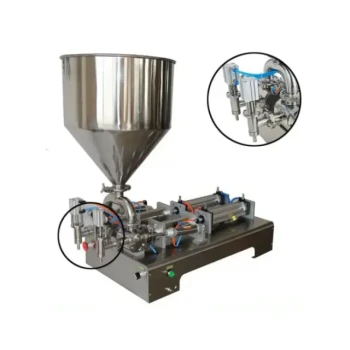
Automated honey filling machines function as the critical technological bridge between raw agricultural production and verified retail merchandise. By utilizing a sealed and sterile process to package honey, these systems effectively prevent environmental contamination while ensuring precise net weight consistency, thereby securing the quality standards necessary for large-scale commercial distribution.
The transformation of honey from a bulk commodity to a high-value retail product relies heavily on the technical assurance provided by automation. These machines do not merely increase speed; they stabilize active biological components and guarantee the hygiene standards required for brand building and premium market entry.
Elevating Product Safety and Integrity
The Sterile Barrier
The primary function of an automated filler is to create a closed hygiene loop. Unlike manual filling, which exposes the product to open air and human handling, automated machines utilize a sealed and sterile process. This significantly reduces the risk of secondary contamination from the environment or operators.
Preserving Active Components
Honey is a biologically active product containing sensitive compounds. Automated systems are designed to maintain the stability of these active components, such as enzymes, during the bottling process. By controlling the filling environment, the machine preserves the nutritional and medicinal value that defines high-quality honey.
Meeting International Hygiene Standards
For honey to be sold in formal retail channels or export markets, it must meet rigorous food safety requirements. Automated filling ensures that every unit complies with these strict hygiene protocols, providing the traceability and safety assurance that modern consumers and regulators demand.
Driving Commercial Value through Standardization
Precision in Net Weight
Commercial viability hinges on consistency. Automated machines ensure the consistency of the net weight for every unit produced. This precision eliminates product giveaway (overfilling) and prevents consumer complaints or regulatory fines associated with underfilling.
From Bulk to Brand
Automation facilitates the transition of honey from a low-cost bulk raw material to a branded commodity. By ensuring uniform packaging appearance and professional presentation, these machines provide the technical foundation necessary for brand building. This consistency allows producers to position their goods in high-end markets rather than selling solely at wholesale agricultural rates.
Operational Efficiency and Scalability
By synchronizing quantitative filling with hygienic sealing, these machines significantly improve packaging efficiency. This reduction in labor costs and increase in throughput allows operations to scale from hobbyist levels to professional commercial distribution, supporting regional economic growth.
Understanding the Operational Trade-offs
Viscosity Management
While automation offers precision, honey is a fluid with variable viscosity depending on temperature and type. Operators must ensure their specific machine is calibrated to handle these variations without compromising speed or accuracy. Incorrect calibration can lead to inconsistent flow rates or equipment strain.
Capital vs. Volume
The shift to automation represents a commitment to volume. While these machines reduce long-term labor costs and waste, they act as a technical prerequisite for large-scale sales. Smaller operations must weigh the initial investment against their current market reach to ensure the equipment delivers a return on investment.
Making the Right Choice for Your Operation
To maximize the value of your bee products, align your equipment choice with your specific business trajectory:
- If your primary focus is Premium Quality: Prioritize machines that emphasize sterile processing and gentle handling to protect enzyme activity and shelf life.
- If your primary focus is Retail Expansion: Focus on systems that guarantee high-precision weight control and standardized sealing to meet supermarket and export compliance codes.
- If your primary focus is Cost Reduction: Look for high-speed synchronization features that minimize manual intervention and maximize daily throughput.
Ultimately, automated filling is the mechanism that converts raw effort into a trusted, scalable, and commercially viable brand.
Summary Table:
| Feature | Key Benefit | Commercial Impact |
|---|---|---|
| Sealed/Sterile Process | Prevents secondary contamination | Ensures safety for international export standards |
| Precision Filling | Consistent net weight per unit | Reduces product waste and avoids regulatory fines |
| Enzyme Preservation | Protects active biological components | Maintains premium product quality and medicinal value |
| High-Speed Sync | Automated filling and sealing | Drastically lowers labor costs and boosts throughput |
| Uniform Packaging | Professional retail appearance | Provides the foundation for successful brand building |
Scale Your Honey Business with HONESTBEE Precision Engineering
At HONESTBEE, we understand that moving from bulk honey to a premium retail brand requires more than just high-quality bees; it requires professional-grade technology. We provide commercial apiaries and distributors with high-performance honey-filling machines, hive-making equipment, and a full spectrum of beekeeping tools designed to meet rigorous global standards.
Whether you are looking to optimize your production line, ensure food safety compliance, or expand your wholesale footprint, our comprehensive machinery and consumables portfolio is built to fuel your growth.
Ready to elevate your production efficiency and market value? Contact HONESTBEE Today to Discuss Your Equipment Needs
References
- Philip Donkersley, Siobhan Maderson. A One-Health Model for Reversing Honeybee (Apis mellifera L.) Decline. DOI: 10.3390/vetsci7030119
This article is also based on technical information from HonestBee Knowledge Base .
Related Products
- Fully Automatic Honey Filling Packaging Machine for Processing Line
- Automatic Honey Filling and Filtering Machine for Beekeeping Bottle Filling
- Precision Durable Efficient HONESTBEE Rotary Honey Filling Machine
- Semi Automatic Small Honey Bottle Filling Machine Honey Filler
- Precision Automated Packaging Turntable Honey Spoon Filling Sealing Packing Machine
People Also Ask
- Why are fully automatic honey filling and packaging lines essential? Boost Your Honey's Market Value and Quality
- What is a fully-automatic honey filler? Streamline Your Production with High-Precision Automation
- How do automated honey filling and packaging machines affect profitability? Boost Margins with HONESTBEE Technology
- How do automated honey filling and packaging machines contribute to the market value of honey products? Maximize Your ROI
- How do industrial-grade automated honey filling and packaging machines mitigate the risk of physical contamination?