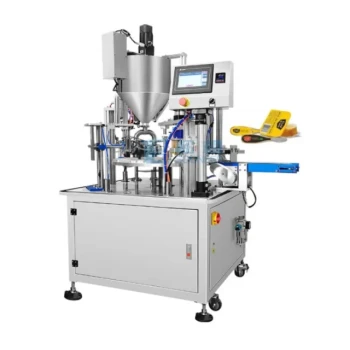
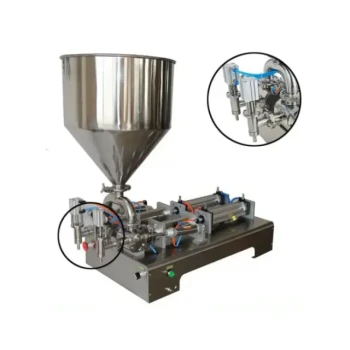
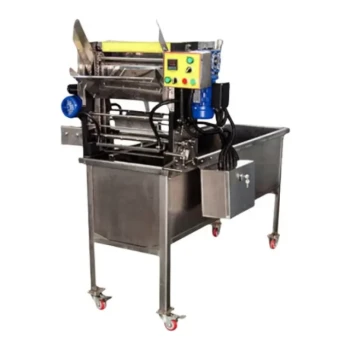
Automated honey filling machines serve as the primary catalyst for transforming honey from a raw agricultural commodity into a high-value commercial product. By utilizing precise metering control and sterile packaging technologies, these machines standardize production, significantly reduce material waste and labor costs, and enable producers to capture the higher margins associated with branded retail goods.
By ensuring hygiene, consistency, and professional presentation, automated filling equipment bridges the economic gap between bulk wholesale and the premium consumer market.
Maximizing Margins Through Operational Efficiency
Precision Metering Reduces Waste
Manual filling often leads to overfilling or spillage, which directly eats into profit margins. Automated machines utilize high-precision quantitative control to dispense exact volumes every time.
This precise metering minimizes material loss, ensuring that every drop of harvest contributes to revenue. For high-value honey varieties, this efficiency is critical to the bottom line.
Lowering Production Costs
Automation drastically reduces the reliance on manual labor for the filling and sealing process. By replacing manual handling with machine speed, producers can achieve higher throughput with fewer personnel.
This reduction in recurring labor costs improves the overall unit economics of the product. It allows rural production regions to retain more economic value locally rather than passing it to external packagers.
Building Brand Equity Through Standardization
Ensuring Product Consistency
To compete in the retail market, a product must be identical across every purchase. Automated machines ensure consistency in physicochemical indicators and volume across different batches.
This uniformity is essential for building consumer trust. It transforms a variable agricultural product into a reliable commercial good that retailers are willing to stock.
Guaranteeing Hygiene and Safety
Modern consumers and regulatory bodies demand strict food safety standards. Automated lines provide a sterile filling environment that prevents secondary contamination caused by human contact.
This "no-touch" processing is often a prerequisite for obtaining organic certifications or passing food safety audits. High hygiene standards act as a physical foundation for brand credit and premium pricing.
Unlocking New and Specialized Markets
Transitioning from Bulk to Retail
The most significant economic leap comes from shifting away from low-margin bulk wholesale. Automated equipment enables the application of labeling and branding directly at the production site.
This capability allows enterprises to enter the differentiated retail market. By selling branded jars rather than wholesale barrels, producers capture the "added value" that typically goes to middlemen.
Targeting High-Value Niches
Beyond food, honey has significant value in the pharmaceutical and cosmetic industries. Specialized filling machines can package honey into eye-dropper bottles, cream jars, or soap boxes.
This versatility shifts the business model toward high-yield medicinal and beauty applications. These markets command significantly higher prices than standard food retail.
Understanding the Trade-offs
Initial Capital Investment
While the long-term economic benefits are clear, the upfront cost of industrial-grade machinery is significant. Small-scale producers must carefully calculate their Return on Investment (ROI) based on their production volume.
Technical Maintenance Requirements
Transitioning to automation changes the skill set required on the production floor. The equipment requires regular calibration, cleaning, and technical maintenance to function correctly.
If a producer lacks the technical infrastructure to maintain the machines, efficiency gains can be lost to downtime.
Making the Right Choice for Your Production Goals
- If your primary focus is maximizing profit margins on raw honey: Prioritize machines with high-precision metering to eliminate product giveaway and waste.
- If your primary focus is building a premium retail brand: Select equipment with advanced hygiene controls and labeling integration to ensure shelf appeal and regulatory compliance.
- If your primary focus is entering new industries: Choose versatile machinery capable of filling specialized containers for cosmetic or pharmaceutical applications.
Ultimately, automated filling technology is not just an operational upgrade; it is the strategic asset that empowers honey producers to dictate their own market value.
Summary Table:
| Economic Driver | Benefit of Automation | Impact on Value |
|---|---|---|
| Material Waste | High-precision metering eliminates overfilling | Maximizes profit per drop |
| Labor Costs | Replaces manual handling with high-speed lines | Lowers per-unit production cost |
| Consistency | Standardized volume and presentation | Builds consumer trust and brand equity |
| Food Safety | Sterile, no-touch processing environments | Enables premium pricing and certifications |
| Market Access | Transition from bulk wholesale to branded retail | Captures higher margins from middlemen |
Scale Your Honey Production with HONESTBEE
Ready to transform your bulk honey into a high-margin retail brand? HONESTBEE specializes in empowering commercial apiaries and distributors with professional-grade beekeeping tools and industrial machinery.
From precision honey-filling machines to automated hive-making equipment, we provide the full spectrum of hardware and consumables needed to dominate the market. Our solutions are designed to reduce labor costs, eliminate waste, and elevate your brand’s presentation.
Contact us today to receive a customized equipment proposal and start maximizing your apiary's economic value.
Contact Our Experts at HONESTBEE
References
- Ersin Güngör, Gökhan Şen. SELECTING SUITABLE FOREST AREAS FOR HONEY PRODUCTION USING THE AHP: A CASE STUDY IN TURKEY. DOI: 10.1590/01047760201824012511
This article is also based on technical information from HonestBee Knowledge Base .
Related Products
- Fully Automatic Honey Filling Packaging Machine for Processing Line
- Automatic Honey Filling and Filtering Machine for Beekeeping Bottle Filling
- Precision Durable Efficient HONESTBEE Rotary Honey Filling Machine
- Precision Automated Packaging Turntable Honey Spoon Filling Sealing Packing Machine
- Semi Automatic Small Honey Bottle Filling Machine Honey Filler
People Also Ask
- Why are fully automatic honey filling and packaging lines essential? Boost Your Honey's Market Value and Quality
- What is a fully-automatic honey filler? Streamline Your Production with High-Precision Automation
- How do automated honey filling and packaging machines affect profitability? Boost Margins with HONESTBEE Technology
- How do automated honey filling and packaging machines contribute to the market value of honey products? Maximize Your ROI
- How do industrial-grade automated honey filling and packaging machines mitigate the risk of physical contamination?