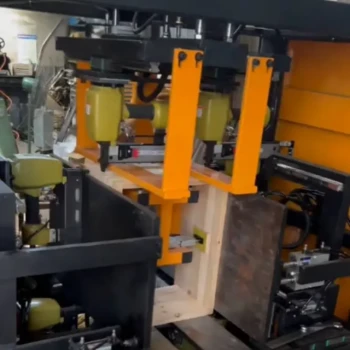
Automated honey filling machines serve as the critical bridge between raw stingless bee honey extraction and large-scale commercial distribution. These systems provide the high-precision dosage and sterile vacuum environments necessary to preserve the rare bioactive compounds found in stingless bee honey. By standardizing output, they enable distributors to move from artisanal production to high-volume, global trade while meeting stringent pharmaceutical and nutritional regulations.
Automated filling technology transforms low-yield, high-value stingless bee honey into a standardized, market-ready asset. It ensures product integrity and minimizes waste, allowing distributors to offer a consistent, premium product portfolio to high-end global markets.
Maximizing Yield for High-Value Commodities
High-Precision Dosage Control
Stingless bee honey is a low-yield, high-value commodity, making every drop commercially significant. Automated filling machines utilize piston or metering pump systems to ensure accurate measurement, significantly reducing the waste of expensive raw materials compared to manual methods.
Minimizing Product Loss
In a professional distribution chain, precision quantitative technology ensures that each unit meets industry net weight standards. This level of accuracy is essential for distributors who must maintain strict inventory control and maximize the market value of limited seasonal harvests.
Preserving Product Integrity and Bioactivity
Vacuum Filling Environments
The use of vacuum filling technology is a cornerstone of high-end honey processing. This environment helps preserve unique volatile aromatic compounds and bioactive substances that are sensitive to oxidation.
Pharmaceutical Grade Standards
Preserving the antibacterial and moisturizing properties of the honey allows distributors to target high-end pharmaceutical and cosmetic markets. Automated systems ensure that the natural biological activities remain intact from the point of extraction to the final consumer.
Accelerating Market Readiness and Branding
Transitioning to Large-Scale Supply
Automated machines facilitate the transition from informal, small-scale operations to large-scale commercial supply networks. This capability allows wholesalers to meet the rigorous demands of global distribution and ensure rapid response times for large orders.
Hygienic Sealing and Safety
The enclosed, automated operation minimizes the risk of secondary contamination by reducing human contact. This is a core requirement for obtaining sanitary certifications and meeting the food safety standards necessary for official market entry.
Establishing a Professional Brand Image
Standardized packaging produced by automated machines creates a consistent product appearance. This professional finish is vital for building brand trust and securing placement in high-end retail environments.
Optimizing the Distribution Chain
Efficient Order Fulfillment
Automation significantly increases the output of the packaging phase, allowing apiaries to keep pace with ultra-fast delivery requirements. For distributors, this means a more reliable supply chain and the ability to fulfill bulk orders with minimal lead times.
Meeting Modern Trade Standards
By ensuring packaging integrity and accurate labeling, automated systems make products "retail-ready" immediately. This reduces the logistical burden on resellers and ensures that the honey meets the quality traceability requirements of modern trade.
Understanding the Trade-offs
Initial Capital Investment
The primary barrier to entry for automated filling is the high initial cost of the machinery. While these machines provide long-term savings through waste reduction and efficiency, the upfront expenditure requires a clear volume-based ROI strategy.
Maintenance and Technical Expertise
Automated systems are more complex than manual tools and require dedicated technical expertise for calibration and maintenance. Improperly maintained machines can lead to downtime, which may disrupt the "rapid response" capabilities that distributors rely on.
Handling High Viscosity
Stingless bee honey can vary in thickness, and machines must be specifically engineered to handle high viscosity. If the equipment is not correctly configured for specific honey types, it can lead to mechanical strain or inconsistent filling weights.
Making the Right Choice for Your Goal
How to Apply This to Your Project
After establishing your production volume and target market, use the following recommendations to guide your equipment strategy:
- If your primary focus is Pharmaceutical or Nutraceutical Entry: Prioritize machines with vacuum filling capabilities and sterile, enclosed environments to protect bioactive compounds.
- If your primary focus is Rapid Scale and High-Volume Distribution: Focus on systems that offer high-speed output and automated sealing to ensure efficient order fulfillment and ultra-fast delivery.
- If your primary focus is Maximizing Profit on Rare Batches: Invest in high-precision quantitative technology to eliminate overfilling and minimize the loss of expensive raw materials.
Integrating automated filling technology is the definitive step for any distributor looking to elevate stingless bee honey from a local specialty to a globally recognized, premium commodity.
Summary Table:
| Key Feature | Commercial Benefit | Impact on Distribution |
|---|---|---|
| High-Precision Dosage | Minimizes waste of high-value honey | Maximizes profit margins per batch |
| Vacuum Filling | Preserves volatile aromas & bioactivity | Meets pharmaceutical & high-end standards |
| Automated Output | Enables high-volume production | Facilitates rapid order fulfillment |
| Hygienic Sealing | Prevents secondary contamination | Simplifies sanitary certification & exports |
| Standardized Finish | Professional branding & packaging | Ensures retail-readiness for global trade |
Scale Your Honey Business with HONESTBEE
Are you ready to transition from artisanal production to a high-volume commercial operation? HONESTBEE specializes in empowering distributors, wholesalers, and B2B resellers with a comprehensive, one-stop sourcing solution. From state-of-the-art honey-filling machines and hive-making hardware to essential beekeeping consumables and honey-themed merchandise, our full-spectrum portfolio is built to support your growth.
Why Partner with HONESTBEE?
- Deep Industry Expertise: Professional-grade equipment tailored for commercial apiaries.
- Rapid Fulfillment: Efficient order processing and ultra-fast delivery to keep your supply chain moving.
- Dedicated Service: Exceptional customer support and a commitment to your long-term success.
Maximize your efficiency and secure your place in the global market. Contact HONESTBEE today to discuss your wholesale needs!
References
- Segni Giza, Dema Dugda. Assessment of Stingless Bee Production Potentials, Distribution, and Constraints in West Hararghe Zone, Oromia, Ethiopia. DOI: 10.11648/j.ajz.20240703.11
This article is also based on technical information from HonestBee Knowledge Base .
Related Products
- Precision Durable Efficient HONESTBEE Rotary Honey Filling Machine
- Automatic Honey Filling and Filtering Machine for Beekeeping Bottle Filling
- Fully Automatic Honey Filling Packaging Machine for Processing Line
- Manual Honey Filling Machine Bottling Machine for Honey
- Automatic Single-Dose Snap & Squeeze Honey Sachets Packing Machine
People Also Ask
- What quality control role does professional honey filling equipment perform? Ensure Consistency and Product Stability
- What is a key feature of the new generation of the honey filling machine? The Advanced Electronic Control Unit
- How do honey filling and processing machines aid native bee product conservation? Boost Value with HONESTBEE Technology
- How do honey filling machines work? Achieve Precision & Speed for Your Apiary
- What are the common types of bottling machines used for honey? Choosing the Right Solution for Your Apiary