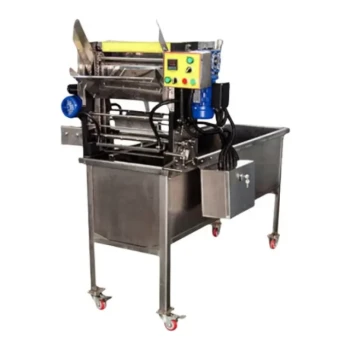
Automated packaging and labeling machines serve as the critical bridge that transforms raw bulk honey into a commercially viable, retail-ready product. These systems function primarily to ensure the hygienic safety and physical consistency of the honey during bottling, while simultaneously providing the accurate labeling and branding required to enter formal retail channels and e-commerce platforms.
By standardizing the production process, this technology allows producers to move beyond low-value wholesale markets. It guarantees the product quality, safety, and traceability necessary to build consumer trust and command premium prices.
Elevating Product Quality and Safety
Ensuring Hygiene and Consistency
The primary technical role of automated machinery is to maintain a sterile or high-hygiene environment during the filling process. By minimizing human contact, these machines prevent secondary contamination that is common in manual operations.
Extending Shelf Life through Sealing
Automated systems provide reliable, airtight sealing that is difficult to achieve manually. This prevents the honey from absorbing atmospheric moisture, which is a leading cause of fermentation and spoilage.
Proper sealing preserves the honey’s quality for longer periods. This extended shelf life is a prerequisite for reaching distant domestic markets or engaging in international export.
Precision Dosing and Standardization
Automation replaces estimation with high-precision weighing and dosing. This ensures that every unit meets specific weight requirements (e.g., 330ml to 1500ml), creating a standardized product essential for supermarket inventory systems.
Unlocking Market Access and Brand Value
Meeting Retail Compliance Standards
Formal retail channels, including supermarkets and export markets, have strict requirements regarding packaging integrity and labeling. Automated labeling ensures compliance with these legal standards, including the display of nutritional facts and production dates.
Building Trust via Traceability
Modern consumers demand transparency regarding food sources. Automated labeling allows for the clear marking of geographical indications and origin traceability, which functions as an anti-counterfeiting measure and assures the buyer of the product's authenticity.
Enhancing Visual Appeal
Beyond compliance, professional packaging improves the visual recognition of the brand. High-quality labels and consistent container presentation help differentiate the product on crowded shelves, directly influencing consumer purchasing decisions.
Operational Considerations and Trade-offs
Balancing Investment against Scale
While automation facilitates growth, it represents a significant upfront capital expenditure. Producers must ensure their production volume is sufficient to justify the cost of transition from manual to automated systems.
Complexity and Maintenance
Transitioning to automation introduces a new layer of technical complexity. Unlike manual bottling, these machines require regular maintenance and calibration to ensure the precision of dosing and labeling remains consistent over time.
Making the Right Choice for Your Goal
To maximize the value of automated packaging technology, align your equipment choice with your specific commercial objective:
- If your primary focus is Market Expansion: Prioritize labeling systems that handle complex traceability data and geographical indications to meet strict retail and export compliance standards.
- If your primary focus is Product Quality: Invest in filling and sealing machinery that guarantees airtight closure to prevent fermentation and maximize shelf life.
Ultimately, automated packaging is not just a tool for efficiency; it is the fundamental mechanism for converting a raw agricultural harvest into a trusted, high-value brand asset.
Summary Table:
| Feature | Role in Commercialization | Primary Benefit |
|---|---|---|
| Automated Filling | Precision dosing & hygienic sealing | Prevents fermentation & ensures weight consistency |
| Airtight Sealing | Preserves product integrity | Extends shelf life for export & long-distance retail |
| Precision Labeling | Regulatory & nutritional compliance | Unlocks access to supermarkets & international markets |
| Traceability Tools | Geographic & origin marking | Builds consumer trust & prevents counterfeiting |
| Visual Branding | Professional shelf presentation | Enhances brand recognition & premium pricing potential |
Scale Your Honey Business with HONESTBEE
At HONESTBEE, we specialize in empowering commercial apiaries and honey distributors with the industrial tools needed to dominate the market. Our comprehensive wholesale catalog includes high-precision honey-filling machines, professional labeling equipment, and durable hive-making machinery, alongside all the essential consumables your operation demands.
Whether you are transitioning from manual bottling to a fully automated production line or looking to enhance your brand's shelf presence with custom cultural merchandise, we provide the technical expertise and hardware to make it happen. Contact HONESTBEE today to discuss your equipment needs and let us help you transform your raw harvest into a high-value, global brand.
References
- Gede Suarta, I Gusti Agung Nyoman Dananjaya. Farmer motivation towards the development of honeybee farming in Bali Province. DOI: 10.53730/ijls.v7n3.14557
This article is also based on technical information from HonestBee Knowledge Base .
Related Products
- Precision Automated Packaging Turntable Honey Spoon Filling Sealing Packing Machine
- Automatic Single-Dose Snap & Squeeze Honey Sachets Packing Machine
- Fully Automatic Honey Filling Packaging Machine for Processing Line
- Honey Stick Filler Vertical Paste Sachet Packing Machine for Honey Sachets
- Economy Small Honey Filling Machine Honey Bottle Filler Packaging Machine
People Also Ask
- Why is the use of professional filling and sealing packaging machinery necessary for the production of high-value honey?
- What role do automated filling and packaging machines play in the honey supply chain? Scale Your Retail Distribution
- What are the benefits of automated honey filling and packaging? Scale Your Apiary with Industrial Precision
- What role do professional automated filling and packaging machines play in honey processing? Boost Efficiency & Value
- How do automated honey filling and packaging machines contribute to the market value of honey products? Maximize Your ROI