Beehive bottom boards serve as a primary, non-invasive diagnostic tool for evaluating the genetic potential of honey bee colonies. By facilitating the collection and counting of naturally fallen Varroa mites, they allow breeders to assess infestation levels and mite population growth without disrupting the colony's internal structure.
Core Insight Effective bee breeding requires identifying colonies that naturally suppress Varroa reproduction. Bottom boards enable the continuous monitoring of natural mite drops, providing the data necessary to differentiate between susceptible colonies and those possessing accurate resistance traits early in the selection process.
The Mechanics of Resistance Screening
Enabling Non-Destructive Monitoring
In a breeding program, preserving the health and structure of potential breeder colonies is paramount. Bottom boards offer a low-intrusiveness method for data collection. unlike alcohol washes or sugar shakes, which can agitate or kill a sample of bees, bottom boards passively collect data, leaving the colony’s social structure and workforce intact.
Assessing Population Dynamics
The primary role of the bottom board in breeding is to track the population growth dynamics of the mite. By performing regular counts of fallen mites over time, breeders can visualize the trajectory of an infestation. This longitudinal data helps identify colonies that are successfully suppressing mite proliferation compared to the general population.
The Function of Screened Hardware
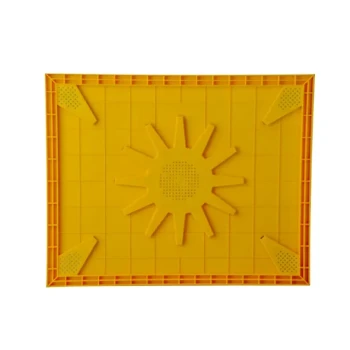
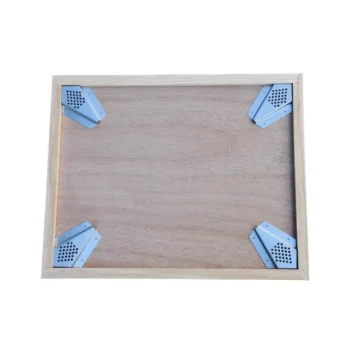
Modern bottom boards often feature a mesh screen designed to physically separate fallen mites from the bees. This design prevents mites from crawling back up into the hive, breaking the re-infestation cycle. When paired with a sticky inspection board beneath the mesh, these mites are permanently trapped for accurate quantification.
Differentiating Resistance Traits
Identifying Grooming Behavior
The debris found on a bottom board provides physical evidence of specific resistance traits. A higher-than-average natural drop, particularly of damaged mites, may indicate strong grooming behavior where worker bees actively bite and remove parasites. This allows breeders to select specifically for hygienic lines.
Verifying Treatment Efficacy
While the primary goal in breeding is natural resistance, bottom boards are also essential for evaluating the efficacy of acaricides (pesticides). By counting the total mite load dropped after a treatment, breeders can calculate control efficacy. This verifies if the remaining mite population is due to bee susceptibility or potential acaricide resistance in the mites themselves.
Understanding the Trade-offs
Interpreting Ambiguous Data
A high number of mites on a bottom board can be interpreted in two opposing ways: it could signify a highly infested, failing colony, or a hygienic colony actively grooming off mites. Breeders must not rely on a single count; they must correlate drop rates with total colony infestation levels to avoid selecting the wrong stock.
Labor and Accuracy Requirements
Using bottom boards for breeding is a labor-intensive process. Accurate screening requires standardized counting protocols and visual identification by trained personnel. Furthermore, external factors like ants or wind can disturb the sticky board, potentially compromising the data if the equipment is not maintained properly.
Making the Right Choice for Your Goal
To effectively utilize bottom boards in your breeding or management program, align your usage with your specific objectives:
- If your primary focus is genetic selection: Prioritize the tracking of population growth dynamics over time to identify colonies that maintain low mite levels naturally.
- If your primary focus is verifying mite resistance to chemicals: Use the boards to calculate the percentage of mites dropped post-treatment to identify treatment failures caused by resistant mite populations.
The bottom board is not just a passive floor for the hive; it is the window through which the invisible war between bee and parasite becomes quantifiable.
Summary Table:
| Feature | Role in Breeding & Resistance Screening | Benefit to Breeders |
|---|---|---|
| Data Collection | Passive tracking of natural mite drops | Non-invasive; preserves colony social structure |
| Screened Mesh | Physical separation of fallen mites | Prevents re-infestation; enables accurate counting |
| Sticky Boards | Captures debris and damaged mites | Provides evidence of grooming and hygienic behavior |
| Growth Dynamics | Longitudinal monitoring of mite population | Identifies colonies with natural suppression traits |
| Efficacy Testing | Post-treatment mite count analysis | Distinguishes between bee resistance and mite chemical resistance |
Maximize Your Colony Health with HONESTBEE Precision Equipment
At HONESTBEE, we understand that commercial apiaries and distributors require more than just supplies—you need reliable data to build resilient bee populations. Whether you are scaling up breeding operations or managing a massive honey production fleet, our comprehensive wholesale offering provides the specialized hardware you need.
From advanced screened bottom boards and precision honey-filling machines to industrial hive-making equipment, we equip you with the tools to succeed. Let us help you streamline your screening process and improve your genetic stock with professional-grade beekeeping machinery and essential consumables.
Ready to elevate your apiary business? Contact HONESTBEE Today to discuss our wholesale solutions and how we can support your growth.
References
- Melissa A. Y. Oddie, Bjørn Dahle. Insights from Norway: Using Natural Adaptation to Breed <i>Varroa</i>-Resistant Honey Bees. DOI: 10.1080/0005772x.2021.1882783
This article is also based on technical information from HonestBee Knowledge Base .
Related Products
- Langstroth Solid Bottom Board for Beekeeping
- Solid Bottom Board Australian Pine Wood Langstroth Bottom Board for Wholesale
- Langstroth Screen Bottom Board for Beekeeping Wholesale
- HONESTBEE Top Bar & Bottom Bar Forming Machine | Bee Frame Machine
- Australian Pine Wood Langstroth Screen Bottom Board for Wholesale
People Also Ask
- What are the functions of solid bottom boards for a beehive? Essential Thermal Protection and Winter Survival Tips
- What is the purpose of a solid bottom board for bee hives? Enhance Hive Health and Winter Survival
- How does climate influence the choice between a solid and screened bottom board? Optimize Your Hive for Local Weather
- What is the primary function of a bottom board in a modern modified beehive system? Essential Foundation Guide
- What are the characteristics of a solid bottom board for a beehive? Boost Colony Health and Thermal Insulation