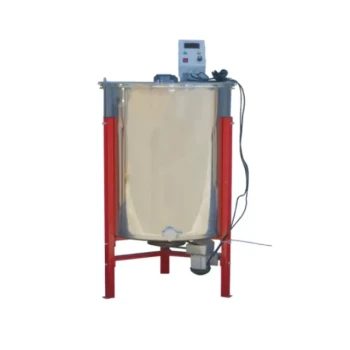
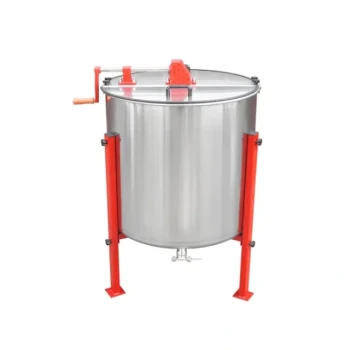
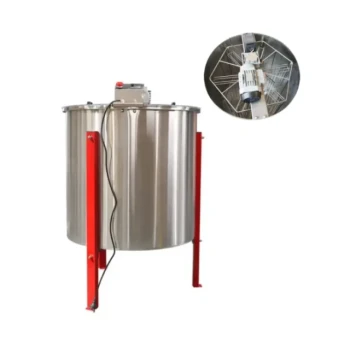
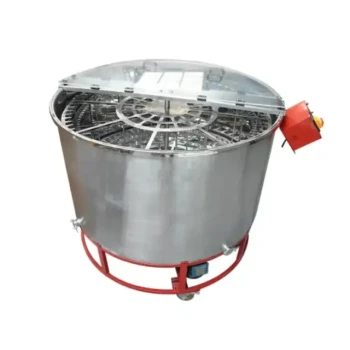
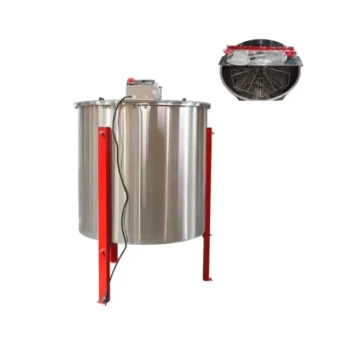
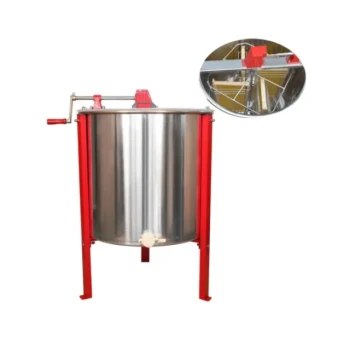
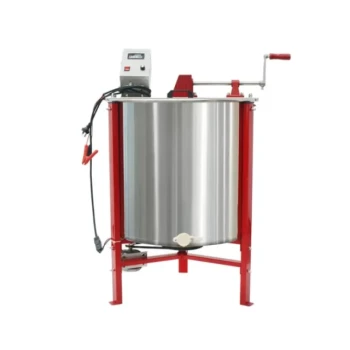
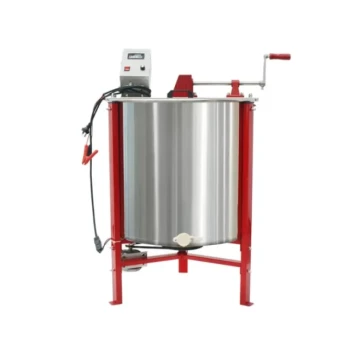
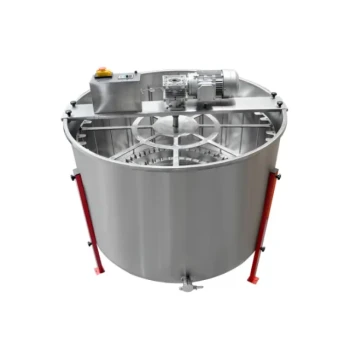
The centrifugal honey extractor is the central mechanism in modern honey processing, designed to separate liquid honey from wax combs using high-speed rotational force. Unlike traditional methods that destroy the comb, this technology extracts the honey while preserving the structural integrity of the frame, allowing for immediate reuse within the hive.
The Core Insight The true value of a centrifugal extractor is not just in harvesting honey, but in conserving the bee colony's energy resources. By preserving the honeycomb structure, you eliminate the need for bees to rebuild wax, significantly increasing production turnover and total annual yield.
The Mechanics of Preservation
The fundamental role of the centrifugal extractor is to replace destructive harvesting with physical separation.
Non-Destructive Extraction
Traditional harvesting often involves crushing and filtering, which destroys the honeycomb. A centrifugal extractor spins the frames at high speeds, flinging the mature honey out of the cells.
This process leaves the delicate wax structure intact. The empty honeycombs are removed from the machine in the same shape they entered, ready to be returned to the colony.
Enhancing Purity Standards
Beyond the physical preservation of the comb, this method improves the quality of the final product. By avoiding the crushing process, the system ensures higher honey purity, meeting the rigorous standards required for exportable honey.
Biological and Economic Efficiency
The integration of centrifugal extractors shifts the focus from simple harvesting to lifecycle management of the hive.
Reducing Metabolic Cost
Bees must consume significant amounts of energy (and honey) to secrete wax and build new combs. When an intact comb is returned to the hive, the colony is spared this metabolic expense.
Shortening Production Cycles
Because the bees do not need to rebuild the nest structure, they can immediately focus on filling the cells with nectar. This drastically shortens the time between harvests.
Maximizing Annual Yield
The cumulative effect of energy conservation and faster turnover is a significant increase in the total annual honey yield. For industrial operations, this efficiency is the primary driver of profitability.
The Shift from Traditional Methods
While centrifugal extraction is the modern standard, it helps to understand the specific limitations of the older methods it replaces to fully appreciate its role.
The Pitfalls of Crushing
The primary alternative—crushing and filtration—creates a "single-use" cycle. Once the comb is crushed, the bees must start from scratch. This method creates a bottleneck in production, as the colony's productivity pauses while they rebuild infrastructure.
The Necessity for Scale
For hobbyists, crushing may be acceptable. However, for high-yield commercial production, the time lost to comb rebuilding makes non-centrifugal methods economically unviable. The extractor is not optional equipment for operations aiming for continuous productivity during a short harvest season.
Making the Right Choice for Your Workflow
The role of the extractor depends on the scale and goals of your apiary.
- If your primary focus is Commercial Scale: Prioritize this technology to maximize the number of harvest cycles per season by eliminating comb rebuilding time.
- If your primary focus is Export Quality: Utilize centrifugal extraction to ensure the purity and physical consistency required for international export standards.
- If your primary focus is Colony Health: Use this equipment to reduce the biological stress on your bees, allowing them to conserve energy for survival rather than construction.
The centrifugal extractor transforms the honeycomb from a disposable byproduct into a permanent, reusable asset for the apiary.
Summary Table:
| Feature | Centrifugal Extraction | Traditional Crushing |
|---|---|---|
| Comb Integrity | Preserved & Reusable | Destroyed |
| Honey Purity | High (Minimal wax debris) | Lower (High wax/pollen content) |
| Production Cycle | Fast (Immediate refill) | Slow (Requires rebuilding) |
| Bee Energy Usage | Low (Focused on nectar) | High (Forced wax secretion) |
| Best For | Commercial & Export | Small-scale hobbyists |
Scaling Your Commercial Apiary? Partner with HONESTBEE
At HONESTBEE, we understand that for commercial apiaries and distributors, efficiency is the foundation of profitability. Our professional centrifugal honey extractors are designed to eliminate production bottlenecks, allowing your colonies to focus on production rather than reconstruction.
We provide a comprehensive wholesale offering, supplying the full spectrum of beekeeping tools—from high-capacity honey-filling machines to specialized hive-making hardware and essential industry consumables.
Ready to upgrade your workflow? Contact us today to discover how our machinery and wholesale solutions can maximize your annual yield and streamline your operations.
References
- Gelan Dule Dahesa, A Tilahun. Review on Beekeeping System, Constraints, and Opportunities in Ethiopia. DOI: 10.30654/mjvs.10059
This article is also based on technical information from HonestBee Knowledge Base .
Related Products
- electric honey extractor honey centrifuge 3 frame honey extractor stainless steel honey frame extractor
- Manual Hand Crank 4 Frame Honey Extractor Centrifuge for Beekeeping
- Professional 4 Frame Self Reversing Electric Honey Extractor for Beekeeping
- Electric 4 Frame Tangential Honey Extractor
- 24 Frame Honey Extractor Commercial Radial Honey Frame Extraction Machine
People Also Ask
- What are the characteristics of electric honey extractors? Boost Your Apiary Efficiency with Automated Technology
- What are the disadvantages of using an electric honey extractor? Weighing Cost, Power, and Comb Safety
- What are the advantages of an electric honey extractor? Boost Efficiency and Scale Your Honey Production
- What are the technical advantages of electric honey extractors? Maximize Yield and Protect Your Bee Colony
- How does an electric honey extractor affect the quality of honey? Preserve Flavor & Purity with Precision Extraction