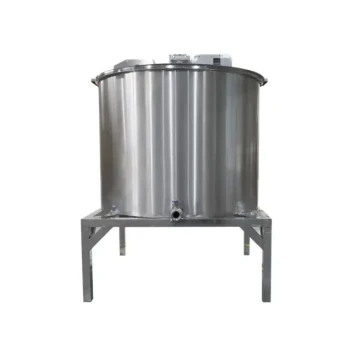
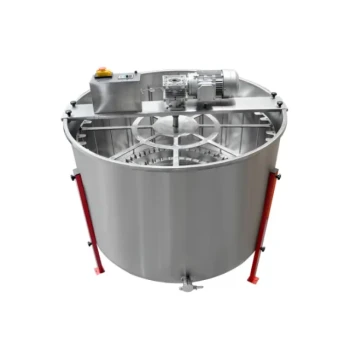
Commercial honey filling machines serve as the critical infrastructure that transforms raw apiary yield into market-ready commodities. In the context of crops like Italian squash, where bees convert floral nectar into honey, these machines provide the automated precision necessary to package this secondary agricultural product into standardized, high-value goods.
By mechanizing the final stage of production, these machines bridge the gap between agricultural pollination services and the consumer market. They ensure that bulk honey is converted into retail products with consistent weight, strict hygiene, and professional presentation.
Transforming Byproducts into Commercial Value
Monetizing Pollination Services
For crops like Italian squash, the primary agricultural goal is often the vegetable itself. However, the nectar collected by bees creates a valuable secondary product.
Filling machines allow beekeepers to efficiently process this byproduct. They convert what is essentially a raw material of pollination into a standardized commercial good capable of entering high-end markets.
Ensuring Economic Efficiency
Manual filling often leads to product overflow and inconsistent weights. Commercial machines utilize high-precision volumetric control to strictly regulate dosage.
This minimizes the waste of raw honey during packaging. By ensuring every container meets exact net weight specifications, producers maximize the revenue generated from their total harvest.
Preserving Quality and Safety
Maintaining a Sterile Environment
Honey is susceptible to spoilage if exposed to external factors. Filling machines often feature closed-pipe designs and sanitary sealing technologies.
This effectively blocks external moisture and pollutants. By preventing environmental exposure, the machinery stops fermentation and spoilage, ensuring the product remains stable during storage and long-distance transportation.
Eliminating Contamination Risks
Manual packaging introduces the risk of human contact and secondary contamination. Industrial filling mechanizes the entire process to maintain strict hygiene.
This automation ensures the honey retains its natural physical and chemical properties. It allows producers to meet rigorous food safety regulations and international export standards that manual operations cannot consistently achieve.
Scaling for Market Distribution
Meeting High-Volume Demands
To supply large-scale retail markets, production speed must match demand. Automated filling machines provide the high-efficiency capacity needed to transition from small-batch apiary work to mass distribution.
This speed facilitates a smooth flow of products from the production stage to the consumer, increasing market turnover efficiency for distributors.
Enhancing Brand Competitiveness
Retail success relies heavily on consumer perception. These machines ensure uniform product specifications and professional packaging appearance.
A consistent, professionally sealed product builds a high-end brand image. This standardization is a prerequisite for competing in modern retail environments where shelf presence is critical.
Understanding the Trade-offs
While the benefits of automation are clear, producers must understand the shift in operational focus.
The Cost of Precision
Moving to commercial filling requires a commitment to standardization over artisanal variability. While manual methods allow for unique handling of every jar, they cannot guarantee the uniformity required by large retailers.
Dependency on Calibration
The machine's value is entirely dependent on proper calibration. To avoid waste and ensure seal integrity, operators must maintain the equipment to handle specific viscosities. However, this technical requirement is the only way to guarantee the airtight packaging necessary to prevent degradation over time.
Making the Right Choice for Your Goal
To determine how best to integrate this technology into your value chain, consider your primary objective:
- If your primary focus is Market Expansion: Prioritize machines with high-speed automation to meet the capacity demands of large-scale supply chains and export markets.
- If your primary focus is Brand Authority: Focus on machines that offer professional-grade sealing and consistent aesthetic presentation to compete in high-end retail sectors.
- If your primary focus is Product Integrity: Select equipment with closed-loop, sterile filling systems to eliminate contamination risks and extend shelf life.
Ultimately, the commercial filling machine is not just a packaging tool; it is the mechanism that validates the quality of your harvest and secures its value in the global marketplace.
Summary Table:
| Key Role | Primary Benefit | Technical Feature |
|---|---|---|
| Value Transformation | Converts pollination byproducts into retail goods | Automated precision packaging |
| Economic Efficiency | Minimizes product waste and ensures exact weight | High-precision volumetric control |
| Quality Assurance | Prevents contamination and fermentation | Closed-pipe design & sanitary sealing |
| Market Scaling | Enables high-volume distribution for retailers | High-efficiency automated throughput |
| Brand Integrity | Ensures professional shelf presence and trust | Uniform product specifications |
Maximize Your Apiary’s Commercial Potential with HONESTBEE
At HONESTBEE, we specialize in empowering commercial apiaries and distributors to capture the full value of their harvest. Whether you are processing honey from high-yield crops like Italian squash or managing a diverse portfolio of floral varieties, our comprehensive range of beekeeping machinery, honey-filling machines, and specialized hardware is designed to scale your operations.
Why partner with HONESTBEE?
- Industrial Efficiency: From hive-making to high-speed honey-filling, we provide the tools to automate your production.
- Total Solutions: We supply a full spectrum of equipment and essential industry consumables tailored for wholesale success.
- Brand Growth: Elevate your market presence with our honey-themed cultural merchandise and professional packaging solutions.
Ready to transform your bulk honey into a high-end global brand? Contact our experts today to discover how our tailored equipment solutions can streamline your value chain and boost your ROI.
References
- Darclet Teresinha Malerbo-Souza, Rodrigo Alves de Siqueira. Biodiversity and forage behavior of bees in Italian pumpkin crop (Cucurbita pepo). DOI: 10.5747/ca.2019.v15.n4.a307
This article is also based on technical information from HonestBee Knowledge Base .
Related Products
- Commercial Rotary Honey Filling Machine for Production
- Precision Durable Efficient HONESTBEE Rotary Honey Filling Machine
- Fully Automatic Honey Filling Packaging Machine for Processing Line
- Double Nozzle Small Honey Filling Machine Honey Sachet Packing Packaging Equipment
- Small Honey Filling Machine Sachet Packing Equipment Single Nozzle
People Also Ask
- What role do commercial honey filling machines play in honey distribution? Scaling Efficiency and Quality Control
- What technical support do commercial-grade filling machines provide? Convert Honey NTFPs into Marketable Commodities
- What is the significance of specialized honey filling equipment? Scaling from Beekeeping to Commercial Success
- Why is professional honey filling machinery critical for honey production? Scale Your Apiary's Profit & Efficiency
- Why is high-capacity honey filling machinery necessary for Giant Honey Bees? Solve the Apis dorsata Volume Crisis