Laboratory-grade disposable sampling spoons serve as a critical standardization tool in the sensory evaluation of honey. Their primary function is to strictly control the volume of honey ingested—typically between 1 and 2 grams—and to mandate a consistent sampling location on the evaluator's tongue.
Core Takeaway In sensory analysis, variable sample sizes create inconsistent data. Laboratory-grade spoons eliminate this variability, ensuring that the dissolution rate and aroma release are identical for every test, which is essential for detecting subtle physical sensations like astringency.
The Mechanics of Standardized Tasting
Precision in Volume Control
The validity of a sensory test relies on every evaluator experiencing the exact same stimulus. Laboratory-grade spoons are calibrated to hold a specific volume, generally 1 to 2 grams of honey.
This prevents the "overwhelming" of the palate that occurs with larger spoonfuls, or the lack of sensory registration that occurs with samples that are too small.
Controlling Dissolution and Aroma
How honey melts in the mouth directly impacts flavor perception. By standardizing the mass of the sample, these spoons ensure a controlled dissolution rate.
This consistent melting process regulates the release of aromatic compounds into the retronasal passage, allowing for a reproducible assessment of the honey's bouquet.
Detecting Complex Sensory Attributes
Isolating Trigeminal Sensations
Honey evaluation goes beyond basic sweetness; it involves trigeminal sensations—physical feelings in the mouth like burning, cooling, or prickling.
The primary reference notes that precise sampling is required to accurately assess properties such as astringency (a dry, puckering feeling) or specific metallic notes.
Consistency of Tongue Placement
The anatomy of the tongue affects how we perceive different stimuli. These spoons allow the evaluator to place the sample on a consistent location on the tongue every time.
This spatial consistency ensures that the honey interacts with the same sensory receptors in every trial, reducing the margin of error in the evaluation.
Understanding the Trade-offs
Protocol Rigidity vs. Natural Eating
While these tools provide excellent data, they create an artificial eating environment. Consumers rarely measure 1-gram samples or place them precisely on specific zones of the tongue.
Therefore, while the data is technically accurate for chemical analysis and quality control, it may not perfectly reflect the casual consumer's "hedonic" (pleasure-based) experience.
Environmental Considerations
The use of "disposable" laboratory-grade equipment introduces a waste stream. While necessary for hygiene and preventing cross-contamination between samples, frequent disposal contributes to the environmental footprint of the testing process.
Making the Right Choice for Your Goal
To determine if strict sampling protocols are necessary for your context, consider your end goal.
- If your primary focus is Quality Control or Research: Use laboratory-grade spoons to ensure data integrity and the detection of subtle defects like metallic off-notes.
- If your primary focus is Consumer Marketing: You may prefer standard teaspoons to mimic the actual volume and "mouthfeel" a customer experiences during breakfast.
Standardization allows you to stop measuring the spoon and start measuring the honey.
Summary Table:
| Feature | Laboratory-grade Sampling Spoon | Benefit to Sensory Evaluation |
|---|---|---|
| Volume Control | Calibrated for 1-2 grams | Prevents palate overwhelming and ensures data consistency. |
| Dissolution Rate | Standardized sample mass | Regulates aroma release and consistent melting on the tongue. |
| Spatial Placement | Facilitates precise tongue location | Reduces margin of error by targeting specific taste receptors. |
| Material Design | Disposable & Inert | Eliminates cross-contamination and prevents metallic off-notes. |
| Sensation Isolation | High precision | Enables accurate detection of astringency and trigeminal sensations. |
Elevate Your Honey Quality Control with HONESTBEE
Precise evaluation starts with the right tools. At HONESTBEE, we empower commercial apiaries and distributors by providing a comprehensive wholesale range of high-quality beekeeping equipment and laboratory-grade consumables.
Whether you are refining your sensory analysis protocols or scaling your production with our honey-filling and hive-making machinery, our specialized hardware and industry expertise ensure your honey meets the highest standards of excellence.
Ready to optimize your operation? Contact us today to explore our full spectrum of professional beekeeping solutions and cultural merchandise tailored to your business needs.
References
- María Cristina Ciappini, Amalia Mirtá Calviño. Development of a Quantitative Descriptive Sensory Honey Analysis: Application to Eucalyptus and Clover Honeys. DOI: 10.19026/ajfst.5.3169
This article is also based on technical information from HonestBee Knowledge Base .
Related Products
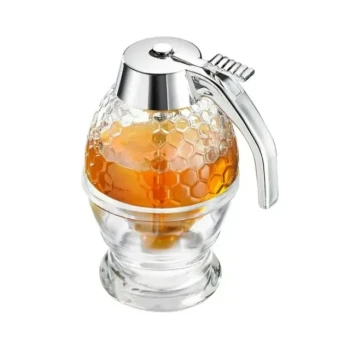
- Premium Diamond-Faceted Glass Honey Dispenser
- Honeycomb Style Drip Free Honey Dispenser
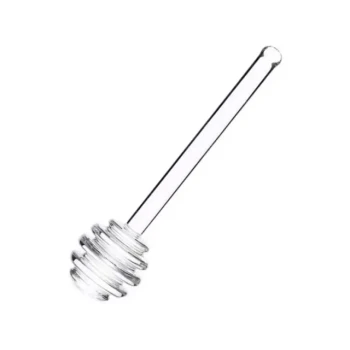
- Professional Plastic Honey Dipper for Easy Honey Drizzling
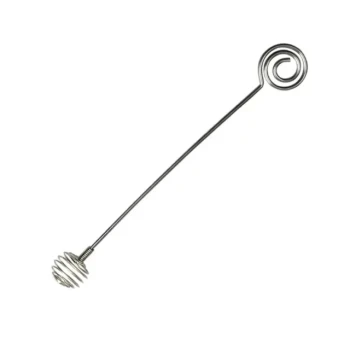
- Heavy Duty 304 Stainless Steel Honey Dipper
- Heavy-Duty Ergonomic Grip Galvanized Pollen Shovel
People Also Ask
- How to clean a honey dripper? A Simple Guide to Preserve Your Tool's Quality
- What is the proper method for cleaning a honey dipper? Maintain Pure Flavor with These Easy Pro Tips
- What is a honey dipper? Master the Art of the Perfect Drizzle with This Essential Tool
- How do you clean and store a honey dipper? Simple Steps for Long-Lasting Performance
- What is a honey taking spoon called? Discover the Tool for a Perfect, Mess-Free Drizzle