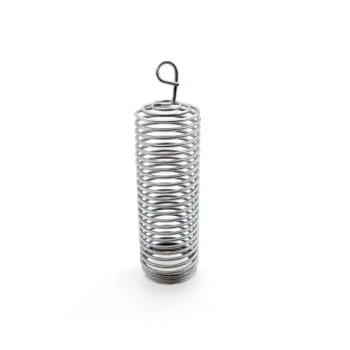
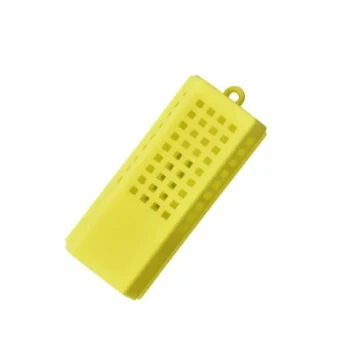
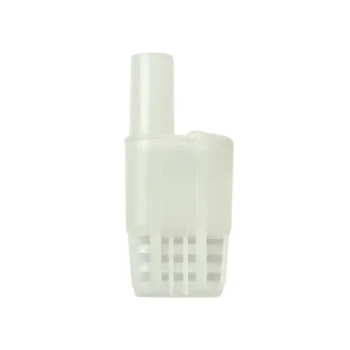
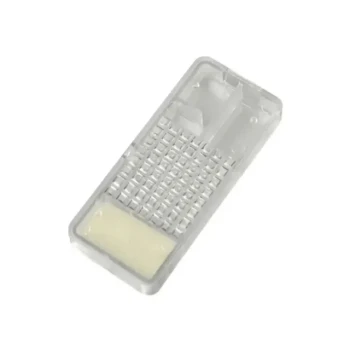
Mesh metal cages serve as the fundamental physical interface for monitoring honeybee lifespans in controlled laboratory settings. These enclosures, typically measuring 11x9x5 cm, house adult bees immediately following emergence. They function to isolate specific groups, allowing researchers to accurately track survival days and analyze the impact of external factors, such as pesticide residues, without environmental interference.
The primary function of the mesh metal cage is to create a secure, breathable environment that isolates adult bees for long-term survival tracking, specifically allowing for the accurate measurement of sub-lethal pesticide effects.
Optimizing the Observation Environment
Regulating Airflow and Climate
The mesh construction of the cage is not merely for containment; it is a life-support feature. It ensures constant, sufficient airflow throughout the observation period.
Proper ventilation prevents moisture buildup and stagnation, which could artificially shorten the bee's lifespan and skew the data.
Facilitating Maintenance and Feeding
Long-term longevity studies require bees to be sustained for weeks. The mesh design allows for the administration of food without requiring the cage to be fully opened.
This ensures that the bees' nutritional needs are met with minimal disturbance to the test subjects.
Providing Physical Protection
The cage dimensions (approximately 11x9x5 cm) offer a balance between confinement and space. This volume allows the bees limited movement while keeping them secure.
The rigid structure provides physical protection, ensuring that the mortality rates recorded are due to the variables being tested, not accidental trauma or predation.
Isolating Variables for Toxicology
Measuring Sub-lethal Effects
One of the most critical roles of these cages is facilitating the study of sub-lethal pesticide effects.
Researchers use these units to house bees that have been exposed to pesticide residues. Because the environment is controlled, any reduction in "survival days" can be directly correlated to the chemical exposure.
Standardizing the Control Group
To scientifically prove a change in longevity, you must have a consistent baseline. These cages allow researchers to create identical environmental conditions for both treated bees and control groups.
This standardization removes environmental noise, isolating the specific impact of the chemical being studied.
Understanding the Trade-offs
Artificial Environment vs. Natural Hive
While these cages are essential for isolation, they represent a highly artificial environment. They do not replicate the complex social interactions, flight requirements, or temperature regulation of a natural colony.
Confinement Stress
The restriction of movement within an 11x9x5 cm space introduces confinement stress. While necessary for observation, researchers must acknowledge that this is a "controlled laboratory environment," and results are strictly applicable to those specific conditions.
Strategic Application for Research
To utilize mesh cages effectively in your monitoring process, you must align the tool with your specific experimental goals.
- If your primary focus is toxicology assessments: Prioritize the isolation capability of the cage to rigorously test for sub-lethal pesticide impacts on survival days.
- If your primary focus is behavioral observation: Recognize that the mesh cage is designed for longevity tracking, not for observing complex social behaviors or flight patterns.
By stabilizing the environment and securing the sample, these cages transform variable biological lifespans into quantifiable, comparable data points.
Summary Table:
| Feature | Role in Monitoring | Benefit to Research |
|---|---|---|
| Mesh Construction | Ensures constant airflow & ventilation | Prevents moisture buildup & data skewing |
| Rigid Structure | Provides physical protection & security | Ensures mortality is linked to variables, not trauma |
| Compact Size | Isolates groups (approx. 11x9x5 cm) | Facilitates accurate daily survival tracking |
| Feeding Interface | Allows nutrition without opening cages | Minimizes disturbance to test subjects |
| Isolation Control | Standardizes environments for groups | Precisely measures sub-lethal pesticide effects |
Elevate Your Apiary Operations with HONESTBEE
Are you looking to scale your research capabilities or optimize your commercial honey production? At HONESTBEE, we specialize in supporting commercial apiaries and distributors with a robust wholesale portfolio of high-quality beekeeping essentials.
From laboratory-grade tools to heavy-duty hive-making and honey-filling machinery, we provide the comprehensive equipment and industrial consumables you need to succeed. Our expertise helps you streamline processes and deliver superior results to your clients.
Ready to upgrade your equipment? Contact us today to discover how our tailored beekeeping solutions and specialized hardware can drive your business growth.
References
- Judy Y. Wu, Walter S. Sheppard. Sub-Lethal Effects of Pesticide Residues in Brood Comb on Worker Honey Bee (Apis mellifera) Development and Longevity. DOI: 10.1371/journal.pone.0014720
This article is also based on technical information from HonestBee Knowledge Base .
Related Products
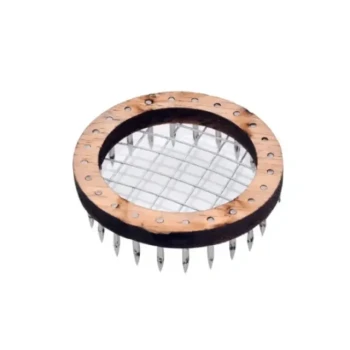
- Wood and Mesh Push-In Queen Cage
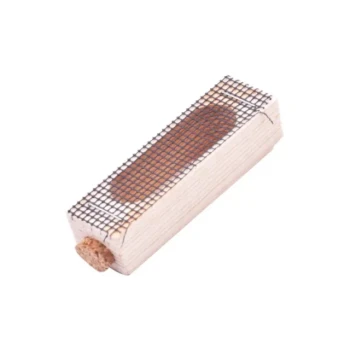
- Classic Wooden and Mesh California Queen Cage
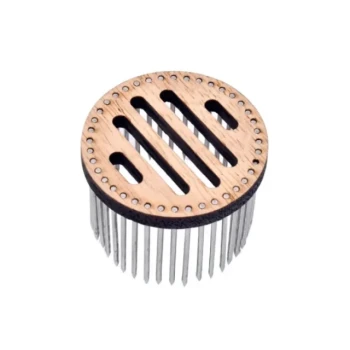
- Premium Wood and Steel Push In Queen Cage
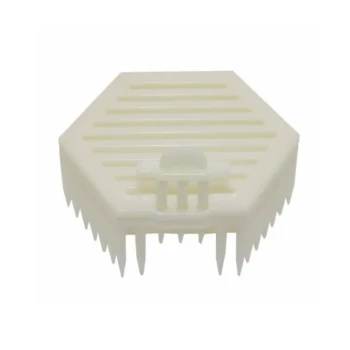
- Hexagonal Direct Comb Introduction Queen Bee Cage
- Durable Galvanized Steel Spring Queen Bee Cage
People Also Ask
- When is a queen introduced with a push-in cage ready for full release? Key Signs for Maximum Colony Acceptance
- How are queen cages used to protect newly hatched queens? Secure Your Virgin Queens During Development
- Why are queen cages or grid cages used in bee studies? Achieve Precise Biological Data for Research
- What advantages do push-in queen cages offer? Boost Acceptance Rates for Artificially Inseminated Queens
- What is a push-in queen cage and how does it differ from a standard queen cage? Boosting Your Queen Acceptance Rates