Professional honey filters serve as the critical mechanical barrier between the chaotic environment of the hive and the standardized requirements of the consumer market. By utilizing a multi-layered precision mesh structure, these tools physically separate raw honey from harvesting byproducts—specifically beeswax debris, bee parts, and forest contaminants—without resorting to chemical processing or excessive heating.
Core Insight Professional filtration is not merely about aesthetics; it is a stabilization process that removes organic catalysts for spoilage while retaining the honey's essential character. It bridges the gap between raw extraction and regulatory safety compliance, ensuring a product that is visually marketable yet biologically authentic.
The Mechanics of Purification
Multi-Layered Precision Technology
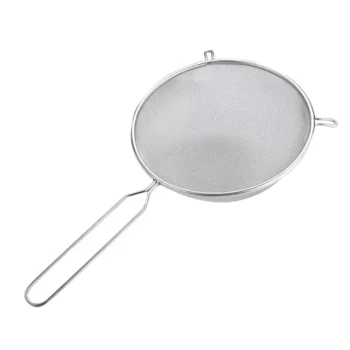
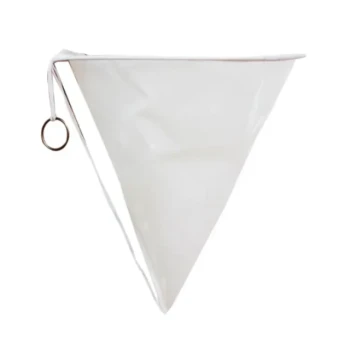
Professional systems rely on a series of fine physical barriers, often constructed from stainless steel mesh or specialized filter cloths.
Unlike simple straining, this multi-layered approach progressively captures particles of varying sizes. This ensures that even microscopic "mechanical impurities" are trapped before the honey reaches the bottling stage.
Removal of Hive Debris
The primary function of these filters is the extraction of physical contaminants naturally collected during harvesting.
This includes visible impurities such as beeswax fragments and bee parts, as well as "forest contaminants" like ash or organic dust. Removing these elements is the first step in converting a raw agricultural yield into a food-grade product.
Enhancing Stability and Shelf Life
Prevention of Phase Separation
Unfiltered raw honey is prone to layering, where heavy particles sink and lighter debris floats.
Professional filtration homogenizes the liquid's consistency. This prevents phase separation, ensuring the honey remains uniform in texture and viscosity from the top of the jar to the bottom.
Mitigating Microbial Risks
Organic residues left in honey are not just unsightly; they can be biologically active.
By removing suspended organic matter, filters significantly reduce the risk of microbial fermentation. This is vital for hygiene, as residual debris can act as a substrate for yeast growth, which would otherwise spoil the honey over time.
Controlling Crystallization
While raw honey will naturally crystallize, the presence of foreign particles accelerates this process unevenly.
Debris acts as "nucleation points" where sugar crystals form rapidly and irregularly. Filtration removes these points, preventing uneven crystallization or sediment formation, allowing for a smoother, more controlled texture as the honey ages.
Elevating Sensory and Market Value
Visual Clarity and Appeal
Modern consumers associate transparency with purity.
High-precision filters significantly enhance the clarity and visual purity of the honey. This allows the natural amber or golden hues of the product to shine without the distraction of suspended cloudiness, directly increasing market appeal.
Sensory Purity
Impurities can introduce off-flavors or gritty textures.
By mechanically scrubbing the liquid of solid contaminants, filtration preserves the sensory purity of the honey. It ensures that the consumer tastes only the nectar profile intended by the floral source, rather than wax or hive debris.
Understanding the Trade-offs
The "Raw" Balance
There is a critical distinction between professional filtration and ultra-filtration (often used in mass commercial honey).
Professional filters for raw honey are designed to remove impurities while preserving bioactive components. The goal is to clean the honey without stripping it of beneficial enzymes or pollen, which are markers of its "raw" status.
Risk of Over-Filtration
Selecting the incorrect mesh size can inadvertently degrade the product's value.
If a filter is too fine, it may remove pollen grains entirely. This not only strips the honey of nutritional value but may also make it impossible to verify the honey's botanical origin (ripeness and source) via laboratory testing.
Making the Right Choice for Your Goal
To select the appropriate filtration strategy, define your end-product objectives:
- If your primary focus is Mass Market Retail: Prioritize finer mesh sizes to maximize visual clarity and shelf stability, as these consumers value a glass-like, sediment-free appearance above all else.
- If your primary focus is Artisan/Raw Certification: Use coarser, professional-grade mesh that removes macro-impurities (wax/parts) but allows pollen to pass through, preserving the bioactive claim of the product.
Professional filtration is the defining step that transforms raw hive yield into a safe, stable, and commercially viable commodity without compromising its natural integrity.
Summary Table:
| Feature | Function in Purification | Impact on Honey Quality |
|---|---|---|
| Multi-Layer Mesh | Progressively captures micro-particles | Enhances visual clarity and transparency |
| Debris Removal | Eliminates wax, bee parts, and dust | Ensures food-grade safety and hygiene |
| Homogenization | Prevents phase separation | Maintains uniform texture and viscosity |
| Particle Control | Removes nucleation points | Slows and smooths the crystallization process |
| Bioactive Balance | Preserves enzymes and pollen | Maintains "raw" status and nutritional value |
Elevate Your Honey Production with HONESTBEE
Transform your raw harvest into a premium, market-leading product with HONESTBEE. As a dedicated partner to commercial apiaries and global distributors, we provide the professional-grade filtration systems and beekeeping machinery you need to ensure peak purity and stability.
Why Choose HONESTBEE?
- Comprehensive Wholesale Range: From stainless steel multi-layer filters to industrial honey-filling machines.
- Industry Expertise: We supply everything from hive-making hardware to essential consumables and honey-themed merchandise.
- Scalable Solutions: Our equipment is designed to enhance efficiency for large-scale operations without compromising the bioactive integrity of your honey.
Ready to optimize your processing line? Contact us today to discover how our tailored equipment solutions can grow your beekeeping business!
References
- Raden Isma Anggraini, M. Syamsul Maarif. Strategic Business Development For Honey Bee Farming in KTH Sadar Tani Muda Forest Farmers Group. DOI: 10.17358/brcs.6.1.1
This article is also based on technical information from HonestBee Knowledge Base .
Related Products
- Professional Honey Filter with Tripod Support Stand
- Professional Stainless Steel Honey Filter with Support Handle
- Professional Stainless Steel Honey Filtering Machine with Water Bath Heating for Beekeeping
- Professional Cone-Shaped Honey Filter with Reinforced Steel Ring
- Electric Double Wall Honey Filtering Machine Purifier Equipment for Honey Processing Plant
People Also Ask
- What are the benefits of using honey filters? Achieve Purity, Efficiency, and Market Appeal
- What are the types of honey filters? Choose the Right System for Your Honey's Clarity & Quality
- Should I filter my honey? A Guide to Clarity, Crystallization & Quality
- How is honey filtered after being extracted? Master the Best Techniques for Pure, Clean Honey
- What micron filter should I use for honey? Choose the Right Filter for Sales or Competitions