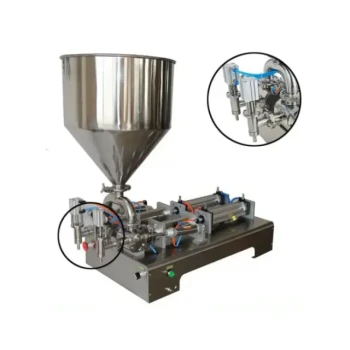
Professional honey processing and filling machines act as the critical bridge between agricultural pollination and commercial profitability. By automating the transformation of raw honey—a natural byproduct of oil palm pollination—into standardized, marketable goods, these systems allow plantation management to efficiently capture a secondary revenue stream. They simultaneously enhance the commercial value of the operation while supporting the ecological benefits derived from integrated beekeeping.
Core Takeaway: These machines function as dual-purpose assets: they operationalize a new revenue channel by converting raw hive output into shelf-ready products, while reinforcing the economic viability of keeping bees for crop pollination.
From Byproduct to Commercial Asset
Transforming Raw Input into Capital
In an oil palm setting, the primary biological goal of beekeeping is pollination to improve crop yields. However, honey is generated as a continuous byproduct of this process.
Professional processing equipment allows plantation managers to capture this byproduct efficiently. Instead of treating honey as a casual surplus, these machines systematize its collection, turning it into a predictable commercial product.
Achieving Market Standardization
To move honey from the hive to the retail shelf, consistency is required. Automated filling machines employ precision pneumatic or quantitative pump systems to ensure every unit meets uniform weight and volume specifications.
This level of standardization strengthens the market position of the producer. It converts variable raw materials into high-value commodities capable of competing in regional and international markets.
Operational Efficiency and Yield Preservation
The Role of Centrifugal Extraction
Modern processing relies heavily on centrifugal force. Specialized extractors separate the honey from the frame without physically destroying the honeycomb structure.
This is a critical efficiency factor. It significantly shortens the harvesting time compared to traditional manual methods, allowing for large-scale processing.
Increasing Future Yields
The preservation of the honeycomb has a direct impact on biological productivity. When the comb structure is preserved during extraction, bees do not need to expend energy rebuilding wax combs.
Instead, they can immediately focus on collecting nectar and pollinating flowers. This energy savings substantially increases the annual honey yield per hive and ensures higher frequency flower-visiting activity within the plantation.
Hygiene and Brand Integrity
Eliminating Contamination Risks
Manual bottling often introduces risks such as unsterilized equipment or poor sealing. Professional filling machines integrate automated metering and sterilization functions to resolve these issues.
This creates a contamination-free bottling environment. It ensures the final product is safe, hygienic, and properly sealed, which is essential for consumer trust.
Meeting Export Standards
For plantations aiming to export honey, hygiene is not optional; it is a regulatory requirement. Automated machines ensure that products meet rigorous national and international hygiene standards.
This compliance is a necessary condition for entering high-end markets. It establishes a premium brand image that manual processing simply cannot support.
Understanding the Operational Trade-offs
Capital Investment vs. Production Volume
While automation drives efficiency, it requires significant upfront capital. High-throughput machines are only cost-effective when the scale of the beekeeping operation produces enough honey to justify the investment.
Technical Complexity
Introducing industrial machinery adds a layer of complexity to an agricultural operation. Staff must be trained not only in apiculture (beekeeping) but also in the operation, sanitation, and maintenance of processing hardware.
Strategic Application for Plantation Managers
To maximize the return on investment in honey processing technology, align your equipment choice with your specific operational goals.
- If your primary focus is increasing honey yield: Prioritize high-quality centrifugal extractors that preserve the comb, as this reduces bee energy expenditure and boosts future production.
- If your primary focus is entering high-end retail markets: Invest heavily in automated filling machines with integrated sterilization and labeling to ensure hygiene compliance and brand consistency.
- If your primary focus is ecosystem sustainability: Use the revenue generated by processing equipment to fund the expansion of the bee population, creating a self-sustaining economic loop that drives pollination.
By integrating these machines, you essentially transform a biological conservation effort into a sustainable, standardized business model.
Summary Table:
| Feature | Primary Function | Operational Benefit |
|---|---|---|
| Centrifugal Extraction | Separates honey while preserving wax combs | Increases future yields by saving bee energy |
| Precision Filling | Automated pneumatic or pump-based bottling | Ensures market standardization and weight accuracy |
| Integrated Sterilization | Eliminates biological and physical contaminants | Meets international hygiene and export standards |
| Systematized Workflow | Converts raw nectar into shelf-ready goods | Creates a secondary revenue stream for plantations |
Maximize Your Plantation's Revenue with HONESTBEE
Transition from simple pollination to a high-margin honey business with HONESTBEE. As a premier provider for commercial apiaries and global distributors, we offer the technical expertise and robust machinery required to scale your operations.
From industrial-grade centrifugal extractors that protect your hives' productivity to high-precision honey-filling machines that ensure retail-ready quality, our comprehensive portfolio covers every hardware and consumable need. We help you build a self-sustaining economic loop that rewards your ecological efforts with commercial success.
Ready to industrialize your honey production? Contact HONESTBEE Today for a Tailored Equipment Consultation
References
- Dunsford, Brian, Jayarathne, Isuri. Evaluating Apis cerana (L.) beekeeping as a strategy to enhance pollination and yield in Sri Lankan oil palm plantations. DOI: 10.5281/zenodo.17736364
This article is also based on technical information from HonestBee Knowledge Base .
Related Products
- Fully Automatic Honey Filling Packaging Machine for Processing Line
- Precision Durable Efficient HONESTBEE Rotary Honey Filling Machine
- Automatic Honey Filling and Filtering Machine for Beekeeping Bottle Filling
- Economy Small Honey Filling Machine Honey Bottle Filler Packaging Machine
- Commercial Rotary Honey Filling Machine for Production
People Also Ask
- Why are fully automatic honey filling and packaging lines essential? Boost Your Honey's Market Value and Quality
- What is a fully-automatic honey filler? Streamline Your Production with High-Precision Automation
- How do automated honey filling and packaging machines affect profitability? Boost Margins with HONESTBEE Technology
- How do automated honey filling and packaging machines contribute to the market value of honey products? Maximize Your ROI
- How do industrial-grade automated honey filling and packaging machines mitigate the risk of physical contamination?