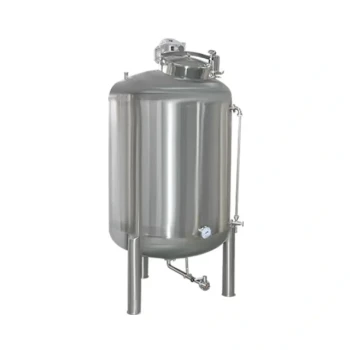
Professional honey processing facilities act as the critical intervention point that transforms raw, unstable nectar into a commercially viable product. Their primary role is to heat and filter raw honey, effectively eliminating fermenting yeasts and removing physical impurities to ensure long-term shelf stability and purity.
By standardizing the filtration, moisture control, and grading processes, these facilities allow producers to convert raw harvests into certified, high-value ingredients suitable for pharmaceutical, confectionery, and international food markets.
Ensuring Biological Stability and Purity
Elimination of Fermentation Risks
Raw honey naturally contains yeasts that can lead to fermentation and spoilage. The core function of professional processing is to eliminate these fermenting yeasts through controlled heating and filtration.
This stabilization process is the baseline requirement for giving honey a commercially viable shelf life. Without this step, the product remains vulnerable to biological degradation.
Precision Filtration
Advanced filtration equipment utilizes multi-stage physical screening. This machinery is designed to remove wax debris and environmental impurities introduced during harvest.
Crucially, modern systems are precise enough to filter out contaminants while retaining active pollen particles. This balance preserves the honey's natural profile while meeting hygiene requirements.
Achieving Standardization and Compliance
Grading for Quality Consistency
Professional facilities are equipped to grade honey according to strict quality specifications, such as AGMARK standards.
This grading capability allows cooperatives to segment their inventory. By categorizing honey based on quality, producers can target specific high-value sectors rather than selling a generic, undifferentiated product.
Industrial-Grade Hygiene
Fragmented or manual processing often leads to quality instability and secondary contamination. Professional facilities implement HACCP (Hazard Analysis and Critical Control Points) protocols to ensure food safety.
Complementary testing equipment validates physical-chemical indicators, such as glucose and fructose ratios. This data provides the industrial-grade quality assurance necessary to build consumer trust, particularly for healthcare or medical applications.
Advanced Preservation and Packaging
Controlling the Environment
Post-harvest storage within these facilities offers controlled temperature and humidity environments.
This environmental control is vital for preventing the honey from absorbing atmospheric moisture or crystallizing prematurely. It supports off-season sales strategies by keeping the stock in optimal physical condition until it is ready for market.
Automated Filling and Sealing
Professional filling machines provide precise measurement and sealing technologies. This automation minimizes material waste and increases packaging speed.
More importantly, this integrated process prevents oxidation and moisture absorption during the final stage. By sealing the product effectively, the facility preserves the unique flavor profiles and pharmacological activities of the honey for the consumer.
The Risks of Inadequate Processing
While raw honey has niche appeal, the absence of professional processing equipment creates a significant production bottleneck for large-scale operations.
Without industrial filtration and moisture control, honey is prone to secondary contamination and spoilage. This limits the product to local, low-value markets and prevents entry into premium international or pharmaceutical supply chains that demand rigorous standardization.
Making the Right Choice for Your Goal
To maximize the value of your honey harvest, align your processing strategy with your target market.
- If your primary focus is Pharmaceutical or Export Markets: Prioritize facilities with HACCP certification and advanced laboratory testing to verify glucose ratios and ensure absolute sterility.
- If your primary focus is Shelf Stability and Mass Retail: Focus on facilities utilizing controlled heating and automated filling systems to eliminate yeast fermentation and prevent oxidation.
- If your primary focus is Premium Consumer Brands: Ensure the facility uses multi-stage screening that removes wax debris but explicitly retains natural pollen particles to support quality claims.
Professional processing is not merely about cleaning honey; it is the prerequisite mechanism for upgrading a raw commodity into a certified, high-value asset.
Summary Table:
| Key Processing Phase | Function & Role | Primary Outcome |
|---|---|---|
| Thermal Treatment | Controlled heating to eliminate fermenting yeasts | Long-term shelf stability |
| Multi-stage Filtration | Precise removal of wax and debris while retaining pollen | High purity & hygiene compliance |
| Grading & Testing | Quality classification (e.g., AGMARK, Glucose ratios) | Access to high-value industrial sectors |
| Environmental Control | Regulation of temperature and humidity | Prevention of crystallization and oxidation |
| Automated Filling | Precise measurement and airtight sealing | Minimized waste and preserved flavor profiles |
Scale Your Honey Production with HONESTBEE
Transition from raw harvests to high-value commercial assets with HONESTBEE. As a premier partner for commercial apiaries and distributors, we provide the comprehensive wholesale solutions you need to succeed in the competitive honey industry.
Our industrial-grade portfolio includes:
- Advanced Machinery: Hive-making, honey-extraction, and precision honey-filling machines.
- Beekeeping Essentials: A full spectrum of professional tools and industry consumables.
- Market Expansion: Specialized equipment designed to meet HACCP and international pharmaceutical standards.
Whether you are scaling your extraction line or stocking a distribution network, HONESTBEE delivers the hardware and expertise to maximize your efficiency. Contact our experts today to upgrade your facility!
References
- Khushdeep Dharni, Deepak Goel. Startup operations and problems of honey bee entrepreneurs: experience from India. DOI: 10.1504/ijesb.2013.052520
This article is also based on technical information from HonestBee Knowledge Base .
Related Products
- Electric Double Wall Honey Filtering Machine Purifier Equipment for Honey Processing Plant
- Heavy Duty Stainless Steel Honey Processing Machine Decrystallizing Tank
- Double Wall Honey Heating Stirring Homogenizer Mixing Machine with Various Capacity
- Economy Honey Homogenizer Mixer and Melting Machine for Beekeeping
- 0.5T Capacity Honey Dehumidifier Dryer with Vacuum Heating and Thickening Filtering Machine
People Also Ask
- What types of equipment are used in honey filtering? Build an Efficient System for Pure, Marketable Honey
- What is the process of filtering honey? A Guide to Clean, Pure, and Market-Ready Honey
- What is the overall importance of using the right equipment in honey filtering? Boost Quality & Marketability
- What steps are involved in maintaining honey filtering equipment? A Guide to Protecting Your Honey Quality
- Why is filtering important in honey processing, and what equipment is used? A Guide to Quality & Efficiency