Professional honey storage and processing facilities serve as the critical firewall between raw harvest and safe consumption, primarily by rigorously controlling environmental variables. By maintaining precise temperature and humidity levels, these facilities prevent fermentation, spoilage, and undesirable crystallization, ensuring the honey’s physical and chemical properties remain stable from extraction through to the finished product.
Professional facilities transform honey from a volatile raw material into a stable commercial product. By strictly regulating storage conditions and processing techniques, they preserve the honey's natural integrity, extending shelf life and enabling strategic off-season sales.
Environmental Stabilization and Shelf Life
Controlling Moisture and Humidity
The primary enemy of harvested honey is moisture absorption, which leads to fermentation. Professional facilities utilize controlled humidity environments to prevent the honey from absorbing water from the air.
This is critical because excess moisture activates yeasts naturally present in honey. By maintaining low humidity, these facilities ensure the product remains below the threshold required for spoilage.
Managing Temperature to Prevent Spoilage
Temperature fluctuations are equally detrimental to honey quality. Professional storage provides a consistent thermal environment that prevents the product from degrading.
High temperatures can accelerate aging and spoilage, while uncontrolled cold can force premature or uneven crystallization. Professional climate control keeps the honey in a state that preserves its texture and natural state for long periods.
Preserving Bioactive Quality
Retention of Heat-Sensitive Enzymes
Beyond basic spoilage, professional processing is designed to protect the biological activity of the honey. Equipment is calibrated to avoid overheating, which destroys heat-sensitive enzymes like diastase.
This precision ensures the retention of bioactive substances, such as flavonoids, which are responsible for many of honey's health benefits. This allows the final product to meet strict regulatory requirements for biological activity.
Protection Against Oxidation
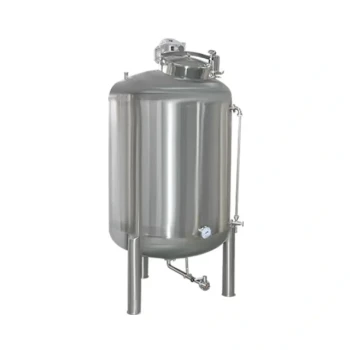
Specialized storage containers are essential for preventing chemical changes during the holding period. These containers use superior sealing and food-grade materials to create a barrier against oxygen.
Oxidation can degrade the flavor and nutritional profile of honey. By isolating the honey from external air and contaminants, professional facilities maintain the product's physicochemical indicators.
Purity and Standardization
Debris Removal and Filtration
Raw honey often contains impurities that must be removed without stripping the honey of its value. Professional processing equipment performs essential filtering and sedimentation functions to remove wax, debris, and foreign particles.
This process is vital for consumer acceptance and meeting hygiene standards. Advanced filtration systems achieve this high purity while designed to preserve the nutritional components that define organic or premium honey.
Ensuring Traceability and Safety
Modern facilities integrate standardization into the packaging process. Using high-density glass or specialized plastic jars effectively blocks foreign odors and further moisture intrusion.
These standardized containers are critical for traceability in contract-based production models. They ensure that every batch can be tracked and meets the safety standards required for commercial processors and medical-grade applications.
Common Pitfalls in Processing
The Risk of Thermal Damage
While professional equipment is designed to process honey efficiently, the incorrect application of heat remains a significant risk. Even in professional settings, over-processing to speed up filtration or dehydration can denature enzymes.
If the temperature controls fail or are set too high, the chemical indicators (such as HMF levels) will spike, causing the honey to fail quality tests. Equipment must be constantly monitored to balance viscosity reduction with enzyme preservation.
Complexity of Standardization
Achieving industrial-grade consistency requires rigid adherence to testing protocols. A common pitfall is relying solely on equipment without complementary quality testing for glucose and fructose ratios.
Without continuous testing, a facility may process a batch that is chemically unstable or prone to rapid crystallization, regardless of the storage conditions. Technology cannot entirely replace the need for constant physicochemical analysis.
Making the Right Choice for Your Goal
To maximize the value of your honey production, align your facility capabilities with your specific end-market requirements.
- If your primary focus is Extended Shelf Life: Prioritize facilities with advanced humidity control and vacuum dehydration capabilities to permanently stabilize moisture levels and prevent fermentation.
- If your primary focus is the Premium/Health Market: Focus on cold-processing equipment and precision temperature monitoring to maximize the retention of diastase enzymes and flavonoids.
- If your primary focus is Commercial Scalability: Invest in standardized filtration and sterile filling machinery to ensure high purity and meet the rigorous traceability requirements of large retailers.
Professional processing is not merely about packaging; it is the science of stabilizing a living product without destroying its essence.
Summary Table:
| Quality Factor | Professional Facility Role | Primary Benefit |
|---|---|---|
| Moisture Content | Controlled humidity & vacuum dehydration | Prevents fermentation and spoilage |
| Temperature | Precision thermal regulation | Preserves heat-sensitive diastase enzymes |
| Bioactive Profile | Cold-processing & oxidation barriers | Maintains flavonoids and health benefits |
| Purity | Advanced filtration & sedimentation | Removes wax and debris without loss of value |
| Shelf Life | Standardized food-grade packaging | Prevents crystallization and ensures traceability |
Elevate Your Honey Quality with HONESTBEE
Transitioning from raw harvest to a premium commercial product requires the right infrastructure. HONESTBEE specializes in supporting commercial apiaries and distributors with high-performance beekeeping machinery and tools.
Whether you need specialized hive-making equipment, high-precision honey-filling machines, or a steady supply of essential industry consumables, we provide the full spectrum of hardware and merchandise to scale your operations.
Ready to optimize your production and ensure market-leading quality?
Contact HONESTBEE Today for a Wholesale Consultation
References
- Andriy I. Popovych. Beekeeping sector as a form of enterprise family history: analysis socio-economic. DOI: 10.5604/01.3001.0013.6508
This article is also based on technical information from HonestBee Knowledge Base .
Related Products
- Professional Honey Storage Tank with Agitation System
- Stainless Steel Honey Storage and Settling Tank with Double Strainer
- Stainless Steel Honey Storage Tank with Lid for Honey
- Heavy Duty Stainless Steel Honey Processing Machine Decrystallizing Tank
- Honey Concentrating and Filtering Dehumidifier Machine 2T Capacity for Honey
People Also Ask
- What economic role do honey storage tanks play? Boost Your Revenue Through Strategic Inventory Management
- What roles do industrial honey storage tanks and filtration meshes play in processing? Ensure Purity & Consistency
- What is the purpose of a honey storage tank? Streamline Your Honey Processing for Quality & Efficiency
- What are honey storage tanks used for? Essential Features for Quality Preservation and Profit
- How do large honey storage tanks and gravity fall filling systems improve honey packaging efficiency and safety?