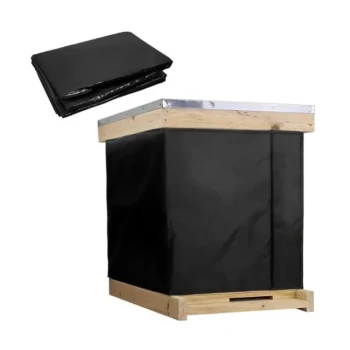
Traditional Hives represent the most foundational approach to apiculture, serving as basic nesting spaces constructed from readily available, low-cost local materials. While they offer the lowest barrier to entry for new beekeepers, they are designed primarily for basic production and household consumption rather than commercial scalability.
While Traditional Hives minimize startup costs through the use of local materials, they inherently limit management capabilities and honey yield. They act as a subsistence-level solution, lacking the movable frames necessary for non-destructive harvesting and disease control found in modern systems.
The Mechanics of Traditional Beekeeping
Construction and Accessibility
Traditional Hives are defined by their minimal construction costs. They utilize materials found locally, making them financially accessible to beekeepers who cannot invest in manufactured equipment.
This design philosophy prioritizes availability over standardization. It allows for the immediate establishment of a colony without the need for specialized supply chains or industrial manufacturing.
The Role in Subsistence Farming
For basic honey production intended for household consumption, these hives are sufficient. They provide the essential shelter bees require to build combs and store nectar.
However, the design focuses on housing the bees rather than optimizing the harvesting process. The yield is generally lower compared to modern designs, sufficing for personal use but often falling short of commercial demands.
Understanding the Trade-offs
Limitations in Colony Management
The primary drawback of the Traditional Hive is the challenge it presents for colony management. Unlike Modern Frame Hives, traditional designs generally do not support movable frames.
This fixed structure makes it difficult to perform routine inspections. Beekeepers cannot easily assess the health of the queen, check for brood patterns, or identify disease outbreaks early.
Impact on Harvesting and Yield
Harvesting from Traditional Hives is often destructive. Because the combs are usually fixed to the hive structure, extracting honey can damage the nest and potentially harm the bee population.
Modern hives allow for non-destructive harvesting, where frames are removed, spun, and returned. In contrast, Traditional Hives require the colony to rebuild destroyed comb, consuming energy that could otherwise be used for honey production.
Swarm Control and Expansion
Traditional designs often lack the modularity of modern systems, such as the ability to add "supers" (vertical boxes). This limits the space available for honey storage and brood rearing.
Without the ability to expand the hive volume, overcrowding becomes a significant risk. Overcrowding triggers the natural swarming instinct, leading to a loss of bees and a subsequent drop in productivity.
Making the Right Choice for Your Goal
When selecting a hive system, you must weigh your initial capital against your long-term production goals.
- If your primary focus is Low-Cost Entry: Choose Traditional Hives to minimize financial risk and utilize local materials for household-level production.
- If your primary focus is Commercial Efficiency: Invest in Modern Movable-Frame Hives to maximize yield, enable non-destructive harvesting, and facilitate disease control.
- If your primary focus is a Balanced Approach: Consider Transitional Hives, which offer better management capability than traditional designs at a lower cost than fully modern systems.
Ultimately, while Traditional Hives are an accessible starting point, upgrading to movable-frame systems is the critical step for achieving standardized, high-volume honey production.
Summary Table:
| Feature | Traditional Hives | Modern Frame Hives |
|---|---|---|
| Startup Cost | Very Low (Local materials) | Higher (Precision manufactured) |
| Management | Difficult (Fixed combs) | Easy (Movable frames) |
| Harvesting | Destructive to combs | Non-destructive extraction |
| Scalability | Limited (Household use) | High (Commercial production) |
| Honey Yield | Low | High |
Scale Your Honey Production with HONESTBEE
Transitioning from traditional methods to high-yield commercial beekeeping requires the right infrastructure. At HONESTBEE, we specialize in supporting commercial apiaries and distributors with a comprehensive range of professional solutions.
Whether you need precision-engineered hive-making machinery, automated honey-filling machines, or a full spectrum of wholesale beekeeping tools and consumables, we provide the industrial-grade equipment necessary to maximize your efficiency and output.
Ready to upgrade your apiary's performance? Contact us today to discuss how our wholesale offerings can grow your business.
References
- Dinku Negash, Bereket Mengeste. ASSESSMENT OF HONEY PRODUCTION SYSTEM, CONSTRAINTS AND OPPORTUNITIES IN SELECTED KEBELES OF HAWASSA CITY ADMINISTRATION, ETHIOPIA. DOI: 10.29121/granthaalayah.v7.i8.2019.641
This article is also based on technical information from HonestBee Knowledge Base .
Related Products
- Premium Traditional Copper Bee Smoker with Bellows
- Wholesales Dadant Size Wooden Bee Hives for Beekeeping
- Plastic Bee Hive Stand for Beekeeping
- Stainless Steel Honey Bee Smoker Hive and Honeycomb Smoker for Beekeeping
- Modern Flat-Mount Hive Number Set for Beekeeping
People Also Ask
- How do bee smokers equipped with bellows contribute to colony management? Master Pheromone Control for Healthier Hives
- What are bee smokers made out of? Choose the Right Material for Your Apiary
- What factors should be considered when choosing a bee smoker? Find the Right Tool for Safe, Effective Hive Management
- How should a bee smoker be stored and maintained? Ensure Reliability and Safety for Your Apiary
- What are the main components of a typical bee smoker? Master Hive Inspections with the Right Tool