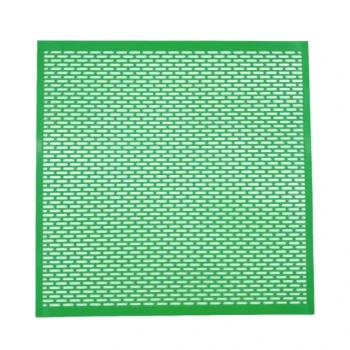
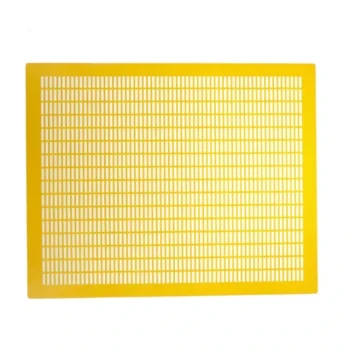
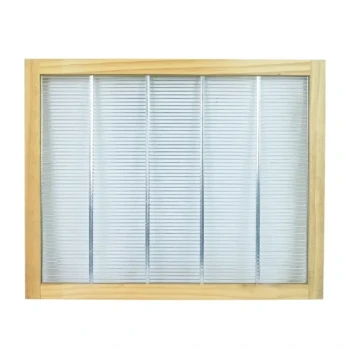
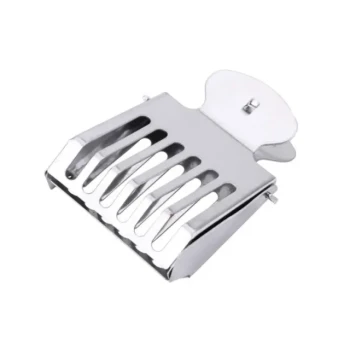
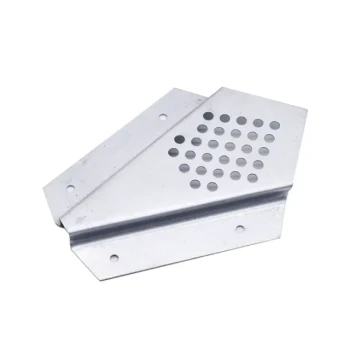
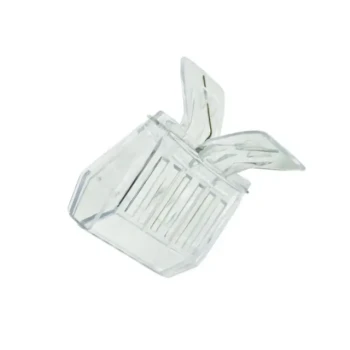
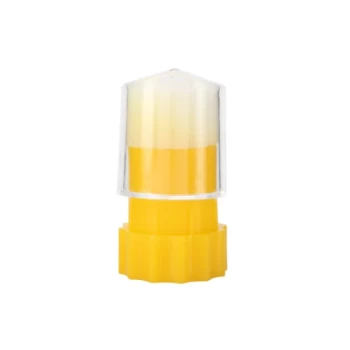
A Queen Excluder is a strategic barrier used to impose order on the natural expansion of a honeybee colony. It answers the need for precise hive management by utilizing a grid with specific apertures that differentiate between the body size of a worker bee and the larger queen. This simple mechanical filter dictates where brood is raised and where honey is stored.
By acting as a physical boundary, the Queen Excluder serves a dual purpose: it guarantees the purity of harvested honey by keeping supers brood-free, and it assists in swarm control by restricting the queen's ability to migrate or lead a colony split.
The Mechanics of Exclusion
Utilizing Caste Size Differences
The core function of the excluder relies on precise measurements. The grid openings are engineered to be large enough for worker bees to pass through freely but too narrow for the larger thorax of the queen.
Defining Vertical Limits
Typically installed between the brood chambers and the honey supers, the device creates a hard ceiling for the colony's reproductive area. While workers circulate throughout the entire hive to store resources, the queen remains physically confined to the lower boxes.
Role in Honey Production and Purity
Separating Brood from Resources
The primary role of the excluder in production is compartmentalization. Without this barrier, a prolific queen will naturally move upward into honey supers to lay eggs, mixing larvae with food stores.
Ensuring Commercial Standards
By confining the queen to the lower hive body, you ensure the upper frames contain only clean, capped honey. This eliminates the risk of harvesting frames containing eggs, larvae, or pupae, which is critical for maintaining commercial quality standards and processing efficiency.
Role in Swarm Management and Regulation
Restricting the Queen's Movement
Swarming involves the old queen leaving the hive with a portion of the worker population. A Queen Excluder can be utilized to physically prevent the queen from leading a swarm, particularly when applied at the hive entrance or in specific configurations that limit her exit.
Managing Colony Density
Beyond blocking exit, the excluder helps regulate the internal population density. By keeping the queen "in check" within the brood chamber, it prevents her from expanding the brood nest indefinitely upward. This forces the colony to maintain a specific organization, minimizing the chaotic overcrowding that often triggers swarming instincts.
Understanding the Trade-offs
The Risk of Artificial Constraints
While the excluder provides control, it imposes an artificial limit on the brood nest. The "density" maintenance mentioned in the primary reference is beneficial for production, but it requires the beekeeper to ensure the queen has adequate space in the lower box.
Balancing Flow vs. Restriction
The barrier must be viewed as a tool for organization, not total blockage. If the brood chamber becomes "honey-bound" (filled with honey because workers cannot move it up fast enough or the queen runs out of space), the colony may feel congested. Effective use requires monitoring the lower chamber to ensure the restriction doesn't inadvertently hamper the colony's health.
Making the Right Choice for Your Goal
To determine how to best utilize a Queen Excluder in your apiary, consider your primary objective:
- If your primary focus is Commercial Honey Production: You should use an excluder between the brood box and supers to guarantee larvae-free extraction and streamlined harvesting.
- If your primary focus is Swarm Prevention: You can utilize the excluder to restrict the queen's departure or to limit the vertical expansion of the brood nest to keep the population density manageable.
Ultimately, the Queen Excluder converts the chaotic growth of a biological organism into a structured, predictable system for the beekeeper.
Summary Table:
| Feature | Primary Function | Impact on Colony Management |
|---|---|---|
| Aperture Design | Mechanical filtration based on thorax size | Allows workers to pass while confining the larger queen. |
| Compartmentalization | Vertical boundary setting | Separates brood rearing from honey storage for cleaner extraction. |
| Swarm Prevention | Physical movement restriction | Prevents the queen from leading a swarm and regulates population density. |
| Quality Control | Resource purity | Eliminates the risk of larvae or eggs in honey supers for commercial standards. |
Maximize Your Apiary Productivity with HONESTBEE
At HONESTBEE, we understand that precision is the key to successful commercial beekeeping. As a dedicated partner to commercial apiaries and global distributors, we provide a comprehensive wholesale range of high-quality beekeeping tools, machinery, and essential consumables designed to streamline your operations.
Whether you need precision-engineered queen excluders, advanced honey-filling machines, or durable hive-making hardware, our portfolio is built to enhance your efficiency and yield. From specialized machinery to honey-themed cultural merchandise, we equip you with everything needed to scale your business.
Ready to upgrade your equipment? Contact us today to discuss our wholesale offerings and discover how HONESTBEE can bring structured, predictable growth to your honey production.
References
- Desta Gemedi, Tesfaye Alemu Aredo. Assessment of Beekeeping Practices in Selected Urban Areas of East Shewa and West Arsi Zones of Oromia, Ethiopia. DOI: 10.11648/j.aje.20250902.11
This article is also based on technical information from HonestBee Knowledge Base .
Related Products
- High Performance Plastic Queen Excluder for Beekeeping and Apiary Management
- Professional Plastic Queen Excluder for Modern Beekeeping
- Lightweight Durable Plastic Queen Excluder Scraper for Beekeeping
- Metal Queen Bee Excluder for Beekeeping
- Premium Wood Framed Metal Wire Queen Bee Excluder
People Also Ask
- What are the characteristics of a plastic queen excluder? Key Benefits for Cost-Effective Beekeeping
- What are the operational and cost advantages of using plastic queen excluders over metal or wire excluders in commercial hive management? Discover how they reduce labor, prevent wing damage, and lower total costs.
- What types of queen excluders are available for beekeepers? Choose the Right Tool for Your Hive
- Why are standardized hive frames and queen excluders essential for maintaining honey purity and quality? Scale Your Purity
- Do plastic queen excluders work? A Cost-Effective Solution for Modern Apiaries