High-precision hive-making equipment transforms beekeeping from a manual craft into a scalable, industrial operation. By utilizing advanced machinery to manufacture standardized and customized hive components, apiaries can ensure their structures align perfectly with the biological needs of specific bee species and local climate conditions.
The core value of high-precision equipment extends beyond simple carpentry; it provides the essential hardware foundation for scaling family-run apiaries into commercial enterprises. By ensuring structural consistency, this technology drastically reduces maintenance labor, facilitates mechanization, and creates a stable microenvironment that improves bee survival rates.
Establishing Operational Scalability
The Power of Standardization
The primary role of this equipment is to ensure geometric accuracy and component interchangeability.
When every hive body and frame is identical, routine maintenance becomes significantly faster. This standardization organizes the workflow, reducing the labor hours required per colony and allowing fewer beekeepers to manage larger numbers of hives.
Enabling Mechanized Workflows
Precision manufacturing is the prerequisite for modern automation.
Standardized components ensure hardware compatibility with industrial honey extraction lines and larval grafting machines. Without the strict dimensional tolerances provided by high-precision equipment, automated processing would face constant jams and inefficiencies.
Streamlining Logistics
Uniform hive dimensions are critical for the logistics of migratory beekeeping and large-scale pollination.
Standardized boxes stack securely, maximizing space on transport trucks and reducing the risk of shifting loads. This structural consistency improves transport efficiency and simplifies the physical relocation of apiaries between crop sites.
Enhancing Colony Health and Biology
Customization for Climate and Species
While standardization is key for the operator, customization is key for the bees.
High-precision equipment allows for the production of hive designs specifically tuned to local climate conditions and the biological characteristics of specific bee species (such as Apis mellifera). This ensures the physical habitat supports, rather than hinders, the colony's natural behaviors.
Stability of the Microenvironment
A well-constructed hive with tight tolerances maintains a stable internal environment.
Gaps or loose fittings in low-quality hives cause temperature fluctuations and allow pests to enter. Precision-made hives eliminate these vulnerabilities, helping colonies regulate temperature, reduce environmental stress mortality, and improve defense against physical intruders like the Greater wax moth.
Pathogen Control and Hygiene
Precise construction facilitates better disease management.
Uniform dimensions allow for the implementation of strict pathogen monitoring protocols. Furthermore, smooth, standardized surfaces are easier to clean and sterilize, providing a hardware foundation for effective disease control.
The Foundation for Smart Beekeeping
Integration with IoT Hardware
Modern apiary management increasingly relies on data.
High-precision manufacturing creates specific physical interfaces and "bee space" compliances required to install IoT monitoring sensors and RFID identification hardware. This transforms the hive from a wooden box into a smart station capable of transmitting real-time data.
Data Quantification and Modeling
Standardized equipment allows for accurate scientific comparison.
By utilizing uniform specifications, beekeepers can convert dispersed apiary sites into quantifiable spatial data. This is essential for ecological modeling, allowing operators to accurately record and compare honey production capacity and colony sizes across different locations.
Understanding the Trade-offs
Capital Intensity vs. Labor Savings
Implementing high-precision machinery requires a significant upfront capital investment compared to buying pre-made manual supplies or building hives with basic tools.
The return on investment depends on the scale of the operation. For small hobbyists, the cost may not be justifiable; however, for growing operations, the reduction in per-unit labor costs and increased longevity of the equipment offsets the initial expense.
The Risk of Systemic Errors
Precision replicates both success and failure.
If the initial design specifications are flawed—for example, incorrect "bee space" calculations—the high-precision equipment will replicate this error across thousands of units. This can lead to systemic issues, such as burr comb buildup or ventilation problems, affecting the entire operation simultaneously.
Making the Right Choice for Your Goal
- If your primary focus is rapid expansion: Invest in equipment that prioritizes speed and strict standardization to minimize labor hours and streamline logistics for migratory pollination.
- If your primary focus is colony health and survival: Configure your equipment to produce hives with tighter thermal properties and precise dimensional tolerances to exclude pests and stabilize the microenvironment.
- If your primary focus is data-driven management: Ensure your manufacturing specifications include precise interfaces for IoT sensors to facilitate seamless integration of monitoring technology.
High-precision equipment is not just about building boxes; it is about engineering a standardized, biologically optimized system that allows your apiary to scale without sacrificing control.
Summary Table:
| Key Role | Primary Benefit | Operational Impact |
|---|---|---|
| Standardization | Component interchangeability | Reduces labor hours & simplifies maintenance |
| Mechanization | Compatibility with automation | Enables high-speed honey extraction & processing |
| Colony Health | Stable microenvironments | Lower pest intrusion & improved bee survival |
| Smart Integration | IoT & RFID hardware ready | Facilitates data-driven apiary management |
| Logistics | Uniform dimensions | Optimizes transport space for migratory beekeeping |
Scale Your Commercial Apiary with HONESTBEE Solutions
Transitioning from manual crafts to industrial scalability requires precision you can trust. HONESTBEE specializes in empowering commercial apiaries and distributors with the high-performance tools needed to dominate the market.
Our value to your business:
- Comprehensive Wholesale Range: From specialized hive-making and honey-filling machinery to high-quality hardware and consumables.
- Precision Engineering: Ensure perfect "bee space" and structural consistency across thousands of units to reduce labor and enhance colony health.
- Industrial Expertise: We provide the machinery that transforms beekeeping into a streamlined, automated, and data-driven operation.
Ready to upgrade your infrastructure with the industry's best beekeeping equipment?
Contact HONESTBEE Today for a Consultation
References
- Agnieszka Kuś. Innovation management in apiaries in times of biodiversity crisis: evidence from Poland. DOI: 10.33119/jmfs.2024.54.3
This article is also based on technical information from HonestBee Knowledge Base .
Related Products
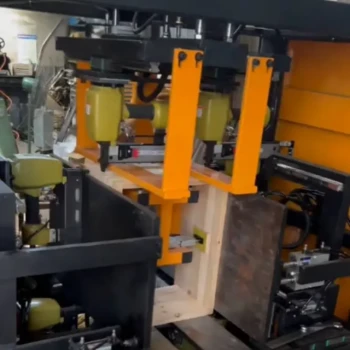
- High-Efficiency Pneumatic Bee Hive Making Machine for Rapid Box Assembly
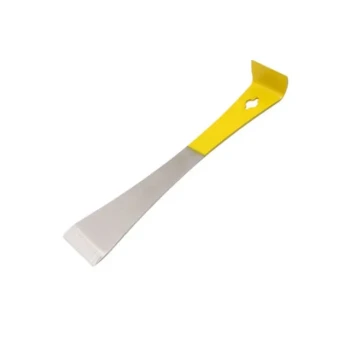
- HONESTBEE Professional Long Handled Hive Tool with Precision Cutting Blade
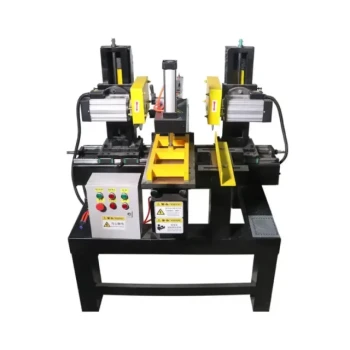
- Beehive Machine Double End Saw for Precision Hive Component Manufacturing
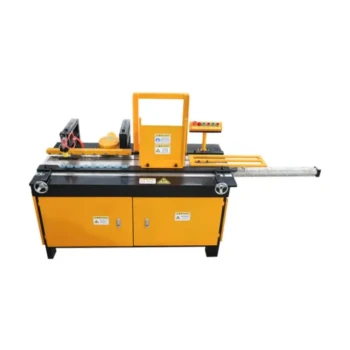
- Automatic High-Speed Bee Hive Box Stapling Machine
- Precision Stainless Steel Frame Cleaner for Hive Grooves and Corners
People Also Ask
- How does the introduction of professional beehive-making machinery benefit sustainable beekeeping? Scale Your Apiary
- Why is specialized beehive-making machinery critical for low-defense breeding? Enhance Selection with Precision Tools
- How does the introduction of specialized beehive making machinery contribute to increasing the scale of regional beekeeping industries?
- What is the importance of specialized beehive making machinery in a circular bio-economy? Build Local Sustainability
- Why is specialized beehive-making machinery essential? Scale Your Apiary with Precision Industrial Standards