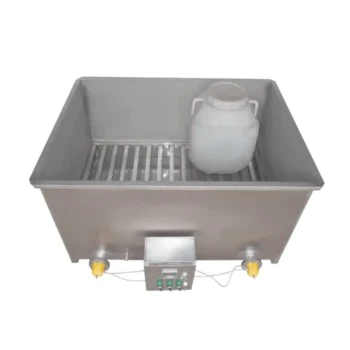
Specialized honey filling and processing equipment serves as the critical bridge between raw agricultural production and a viable commercial enterprise. It transforms bulk harvest into high-value consumer goods by ensuring precise measurement, sterile bottling, and the preservation of natural nutritional components required to meet rigorous market standards.
The economic power of this technology lies in its ability to standardize a variable natural product. By stabilizing biological activity and ensuring hygiene, mechanized systems convert raw honey into a consistent, export-grade commodity that commands a premium price.
Preserving Nutritional Integrity and Value
Maintaining Biological Activity
The primary economic driver of honey is its nutritional profile. Specialized equipment operates under sterile conditions to bottle honey without degrading its natural chemical and physical properties. This ensures the retention of unique biological components that define the product's market value.
Enhancing Visual Appeal and Purity
Raw honey often contains beeswax residues, debris, and other impurities. Processing workflows include filtration and refining stages that improve clarity and visual quality. This aesthetic improvement is often a prerequisite for consumer acceptance in premium retail environments.
Catering to Niche Genetics
Advanced machinery allows for the careful handling of honey from specific bee subspecies or floral sources. By processing these batches separately without cross-contamination, producers can market high-end, niche products like specific floral source honey or royal jelly, which fetch significantly higher prices than blended varieties.
Standardizing for Retail and Export
Overcoming Manual Limitations
Manual filling often leads to unsterilized containers, inconsistent volumes, and poor sealing. Industrial-grade machines utilize automated metering and sterilization functions to resolve these issues. This creates a standardized product that builds brand trust and minimizes waste.
Meeting International Hygiene Standards
To enter high-end markets or engage in international trade, products must meet strict hygiene and safety protocols. Automated systems ensure every bottle complies with national and international food safety standards. This compliance is a necessary material prerequisite for expanding a local brand into a global competitor.
Extending Shelf Life
Professional packaging does more than look good; it protects the product. High-quality sealing extends the shelf life of honey by preventing fermentation and contamination. A longer shelf life reduces inventory losses and allows for broader distribution logistics, opening up distant markets.
Diversifying Income Streams
Creating Dual-Revenue Models
Industrial capacity helps offset the operational costs of other beekeeping activities, such as pollination services. By adding value through deep processing, beekeepers create a dual-revenue model—earning fees for pollination while simultaneously selling high-margin processed goods.
Monetizing By-products
Professional processing lines efficiently separate honey from beeswax. This allows producers to recover high-purity beeswax, which can be further processed into value-added products like candles or cosmetics. This maximizes the yield from every hive and significantly diversifies the beekeeper's income sources.
Understanding the Operational Trade-offs
Capital Investment vs. Scale
While the economic benefits are clear, the transition to industrial-grade equipment requires significant upfront capital. For very small operations, the cost of automated lines may outweigh the immediate returns.
Complexity and Maintenance
Moving from manual to automated processing introduces technical complexity. Operators must account for the costs of maintenance, calibration, and the skilled labor required to manage high-precision machinery.
Making the Right Choice for Your Goal
Whether you are upgrading a community operation or managing a commercial facility, the equipment must match your strategic objective.
- If your primary focus is entering the export market: Prioritize equipment with advanced sterilization and precise automated weighing to meet international compliance standards.
- If your primary focus is niche product branding: Choose machinery capable of handling diverse viscosities and small batches to preserve the unique identity of specific floral sources or royal jelly.
- If your primary focus is maximizing revenue per hive: Invest in processing lines that efficiently separate and refine by-products like beeswax to create secondary income streams.
Specialized processing equipment is not just a tool for efficiency; it is the fundamental mechanism that validates the quality of your product and unlocks its true market potential.
Summary Table:
| Economic Driver | Role of Specialized Equipment | Key Business Benefit |
|---|---|---|
| Market Value | Preserves nutritional integrity & improves clarity | Commands premium pricing for high-quality goods |
| Standardization | Automated metering and sterile bottling | Builds brand trust and meets export standards |
| Waste Reduction | High-precision sealing and filtration | Extends shelf life and minimizes inventory loss |
| Income Streams | Efficient separation of honey and beeswax | Enables secondary revenue from beeswax by-products |
| Market Access | Compliance with international safety protocols | Facilitates entry into global and high-end retail |
Maximize Your Apiary’s Revenue Potential with HONESTBEE
Transitioning from raw production to a high-margin commercial enterprise requires more than just honey—it requires the right technology. HONESTBEE specializes in empowering commercial apiaries and distributors with the tools needed to scale.
We provide a comprehensive wholesale portfolio, including:
- Precision Machinery: Advanced honey-filling and hive-making machines to ensure standardization.
- Beekeeping Essentials: A full spectrum of professional tools and industry consumables.
- Cultural Merchandise: Honey-themed goods to diversify your brand appeal.
Whether you are aiming to penetrate the export market or optimize your processing efficiency, HONESTBEE delivers the hardware and expertise to unlock your true market potential.
Ready to elevate your production? Contact us today to explore our wholesale solutions!
References
- V. Pyl, H. I. Ganus. Actual directions of the rational use of the potential of beekeeping in solving economic, environmental and social problems of the development of the agroindustrial complex of Belarus. DOI: 10.29235/1818-9806-2022-2-85-93
This article is also based on technical information from HonestBee Knowledge Base .
Related Products
- Fully Automatic Honey Filling Packaging Machine for Processing Line
- Small Honey Filling Machine Sachet Packing Equipment Single Nozzle
- Double Nozzle Small Honey Filling Machine Honey Sachet Packing Packaging Equipment
- Automatic Honey Filling and Filtering Machine for Beekeeping Bottle Filling
- Precision Durable Efficient HONESTBEE Rotary Honey Filling Machine
People Also Ask
- Why are fully automatic honey filling and packaging lines essential? Boost Your Honey's Market Value and Quality
- What is a fully-automatic honey filler? Streamline Your Production with High-Precision Automation
- How do automated honey filling and packaging machines affect profitability? Boost Margins with HONESTBEE Technology
- How do automated honey filling and packaging machines contribute to the market value of honey products? Maximize Your ROI
- How do industrial-grade automated honey filling and packaging machines mitigate the risk of physical contamination?