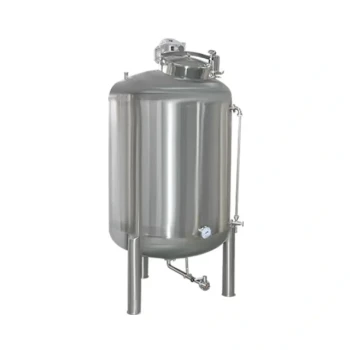
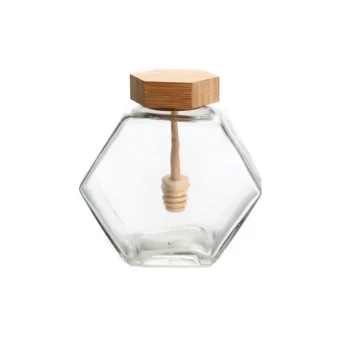
Specialized honey storage equipment is the primary defense against product loss, functioning chiefly by maintaining precise temperature and humidity levels to prevent physical spoilage and quality degradation. These systems serve as an active physical barrier against environmental risks, ensuring that the honey retains its commercial value and chemical integrity from the moment of production until it reaches the consumer.
By stabilizing the post-harvest environment, specialized storage converts a seasonal, perishable raw material into a stable commercial asset, preventing both physical waste due to spoilage and economic loss due to market oversaturation.
The Mechanics of Preservation
Controlling Environmental Variables
The primary cause of product loss in honey is exposure to uncontrolled environments. Specialized storage equipment provides rigorous regulation of temperature and humidity.
Without this control, honey is susceptible to fermentation, crystallization, or degradation of active nutritional components. By maintaining an optimal climate, these facilities stop the biological processes that lead to spoilage.
The Physical Barrier
Storage facilities act as a shield against external contaminants. This equipment creates a sealed environment that protects the inventory from physical storage-related risks.
This includes shielding the product from light exposure, which can deteriorate quality over time. A professional storage environment ensures the honey remains in the exact state required for high-end markets.
Economic Stability and Supply Chain Control
Mitigating Seasonal Risks
Honey production is inherently seasonal, creating distinct peaks in supply that can lead to market oversaturation. Storage equipment allows producers to hold inventory safely without fear of spoilage.
This capability prevents "economic product loss"—the need to slash prices just to move perishable stock. Instead, producers can stabilize the supply chain, releasing product as market demand dictates.
Preserving Commercial Grades
The value of honey is directly tied to its purity and chemical composition. Storage equipment ensures that the uniform product specifications achieved during processing are maintained.
By preventing degradation during holding periods, the equipment protects the product's grading evaluation. This ensures the final selling price reflects a premium, uncompromised product.
Understanding the Limits: Storage vs. Processing
The Distinction in Equipment Roles
It is critical to distinguish between storage equipment and processing equipment. While storage prevents loss over time, it does not improve the inherent purity of the honey.
Processing equipment (such as filtration devices and settling tanks) is responsible for removing wax debris and larval fragments to achieve transparency. Storage equipment simply preserves the quality achieved by those processing steps; it cannot retroactively clean the product.
The Investment Trade-off
Implementing professional storage requires significant capital investment and energy for climate control. However, rely strictly on ambient storage introduces the risk of total crop loss via fermentation.
The trade-off is an upfront operational cost versus the long-term risk of inventory spoilage. For commercial operations, the cost of storage is usually far lower than the cost of losing a harvest to poor environmental conditions.
Making the Right Choice for Your Goal
To maximize the value of your honey production, consider your specific operational needs:
- If your primary focus is preventing immediate spoilage: Prioritize storage solutions with automated temperature and humidity regulation to stop fermentation.
- If your primary focus is market leverage: Invest in high-capacity storage that allows you to withhold inventory during peak harvest and sell when prices stabilize.
- If your primary focus is product purity: Ensure your workflow integrates filtration processing equipment before the honey enters long-term storage.
Effective storage is not just about warehousing; it is a strategic tool for asset preservation.
Summary Table:
| Feature | Protection Mechanism | Benefit to Producer |
|---|---|---|
| Climate Control | Regulates temperature & humidity | Prevents fermentation and spoilage |
| Physical Barrier | Sealed, light-protected tanks | Stops contamination and UV degradation |
| Market Timing | High-capacity long-term storage | Prevents economic loss from oversaturation |
| Quality Retention | Maintains chemical integrity | Ensures premium market grading & pricing |
Maximize Your Honey Revenue with HONESTBEE
Don't let your hard-earned harvest lose value to environmental spoilage or market volatility. HONESTBEE provides commercial apiaries and distributors with the robust machinery and tools needed to protect every drop.
From high-precision honey-filling machines to advanced processing and storage solutions, our comprehensive wholesale offering is designed to scale your operation. Whether you need specialized hardware or essential industry consumables, our experts are ready to help you optimize your supply chain.
Contact us today to secure your honey production assets
References
- Köksal Karadaş, Avni Birinci. Identification of risk factors affecting production of beekeeping farms and development of risk management strategies: A new approach. DOI: 10.1590/rbz4720170252
This article is also based on technical information from HonestBee Knowledge Base .
Related Products
- Stainless Steel Honey Storage and Settling Tank with Double Strainer
- Professional Honey Storage Tank with Agitation System
- Stainless Steel Honey Storage Tank with Lid for Honey
- Hexagonal Glass Honey Jar with Wooden Lid Integrated Dipper Elegant Functional Storage
- Classic Glass Honey Jar with Metal Lug Cap for Beehive Storage
People Also Ask
- What economic role do honey storage tanks play? Boost Your Revenue Through Strategic Inventory Management
- What roles do industrial honey storage tanks and filtration meshes play in processing? Ensure Purity & Consistency
- What is the purpose of a honey storage tank? Streamline Your Honey Processing for Quality & Efficiency
- What role do settling tanks play in honey production? Achieve Pure, High-Clarity Honey Naturally
- Why are large settling tanks used in the honey clarification process? Achieve Natural Purity & Batch Consistency