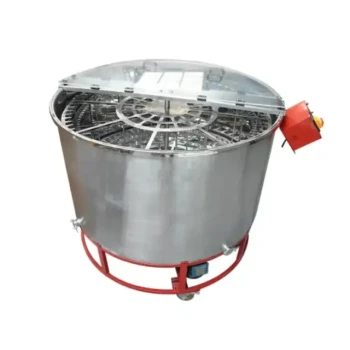
Industrial-grade dehumidification is the critical safeguard against fermentation in commercial honey production. Honey naturally retains moisture levels that, if left unregulated, create an environment ripe for spoilage. By actively reducing this moisture to meet strict international standards, such as the Codex Alimentarius, this equipment transforms raw harvest into a stable, export-ready product.
The Core Insight While raw honey is a natural product, its inherent moisture content is the primary threat to its longevity. Industrial dehumidification bridges the gap between the beehive and the retail shelf, ensuring the product remains biologically stable and free from fermentation without compromising its nutritional value.
The Science of Stability: Preventing Fermentation
To understand the necessity of this equipment, one must understand the biological risks inherent in raw honey.
Controlling Natural Moisture
Honey is hygroscopic, meaning it naturally absorbs moisture from the air. If the water content exceeds specific thresholds, dormant yeasts naturally present in the honey become active.
Industrial dehumidifiers provide the precise control needed to lower moisture content below the risk zone. This is not merely about drying; it is about reaching a specific target that inhibits yeast reproduction.
Stopping Spoilage at the Source
When yeast ferments honey, it converts sugars into alcohol and carbon dioxide, ruining the flavor and texture. This leads to souring and visible gas bubbles.
By removing excess water, dehumidification equipment eliminates the medium these microorganisms need to survive. This process is the primary mechanism for significantly extending the shelf life of the product.
Meeting International Commercial Standards
For honey to move from a local farmers' market to a high-end retail or export environment, consistency is non-negotiable.
Compliance with Codex Alimentarius
Global trade relies on the Codex Alimentarius, which sets definitive limits on moisture content for honey.
Industrial-grade equipment ensures that every batch meets these rigorous specifications. Without this mechanical intervention, natural variations in harvest conditions could render a batch unsellable in the international market.
Preserving Bioactive Integrity
Commercial success depends on marketing the health benefits of honey. Heat can reduce moisture, but excessive heat destroys enzymes.
Modern industrial dehumidification uses controlled processes to reduce water content while ensuring the stability of biological active ingredients. This preserves the nutrient profile that justifies premium pricing.
Integrating Dehumidification with Packaging
Dehumidification does not exist in a vacuum; it is part of a larger hygiene ecosystem.
The Pre-Packaging Prerequisite
Dehumidification is the preparatory step that standardizes the liquid. It ensures the honey is chemically stable before it enters the bottling phase.
Synergy with Filling Technology
Once the honey is dehumidified, it must be protected. As noted in broader industry practices, industrial filling machines operate in closed environments to prevent the honey from re-absorbing moisture from the air.
The dehumidifier creates the quality standard; the filling line locks it in. Together, they prevent contamination and ensure the "net weight" implies a dense, nutrient-rich product rather than one diluted by water weight.
Understanding the Trade-offs
While essential, the use of industrial dehumidification requires careful management to avoid diminishing returns.
The Risk of Over-Processing
The goal is moisture reduction, not total desiccation. Removing too much moisture can alter the viscosity, making the honey difficult to process or consume. It can also negatively impact crystallization rates.
Thermal Management
Some dehumidification methods generate heat. If this heat is not monitored, it can spike the HMF (Hydroxymethylfurfural) levels, a marker used to indicate thermal degradation. High-quality equipment balances moisture removal with temperature control to protect the honey's raw qualities.
Making the Right Choice for Your Goal
Implementing industrial dehumidification is an investment in product security. Your specific goals should dictate how you prioritize this equipment.
- If your primary focus is International Export: Prioritize equipment capable of hitting exact Codex Alimentarius moisture percentages to avoid rejection at customs.
- If your primary focus is Brand Reputation: Focus on systems with advanced temperature controls to ensure you preserve the bioactive ingredients and enzymes your customers value.
- If your primary focus is Large-Scale Wholesale: Ensure your dehumidification capacity matches the throughput of your filling lines to prevent bottlenecks and ensure batch consistency.
Dehumidification is not just a drying process; it is the fundamental step that professionalizes honey production.
Summary Table:
| Feature | Impact on Honey Quality | Benefit for Commercial Producers |
|---|---|---|
| Moisture Control | Reduces water content below yeast activation levels | Prevents fermentation and spoilage |
| Codex Compliance | Meets international moisture thresholds | Enables global export and high-end retail sales |
| Enzyme Preservation | Low-heat moisture removal | Maintains bioactive integrity and nutritional value |
| Shelf-Life Extension | Creates biological stability | Increases product longevity and reduces waste |
| Viscosity Optimization | Standardizes density for filling | Improves efficiency of bottling and packaging lines |
Scale Your Honey Production with Professional Equipment
At HONESTBEE, we understand that commercial success depends on precision and quality. We provide the specialized tools necessary for commercial apiaries and distributors to thrive in a competitive market. From industrial-grade dehumidifiers and honey-making machinery to automated honey-filling machines and essential consumables, our comprehensive wholesale offerings are designed to protect your harvest and maximize your ROI.
Ready to upgrade your facility and meet global export standards?
Contact HONESTBEE Today to discover how our tailored equipment solutions can enhance your production efficiency and product value.
References
- Zhang Ru Bong, Irine Runnie Henry Ginjom. Simple and Rapid Characterization of Sarawak Stingless Bee Honey Using Melissopalynological and ATR-FTIR Analysis. DOI: 10.1007/s12161-024-02608-7
This article is also based on technical information from HonestBee Knowledge Base .
Related Products
- 0.5T Capacity Honey Dehumidifier Dryer with Vacuum Heating and Thickening Filtering Machine
- High Quality Honey Dehumidifier Dryer Thickening Machine for Beekeeping
- Honey Concentrating and Filtering Dehumidifier Machine 2T Capacity for Honey
- Honey Concentrating Vacuum Heating Thickening Machine Dehumidifier for Honey
- Economy Small Scale Honey Dryer Dehumidifier Thickening Machine
People Also Ask
- What is the primary function of professional dehumidification equipment in honey processing? Stability & Quality
- How to dry up honey? The Safe Guide to Stabilizing Honey and Preventing Fermentation
- What is the process for using a dehumidifier to lower honey's moisture content? Expert Drying Techniques
- How to decrease moisture in honey? Prevent Fermentation and Ensure Long-Term Quality
- How to remove humidity from honey? Protect Your Harvest from Fermentation