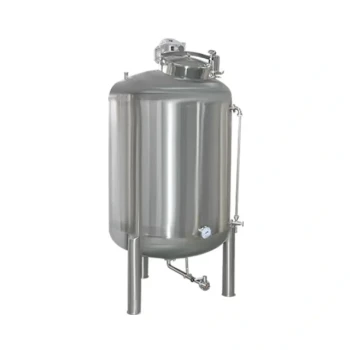
Specialized storage and climate control systems serve as the critical infrastructure in honey distribution centers, primarily functioning to maintain precise environmental stability through temperature and humidity regulation. These systems directly prevent product degradation—specifically crystallization and fermentation—allowing wholesalers to manage inventory levels effectively and align supply with market demand.
By decoupling the timing of the harvest from market sales, specialized climate control transforms honey from a seasonally vulnerable crop into a stable, non-perishable asset that retains its biological and economic value over time.
Preserving Physicochemical Integrity
Controlling Hygroscopic Reactions
Honey is naturally hygroscopic, meaning it readily absorbs moisture from the surrounding air. If the water content rises too high, naturally occurring yeasts can activate, leading to fermentation and spoilage.
Specialized dehumidification equipment ensures the storage environment remains dry. This blocks moisture absorption, preserving the honey’s original chemical stability and preventing the loss of nutritional components.
Managing Thermal Sensitivity
Temperature fluctuations pose a dual threat to bulk honey. Low temperatures accelerate crystallization, altering the texture and making the product difficult to pump or bottle. Conversely, high temperatures degrade biological activity and flavor profiles.
Industrial-grade climate control systems maintain a constant, optimal temperature range. This prevents texture defects while protecting heat-sensitive enzymes and ensuring the honey meets strict quality indicators.
Protection from Sensory Contamination
Beyond temperature and moisture, honey is susceptible to absorbing external odors and degrading under light exposure.
Specialized storage containers utilize food-grade sealing and light-shielding materials. This infrastructure isolates the honey from environmental contaminants, ensuring the aroma, color, and flavor remain identical to the day of harvest.
Supply Chain and Market Logistics
Balancing Supply and Demand
The primary reference highlights that effective storage allows wholesalers to manage inventory strategies independent of harvest cycles.
By extending the shelf life of bulk honey without quality loss, distribution centers can hold stock during surplus periods. This allows them to release product steadily throughout the year, stabilizing market availability and prices.
Centralized Standardization
Distribution centers often act as the aggregation point for multiple small and medium-sized producers.
Equipped with industrial-grade tanks and filtration systems, these centers allow for the centralized assessment and purification of raw honey. This infrastructure creates a vital link, enabling smaller producers to meet the volume and consistency standards required by large-scale trade markets.
Understanding the Operational Trade-offs
Energy Intensity and Cost
While climate control preserves value, it introduces significant operational costs. Maintaining constant temperature and humidity in large warehouses requires substantial energy consumption, particularly in regions with extreme weather.
Maintenance Complexity
The use of specialized filtration and sealing systems requires rigorous maintenance protocols. If seals fail or filtration units are not serviced, the "closed loop" is broken, rendering the honey vulnerable to rapid spoilage or contamination despite the climate control measures.
Making the Right Choice for Your Logistics
Different distribution goals require prioritizing different aspects of storage infrastructure.
- If your primary focus is Long-Term Asset Holding: Prioritize advanced dehumidification and thermal regulation systems to prevent fermentation and biological degradation over extended periods.
- If your primary focus is High-Volume Throughput: Prioritize industrial filtration and pumping infrastructure to facilitate rapid standardization and packaging for retail markets.
- If your primary focus is Quality Assurance: Prioritize inert, food-grade storage materials with superior sealing to eliminate odor absorption and moisture ingress during transport.
Effective honey distribution relies not just on storage space, but on an active environmental management system that safeguards the product's biological reality.
Summary Table:
| System Type | Key Function | Benefit for Wholesalers |
|---|---|---|
| Climate Control | Regulates Temp & Humidity | Prevents crystallization and stops fermentation |
| Industrial Dehumidifiers | Manages moisture levels | Blocks hygroscopic reactions to preserve chemical stability |
| Food-Grade Sealing | Isolates from environment | Protects against sensory contamination and external odors |
| Filtration & Pumping | Centralized purification | Standardizes raw honey for large-scale trade markets |
Elevate Your Honey Distribution Strategy with HONESTBEE
Maintaining the biological and economic value of bulk honey requires more than just storage; it requires precision engineering. At HONESTBEE, we specialize in empowering commercial apiaries and distributors with the tools needed for success. From high-capacity honey-filling machines to professional-grade beekeeping equipment and essential industry consumables, our comprehensive wholesale offering is designed to optimize your supply chain.
Whether you are scaling up your production line or looking to standardize quality for global trade, our team provides the specialized hardware and cultural merchandise to set your brand apart. Protect your harvest and maximize your market value—contact our experts today to discuss your equipment needs!
References
- Vidal Salazar Solano, Isaac Shamir Rojas Rodríguez. La configuración del mercado global de la miel: un análisis de equivalencia estructural. DOI: 10.22201/enesl.20078064e.2023.25.82397
This article is also based on technical information from HonestBee Knowledge Base .
Related Products
- Professional Honey Storage Tank with Agitation System
- Stainless Steel Honey Storage and Settling Tank with Double Strainer
- Stainless Steel Honey Storage Tank with Lid for Honey
- Classic Drum Shaped Glass Honey Jar with Airtight Lid
- Heavy Duty Stainless Steel Honey Processing Machine Decrystallizing Tank
People Also Ask
- What economic role do honey storage tanks play? Boost Your Revenue Through Strategic Inventory Management
- What roles do industrial honey storage tanks and filtration meshes play in processing? Ensure Purity & Consistency
- What is the purpose of a honey storage tank? Streamline Your Honey Processing for Quality & Efficiency
- What are honey storage tanks used for? Essential Features for Quality Preservation and Profit
- How do large honey storage tanks and gravity fall filling systems improve honey packaging efficiency and safety?