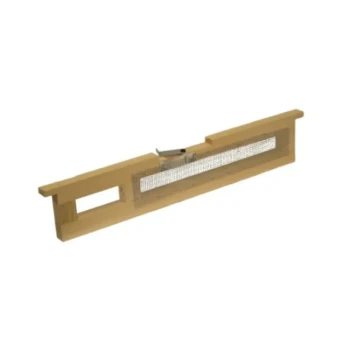
The structural design of a standard wooden beehive serves as the fundamental infrastructure for the scalable management of Apis cerana. It acts as a bridge between biological needs and operational efficiency by simulating a natural nest environment through precise internal spacing—typically involving 6-frame positions—and specific physical dimensions. This multi-layered architecture not only stabilizes the colony but also enables critical beekeeping tasks like inspection, honey collection, and data recording.
By combining biological precision with standardized hardware, the beehive design minimizes colony stress and prevents absconding while maximizing the beekeeper’s ability to intervene, record data, and manage large-scale expansion.
Optimizing the Biological Microenvironment
The primary role of the beehive's structure is to create a controlled habitat that aligns with the specific instincts of Apis cerana.
Simulating Natural Nest Conditions
Apis cerana is highly sensitive to its environment and prone to absconding (leaving the hive) if conditions are poor. A high-quality wooden structure mimics the temperature-controlled environment of a natural forest nest. This physical stabilization safeguards the colony against external temperature fluctuations, encouraging long-term settlement.
Precision of "Bee Space"
The internal configuration, often featuring dimensions such as 36cm x 18cm x 26cm, is not arbitrary; it adheres to the biological "bee space" requirements of the species. Professional equipment ensures these dimensions are exact, which guides bees to nest and store honey in designated areas rather than building irregular combs.
Energy Conservation for the Colony
A well-designed structure regulates internal temperature and humidity, significantly reducing the workload on worker bees. When the hive assists in thermoregulation, fewer bees are needed for cooling or heating the nest. This frees up a larger portion of the population to participate in foraging, directly increasing survival rates and resource collection.
Enhancing Management Efficiency
For large-scale breeding, the hive must function as a tool for the beekeeper as much as a home for the bee.
Facilitating Inspection and Data Recording
The multi-layered structure, consisting of the hive body, frames, and top cover, is engineered for human accessibility. The movable lid allows beekeepers to open the hive for frame inspection or honey extraction with minimal disturbance. This accessibility is crucial for maintaining consistent records on colony health and growth.
Streamlining Artificial Queen Rearing
Standardization is vital for advanced breeding techniques. Standard dimensions ensure the accurate positioning of queen frames during artificial rearing. This allows technicians to conduct frequent observations and delicate operations with the high precision necessary for successful colony expansion.
Resource Conservation and Colony Defense
The physical design plays a defensive role, protecting the colony from both environmental stressors and biological threats.
Facilitating Ventilation and Hygiene
Proper internal spacing and cavity volumes facilitate essential air circulation. Good ventilation helps prevent disease buildup and optimizes the environment, which is a key factor in increasing both honey yield and quality.
Protection Against Competition
In regions where Apis cerana coexists with Apis mellifera (Western honeybees), the native species faces intense resource competition. The specific management strategies enabled by these hives provide necessary physical isolation. This prevents the collapse of Apis cerana colonies that might otherwise be out-competed by the stronger cleaning and foraging capabilities of Apis mellifera.
Understanding the Trade-offs
While standardized wooden hives are essential for scale, they introduce specific challenges that must be managed.
Sensitivity to Dimensional Inaccuracy
Apis cerana is much less forgiving of spatial errors than other species. If the wooden equipment does not meet professional standards for "bee space," it can induce stress reactions in the bees. This stress often leads to lower breeding success rates or the colony abandoning the hive entirely.
Balance of Intervention vs. Disturbance
The design encourages frequent inspection, which is good for data but carries a risk. While the movable lid minimizes disturbance, the ease of access can tempt beekeepers to over-inspect. Maintaining the stability of the ecosystem requires a disciplined approach to using the hardware.
Making the Right Choice for Your Goal
The structural design of the hive should be leveraged differently depending on your immediate operational objectives.
- If your primary focus is Colony Expansion: Prioritize the precision of the 6-frame positioning to facilitate accurate artificial queen rearing and frequent, low-impact inspections.
- If your primary focus is Colony Stability: Focus on the thermal properties and "natural nest" simulation of the wood structure to reduce stress and prevent the colony from absconding.
Precise structural design transforms beekeeping from a game of chance into a controlled science, securing both the colony's instinctual needs and the keeper's operational success.
Summary Table:
| Feature | Role in Large-Scale Breeding | Benefit to Apis Cerana |
|---|---|---|
| 6-Frame Position | Standardizes internal bee space | Prevents irregular comb & guides nesting |
| Wooden Insulation | Mimics natural forest nest conditions | Reduces absconding & stabilizes temperature |
| Movable Lid/Frames | Enables rapid, low-impact inspections | Minimizes colony stress during data collection |
| Precise Dimensions | Facilitates artificial queen rearing | Ensures high success rates for colony expansion |
| Ventilation Design | Optimizes airflow and hygiene | Prevents disease and improves honey quality |
Scale Your Apiary with HONESTBEE Precision
For commercial apiaries and distributors, the difference between a thriving colony and an empty hive lies in the precision of your equipment. HONESTBEE provides the industry's most reliable wooden hives and beekeeping tools, specifically engineered to meet the delicate biological requirements of Apis cerana.
From standardized hives that prevent absconding to high-efficiency honey-filling machines and specialized hardware, our comprehensive wholesale solutions empower you to manage large-scale operations with scientific accuracy. Let us help you maximize your yield and operational efficiency.
Contact HONESTBEE Today to Discuss Your Wholesale Needs
References
- Z. Muhammad Shakir, D. Mohd Salleh. Honeybees, Apis cerana colony performance in the non-protected and protectedbeehive methods in relation to climatic factors. DOI: 10.26656/fr.2017.6(s1).002
This article is also based on technical information from HonestBee Knowledge Base .
Related Products
- Wholesales Dadant Size Wooden Bee Hives for Beekeeping
- Wooden Bee Hive Frames for Beekeeping and Wholesale
- Assembled Wooden Bee Frames with Plastic Foundation for Durability and Convenience by HONESTBEE
- HONESTBEE Wired and Assembled Wooden Bee Frames Foundation for a Thriving Hive
- Assembled Wooden Bee Frames with Beeswax Foundation Ready to Use by HONESTBEE
People Also Ask
- What are the strategic benefits of installing beekeeping hives at an elevation of 1 to 6 meters? Protect Your Assets
- What are the key advantages of modern improved beekeeping hives? Scale Your Honey Yield and Production Efficiency
- What is the proper way to store unused bee hives? Expert Stacking Tips for Equipment Longevity
- What are the 2 types of bee hives? Langstroth vs. Top-Bar for Your Apiary
- How does the design of improved beekeeping hives contribute to maintaining honey quality and purity? Enhancing Purity