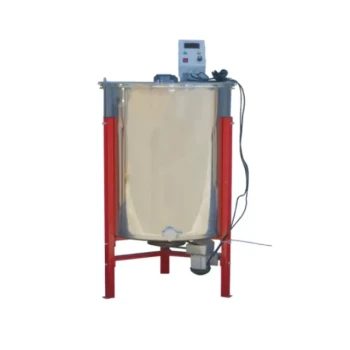
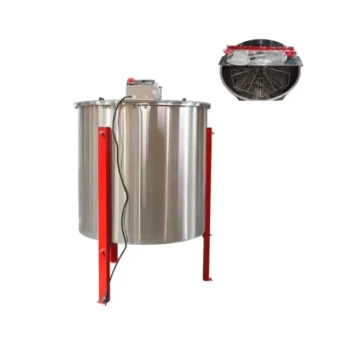
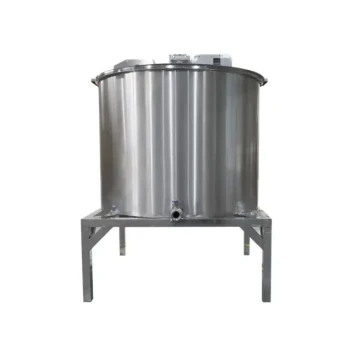
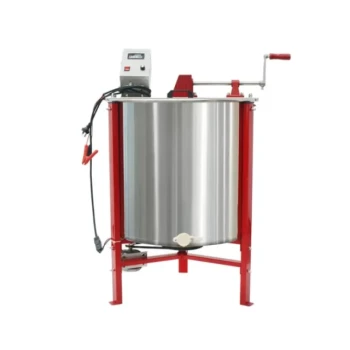
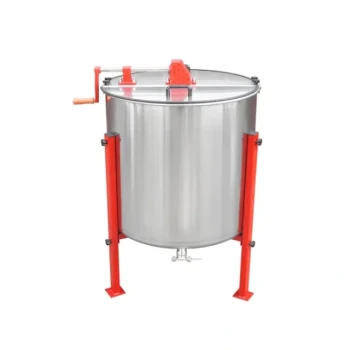
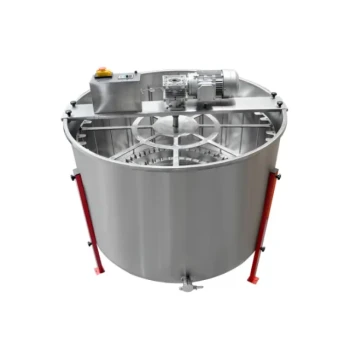
During the preliminary honey extraction phase, centrifuges and multi-stage filtration equipment function as the primary mechanisms for separation and purification. The centrifuge applies high-speed rotational force to physically eject liquid honey from the honeycomb without damaging the comb's structure. Following this, multi-stage filtration systems employ stainless steel meshes to mechanically remove solid contaminants, ensuring the product meets hygiene and clarity standards.
The Core Technical Synergy While the centrifuge maximizes yield and operational efficiency by allowing for honeycomb reuse, filtration ensures the final product is chemically pure and visually clear. Together, these physical processes transform raw hive material into commercial-grade honey without altering its natural nutritional profile or flavor.
The Role of the Centrifuge: Efficiency and Preservation
The primary function of the centrifuge is liquid-solid separation. By spinning the frames at high speeds, the machine isolates the honey from the wax structure.
Maximizing Extraction Efficiency
The centrifuge utilizes centrifugal force to spin mature honey out of the cells after the wax cappings have been removed. This mechanical method is significantly faster and more thorough than gravity draining alone. It ensures the highest possible recovery rate of raw material from the frames.
Preserving Honeycomb Structure
A critical advantage of centrifugal extraction is that it leaves the physical structure of the honeycomb intact. Because the comb is not crushed to extract the honey, empty frames can be returned immediately to the beehive. This shortens production cycles and conserves the substantial energy bees would otherwise expend on rebuilding wax, allowing them to focus on honey production.
Maintaining Chemical Integrity
The process is purely physical, avoiding the need for heat or chemical additives that could alter the honey. This preserves the original physicochemical properties and natural flavor of the honey. It yields a high-quality sample ideal for subsequent purity testing and organic certification.
The Role of Multi-Stage Filtration: Clarification and Hygiene
Once extracted, the raw honey contains various solids that must be removed. Multi-stage filtration acts as the clarification gatekeeper.
Physical Purification
This equipment typically uses stainless steel filter meshes of varying grades to trap impurities. It effectively removes beeswax microparticles, bee fragments, and other organic debris introduced during the harvest. This step is non-negotiable for producing a clean, palatable product.
Compliance and Standardization
Filtration ensures the honey complies with strict food hygiene and safety standards. By standardizing the purity level, the equipment prepares the honey for decanting and bottling. It ensures consistency across batches, which is vital for commercial distribution.
Enhancing Sensory Quality
Beyond safety, filtration significantly improves the visual clarity and texture of the honey. By removing suspended solids, the equipment prevents immediate crystallization triggers and ensures the product meets consumer expectations for high-quality, clear honey.
Operational Considerations and Quality Control
While these technologies are essential, understanding their operational boundaries is key to maintaining quality.
The Balance of Force and Integrity
The extraction process relies on a delicate balance: the centrifugal force must be strong enough to extract the honey but controlled enough to prevent frame blowout (breaking the wax foundation). Properly calibrated equipment ensures efficient extraction without destroying the reusable asset (the comb).
The Necessity of Physical Processing
Both centrifuging and filtration are strictly mechanical processes. This is a deliberate choice in high-quality production to avoid thermal degradation. Relying on these physical methods is essential for providing high-purity samples required for accurate pollutant residue analysis, as heat could mask or alter chemical markers.
Making the Right Choice for Your Goal
Selecting and tuning this equipment depends on your specific production objectives.
- If your primary focus is Production Efficiency: Prioritize high-capacity centrifuges that preserve comb structure, as reusing drawn combs significantly reduces the bees' turnaround time for the next harvest.
- If your primary focus is Product Purity and Compliance: Invest heavily in multi-stage filtration with progressively finer meshes to ensure absolute clarity and adherence to strict food safety regulations without heat treatment.
Ultimately, these two technologies work in tandem to bridge the gap between the raw biological hive environment and the hygienic requirements of food production.
Summary Table:
| Equipment Type | Primary Function | Key Benefit |
|---|---|---|
| Centrifuge | Liquid-solid separation via rotational force | Maximizes yield while preserving reusable honeycomb |
| Multi-Stage Filtration | Mechanical removal of solid contaminants | Ensures food-grade hygiene, clarity, and texture |
| Combined Process | Preliminary purification and clarification | Produces high-quality raw honey without thermal damage |
Elevate Your Honey Production with HONESTBEE
Maximize your apiary's efficiency and product quality with professional-grade hardware. HONESTBEE specializes in supporting commercial apiaries and distributors by providing a comprehensive wholesale range of beekeeping tools, specialized machinery, and essential industry consumables.
How we add value to your business:
- High-Performance Machinery: From automated honey-filling machines to robust hive-making equipment.
- Complete Supply Chain: A full spectrum of beekeeping tools and hardware designed for durability.
- Industry Expertise: Tailored solutions for distributors looking to scale their inventory with quality-tested products.
Ready to upgrade your extraction facility or restock your wholesale inventory?
Contact HONESTBEE Today for a Quote
References
- J. Radtke, Birgit Lichtenberg‐Kraag. Long-term changes in naturally produced honey depending on processing and temperature. DOI: 10.1080/00218839.2018.1494893
This article is also based on technical information from HonestBee Knowledge Base .
Related Products
- electric honey extractor honey centrifuge 3 frame honey extractor stainless steel honey frame extractor
- Manual Hand Crank 4 Frame Honey Extractor Centrifuge for Beekeeping
- Professional 4 Frame Self Reversing Electric Honey Extractor for Beekeeping
- 24 Frame Honey Extractor Commercial Radial Honey Frame Extraction Machine
- 10L Stainless Steel Electric Honey Press Machine
People Also Ask
- What are the characteristics of electric honey extractors? Boost Your Apiary Efficiency with Automated Technology
- What are the disadvantages of using an electric honey extractor? Weighing Cost, Power, and Comb Safety
- What are the advantages of an electric honey extractor? Boost Efficiency and Scale Your Honey Production
- What are the technical advantages of electric honey extractors? Maximize Yield and Protect Your Bee Colony
- How does an electric honey extractor affect the quality of honey? Preserve Flavor & Purity with Precision Extraction