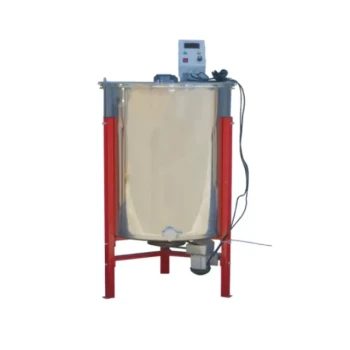
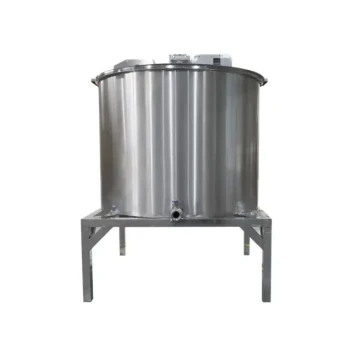
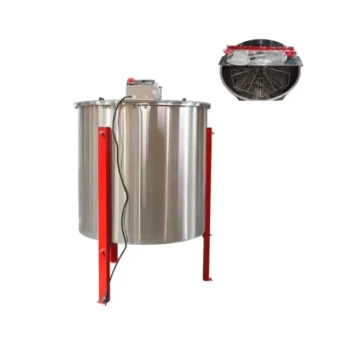
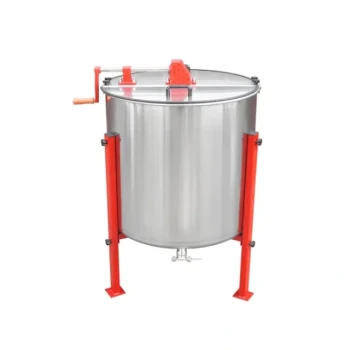
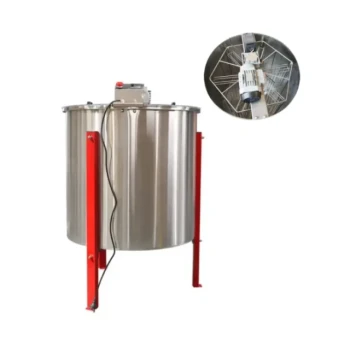
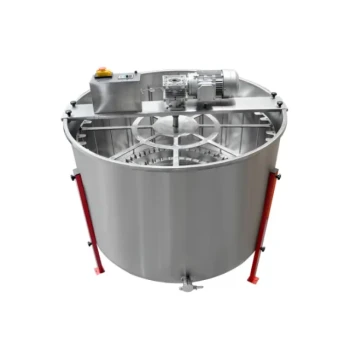
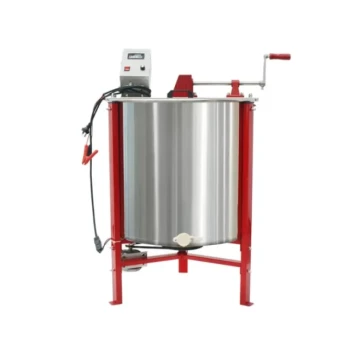
Industrial centrifugal honey extractors utilize high-speed rotation to generate centrifugal force, extracting liquid honey from the comb without requiring physical contact or compression. Unlike traditional harvesting methods that rely on crushing, squeezing, or heating—processes that inevitably destroy the comb—this mechanical separation preserves the delicate beeswax structure in its original state.
By maintaining the structural integrity of the honeycomb, these extractors allow beekeepers to return intact frames to the hive immediately. This eliminates the substantial biological cost of wax secretion for the colony, directly shortening production cycles and increasing total annual yields.
The Mechanics of Preservation
Non-Destructive Separation
The fundamental advantage of this technology is the application of centrifugal force.
By spinning the frames, honey is pulled out of the cells by inertia while the wax structure remains stationary and supported. This avoids the structural collapse common with manual squeezing or pressing methods.
Enhanced Purity and Hygiene
Preserving the comb structure does more than just save wax; it acts as a natural filter.
Because the comb is not crushed, impurities such as bee larvae, pollen, and wax debris are not forced into the honey. This mechanical separation ensures a higher level of clarity and purity, often required for high-end market standards.
The Biological and Economic Impact
Bypassing the Wax Secretion Cycle
The most critical reason for preserving the comb is the conservation of the colony's energy.
Bees must consume significant amounts of honey and energy to secrete the wax needed to build honeycombs. When a centrifugal extractor allows you to return an intact comb to the hive, the bees effectively bypass this energy-intensive construction phase.
Accelerating Production Cycles
With the infrastructure already in place, bees can immediately begin refilling the cells with nectar.
This reuse significantly shortens the honey production cycle, as the colony does not need to spend time rebuilding their storage vessels. This efficiency allows for faster turnover between harvests.
Increasing Overall Yield
The conservation of biological energy translates directly to productivity.
By reducing the energy loss associated with wax secretion, the colony can redirect its resources toward foraging and honey production. This leads to a substantial increase in the total annual honey yield per colony.
Understanding the Trade-offs
Initial Investment vs. Long-Term Gain
While effective, centrifugal extractors represent a significant upfront investment compared to simple manual tools.
They are mechanical or electrical devices designed for longevity, but the initial cost can be a barrier for very small-scale hobbyists. However, for those prioritizing yield, the efficiency gains typically offset this cost over time.
Maintenance and Complexity
Moving from manual crushing to mechanical extraction introduces a need for equipment maintenance.
Operators must ensure the machinery is balanced and cleaned correctly to prevent mechanical failure. Unlike simple crushing tools, these extractors require a dedicated space and power source (for electrical models) to operate effectively.
Optimizing Your Apiary's Efficiency
To determine if a centrifugal extractor aligns with your operational goals, consider the following:
- If your primary focus is maximizing volume: Prioritize centrifugal extraction to recycle combs, allowing bees to focus entirely on nectar collection rather than wax building.
- If your primary focus is product purity: Use centrifugal extraction to minimize the introduction of pollen, larvae, and wax particles into the final product.
By shifting from destructive harvesting to preservation-based extraction, you transform the honeycomb from a single-use resource into a permanent, reusable asset for your colony.
Summary Table:
| Feature | Centrifugal Extraction | Traditional Crushing/Pressing |
|---|---|---|
| Comb Condition | Preserved & Reusable | Destroyed/Single-use |
| Honey Purity | High (Minimal debris) | Lower (Contains wax/pollen) |
| Production Speed | Fast (Immediate refilling) | Slow (Rebuilding required) |
| Colony Energy | Conserved (Focus on nectar) | Wasted (Focus on wax secretion) |
| Equipment Type | Mechanical/Electrical | Manual/Basic |
| Long-term ROI | High (Increased annual yield) | Low (Higher labor/lower volume) |
Maximize Your Honey Production with HONESTBEE Professional Equipment
Ready to transform your honeycomb from a single-use resource into a high-efficiency asset? At HONESTBEE, we specialize in empowering commercial apiaries and distributors with the industry's most reliable harvesting solutions.
Our comprehensive wholesale offering includes everything from high-speed centrifugal honey-filling machines and industrial-grade hive-making hardware to a full spectrum of specialized beekeeping tools and consumables. By choosing HONESTBEE, you provide your bees with the infrastructure they need to bypass wax secretion and focus entirely on foraging.
Take your apiary to the next level of efficiency and purity.
Contact HONESTBEE Today for Wholesale Inquiries
References
- Louise Cilliers, François Retief. BEES, HONEY AND HEALTH IN ANTIQUITY. DOI: 10.7445/53-0-36
This article is also based on technical information from HonestBee Knowledge Base .
Related Products
- electric honey extractor honey centrifuge 3 frame honey extractor stainless steel honey frame extractor
- Manual Hand Crank 4 Frame Honey Extractor Centrifuge for Beekeeping
- Professional 4 Frame Self Reversing Electric Honey Extractor for Beekeeping
- HONESTBEE 72 Frame Industrial Electric Honey Extractor for Beekeeping
- 24 Frame Honey Extractor Commercial Radial Honey Frame Extraction Machine
People Also Ask
- What are the characteristics of electric honey extractors? Boost Your Apiary Efficiency with Automated Technology
- What are the disadvantages of using an electric honey extractor? Weighing Cost, Power, and Comb Safety
- What are the advantages of an electric honey extractor? Boost Efficiency and Scale Your Honey Production
- What are the technical advantages of electric honey extractors? Maximize Yield and Protect Your Bee Colony
- How does an electric honey extractor affect the quality of honey? Preserve Flavor & Purity with Precision Extraction