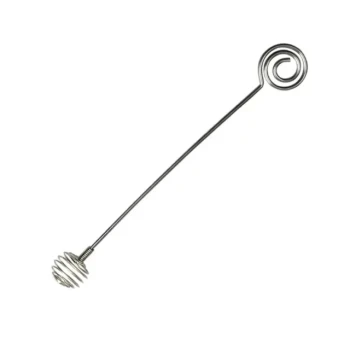
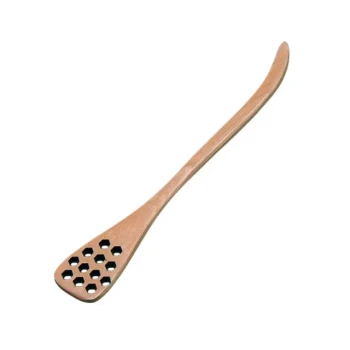
Precision tweezers and stirring rods are the fundamental instruments for maintaining physical integrity and ensuring statistical reliability in pollen analysis. Tweezers are utilized to delicately separate small volumes of pollen balls from the pollen baskets of bees without altering the original structure of the grains. Stirring rods are subsequently used to mix these samples with chemical reagents, ensuring a uniform distribution that minimizes experimental error during microscopic observation.
Success in pollen analysis requires a balance between delicate extraction and vigorous homogenization. These tools ensure that the physical structure of the pollen remains intact while allowing for a chemically consistent sample for observation.
Preserving Sample Integrity During Extraction
The first phase of analysis involves removing the pollen load from the bee. The quality of the final data is heavily dependent on the precision of this mechanical separation.
Delicate Separation of Pollen Balls
Precision tweezers are the primary tool for isolating pollen from the bee’s anatomy. Specifically, they are used to extract pollen balls from the pollen baskets (corbiculae) located on the bee's hind legs. The fine tips allow for the manipulation of very small volumes of material.
Preventing Structural Damage
The most critical function of the tweezers is to handle the sample without crushing it. The primary reference highlights that tweezers must be used to separate the pollen without damaging its original structure. Preserving the morphology of the pollen grain is essential for accurate visual identification later in the process.
Minimizing Cross-Contamination
While the primary focus is on pollen baskets, high-precision tools are generally employed to isolate specific samples without touching surrounding materials. By gripping only the target pollen load, the researcher prevents the accidental inclusion of external debris or other biological matter that could skew results.
Ensuring Consistency in Chemical Preparation
Once the pollen is extracted, it must be processed for viewing on a slide. This is where the stirring rod becomes the critical variable for accuracy.
Achieving Thorough Mixtures
Stirring rods are used to combine the raw pollen sample with chemical reagents. The goal is not merely to wet the pollen, but to achieve a thoroughly mixed suspension. This ensures that the chemical reaction—often used to stain or clear the pollen grains—affects the sample evenly.
Creating Uniform Distributions
For a slide to be statistically valid, the pollen must be spread evenly. The stirring rod facilitates the uniform distribution of pollen grains within the reagent mixture. This prevents "clumping," where grains stack on top of one another, obscuring features and making accurate counting impossible.
Reducing Experimental Error
Inconsistent mixing leads to inconsistent data. By using a stirring rod to standardize the mixture, researchers significantly reduce potential experimental errors. This ensures that the density of pollen observed on one part of the slide is representative of the whole, allowing for reliable quantitative analysis.
Understanding the Trade-offs
While these tools are standard, their misuse can introduce new sources of error into the analysis.
The Risk of Mechanical Deformation
The sharpness of precision tweezers is a double-edged sword. While they allow for accurate selection, applying too much pressure can mechanically deform soft pollen loads. This can alter the perceived shape of the grains, potentially leading to incorrect taxonomic classification.
Homogeneity vs. Agitation
The use of a stirring rod requires a controlled technique. Insufficient stirring leads to poor reagent penetration and clumping. Conversely, overly aggressive stirring can physically damage fragile pollen grains or introduce air bubbles that interfere with microscopic imaging.
Optimizing Your Analysis Workflow
The choice of how you utilize these tools depends on the specific metrics you are trying to capture in your research.
- If your primary focus is Taxonomic Identification: Prioritize the use of high-quality precision tweezers to ensure the physical shape and surface structure of the pollen grains remain completely intact during extraction.
- If your primary focus is Quantitative Counting: Focus on the technique used with the stirring rod to guarantee a perfectly homogeneous mixture, ensuring that the slide counts are statistically representative of the total load.
Mastering these manual techniques is the first step toward generating reproducible, high-fidelity palynological data.
Summary Table:
| Tool Type | Primary Function | Impact on Analysis |
|---|---|---|
| Precision Tweezers | Extraction from corbiculae | Preserves grain morphology & prevents damage |
| Stirring Rods | Reagent mixing & suspension | Ensures uniform distribution & reduces error |
| Fine Tips | Delicate manipulation | Facilitates isolation of small sample volumes |
| Homogenization | Chemical preparation | Eliminates clumping for accurate slide counting |
Elevate Your Apiary Analysis with Professional-Grade Equipment
Precise research requires reliable tools. HONESTBEE supports commercial apiaries and distributors with a comprehensive range of professional beekeeping machinery, specialized hardware, and essential consumables. Whether you are scaling up with honey-filling machines or outfitting your laboratory for pollen analysis, our wholesale solutions are designed to enhance your efficiency and data accuracy.
Unlock the full potential of your operations—contact our expert team today to discuss our volume-ready equipment and global distribution services.
References
- Syayidah Nuriyah, Teguh Husodo. Ecosystem Services From Honey Beees Apis cerana Fabr. In Taman Hutan Raya (Tahura) Ir. H. Djuanda Dago Expert Bandung Ecology and Economically. DOI: 10.1051/e3sconf/202124903016
This article is also based on technical information from HonestBee Knowledge Base .
Related Products
- Modern Stainless Steel Honey Dipper Stirrer
- Stainless Steel Pollen Shovel with Wooden Handle
- Heavy-Duty Ergonomic Stainless Steel Pollen Shovel
- Heavy-Duty Ergonomic Grip Galvanized Pollen Shovel
- Plastic Bee Pollen Trap Strips Comb Catcher Collector
People Also Ask
- What is a honey dipper? Master the Art of the Perfect Drizzle with This Essential Tool
- How do you clean and store a honey dipper? Simple Steps for Long-Lasting Performance
- What is a honey taking spoon called? Discover the Tool for a Perfect, Mess-Free Drizzle
- What is a honey dipper and what is it used for? A Guide to Mess-Free Drizzling
- What is the proper method for cleaning a honey dipper? Maintain Pure Flavor with These Easy Pro Tips